From School Courtyard to Outdoor Classroom
Boonville High School, USA
An inner courtyard at Boonville High School in Indiana, USA wasn’t being used for much of anything, which made it the perfect place for an outdoor learning area for the entire school! This was the idea Ms. Rebecca Schnurr, a teacher at Boonville High School, presented to her 83 students who immediately dove into the project with enthusiasm.

Outdoor learning spaces have a number of benefits. Research has shown that students exposed to nature experience less stress and perform at higher levels academically and transforming sterile lawns into productive habitats is beneficial for local biodiversity too. The students at Boonville High School worked to rebuild the old pond in the school courtyard, remove non-native plants and introduce new native plants, especially pollinator species.
The result is a beautiful ‘Schoolyard Habitat’ that is useful as a stress reducer and creative inspiration for all students and faculty in the building. It also serves as an educational space where, for example, science classes can now go to conduct authentic field studies, such as soil and water testing, that would normally have been down in the classroom lab. While rebuilding the pond was a challenge, it’s become a favorite feature, enjoyed and admired by the school community with the added benefit of providing a water source for native animal species.
Through this Alcoa W5 project, students learned about constructing and maintaining the pond, which included lessons on rock identification, water flow, soil studies, aquatic plant life and the simple pleasure and satisfaction of doing physical labour that resulted in a beautiful and completed project. As Ms. Schnurr shared,

“This project has provided joy and stress relief for my students. It is hard to put into words the enthusiasm and happiness that most of my students displayed when they knew we would be working outside on this project. It was an uplifting experience for me to watch them become absorbed in the project through creativity and physical activity. It was learning at its best.”
Another teacher felt that the outdoor courtyard has become a “place where students can enjoy some green space and fresh air. I believe it gives them a way to relax from the orderly rows of indoor classrooms; this helps them to be more insightful and creative. I tend to get better class discussion from students when we are out there. Students just seem happier outside!”
The Alcoa W5 project of Boonville High School supports the following SDGs:
Putting Waste Management into Practice
Granmoen Primary School, Norway
As part of their Alcoa W5 project, 2nd and 3rd graders at Granmoen Primary School not only learned about waste management in theory but also in practice!
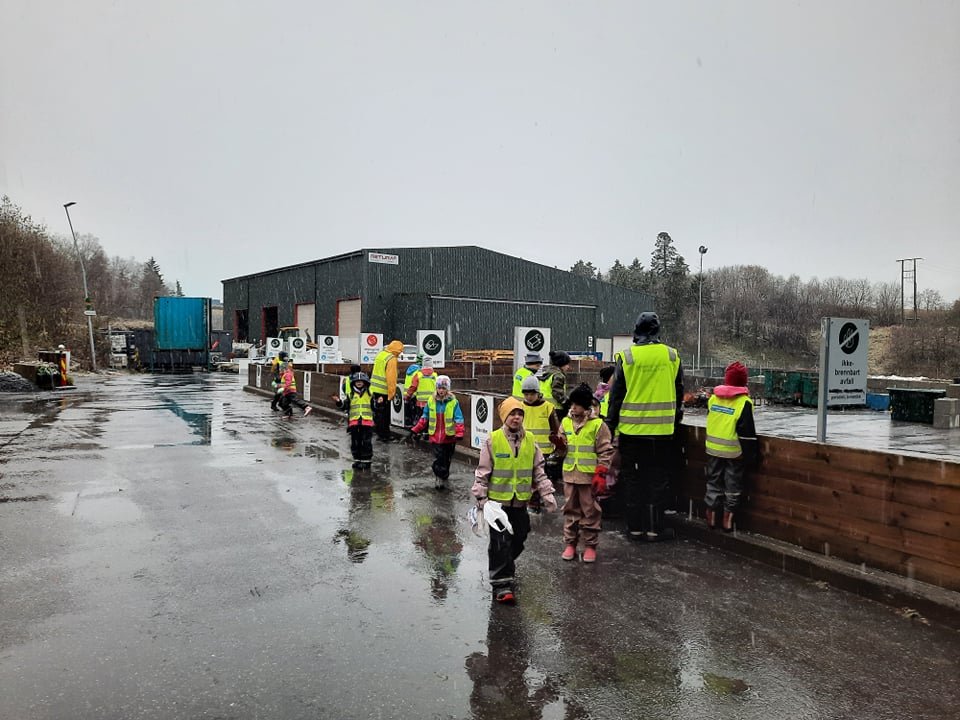
Grandmoen Primary School is located in the village of Granmoen, which lies inland along the 50-kilometre-long Vefsnfjord in the north of Norway. The school’s mission is all about investing in the youngest in society, with a strong desire to engage more deeply in environmental issues. Teachers work together with students, with the aim of identifying active and practical ways of making a difference.
Throughout the spring, the 2nd and 3rd graders learned about different topics related to waste and our environment, including the different types of waste, how to sort and recycle waste, what happens to waste and how we can all contribute to a clean environment. As the students learned about waste in the classroom, they also got outdoors for litter pick-ups in their community. They also visited the facility of the local waste company, SHMIL (Søndre Helgeland Miljøverk IKS). At the waste plant, students go to see waste management in practice, observing how different types of waste are sorted and treated in different ways.
“Batteries must be delivered as special waste in the correct place. If they are thrown into residual waste, it may start to burn.” – Student, Grandmoen Primary School
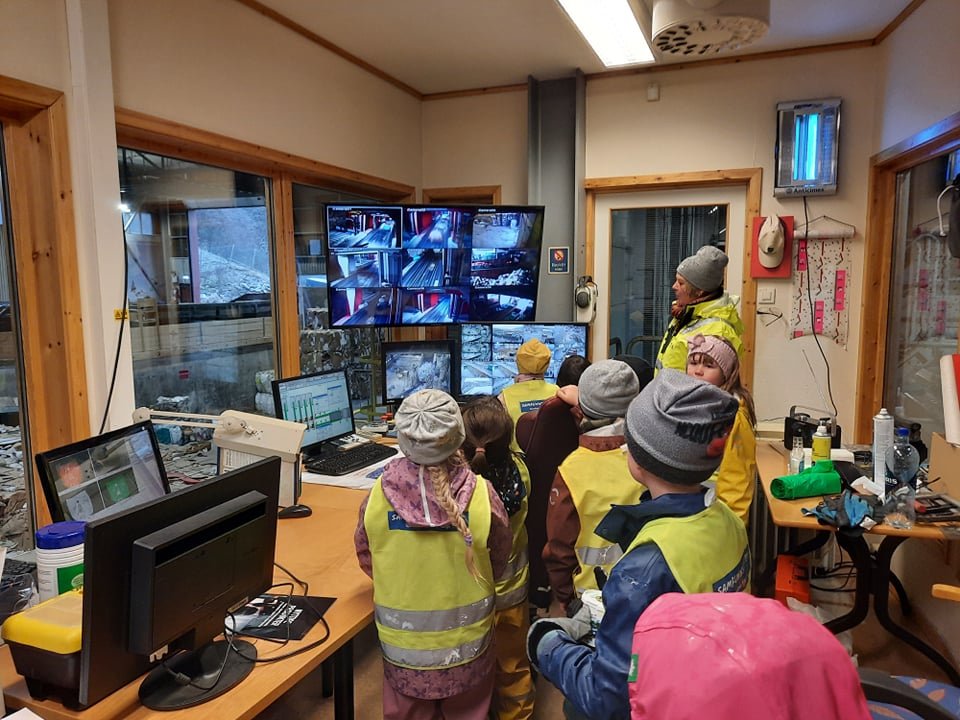
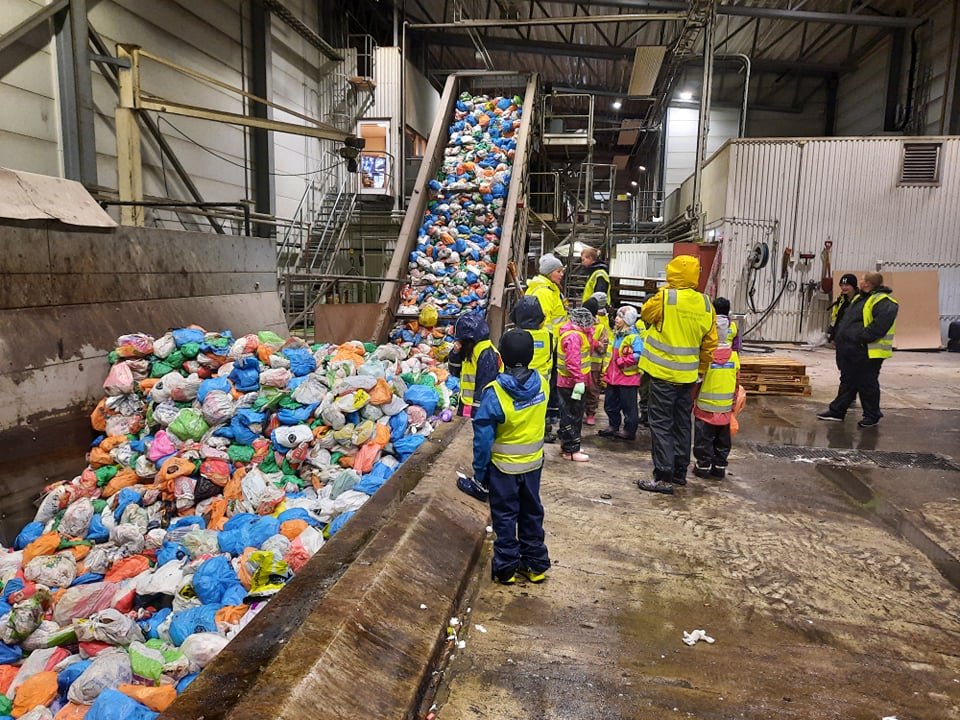
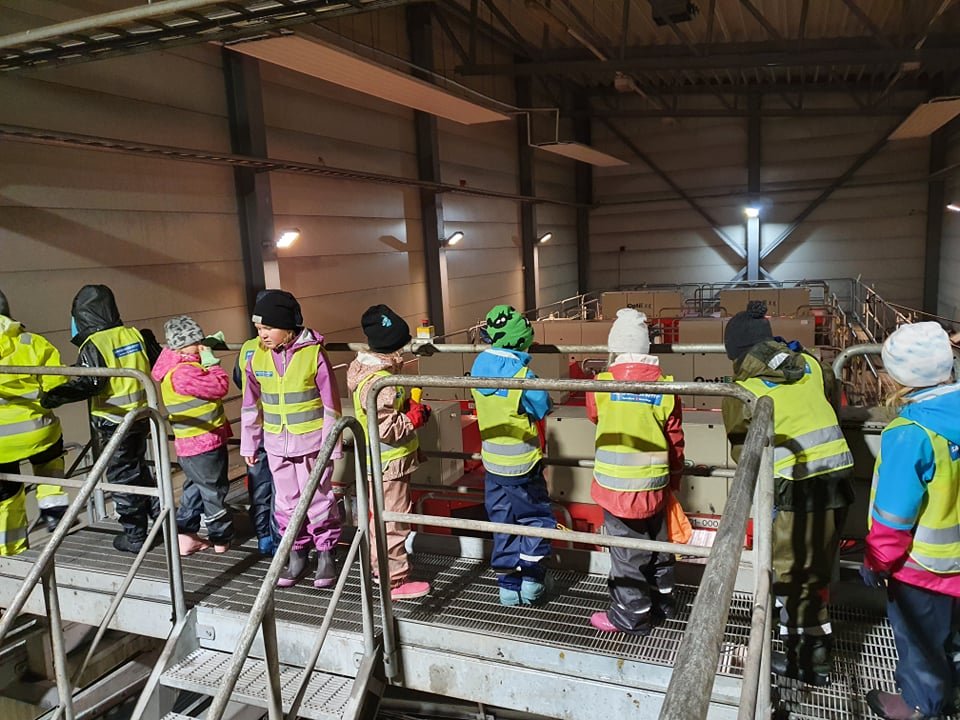
The students developed a deeper understanding of how increasing quantities of waste present a challenge for a sustainable society. Learning about waste from different sources, such as households, workplaces and industry, has led the students to be more aware of what they can do to reduce the issue of waste. It should come as no surprise then that all the students have become better at recycling their waste at home and school!
The Alcoa W5 project of Granmoen Primary School supports the following SDGs:
Rainwater Collection for Water Protection!
Environmental Charter School, USA
After the 5th grade students at The Environmental Charter School read the book Water is Life, they were inspired to apply their new knowledge to their Alcoa W5 project!

The Environmental Charter School is located in Pittsburgh, USA with students coming from the surrounding neighborhoods. Their own school garden is what the 5th graders had in mind when they started learning about the water cycle, including the role of water filtration and capture to slow runoff and mitigate the negative impacts of heavy rainfall. This inspired the students to want to add rain barrels in their school garden to help conserve water.
Their Alcoa W5 project started out with reading the book, We Are Water Protectors, which was inspired by Indigenous-led movements and is an urgent rallying to safeguard the Earth’s water from harm and corruption. Through the book and related activities, such as signing the Water Protectors Pledge, students gained new knowledge about indigenous conservation efforts and reflected on their own role within their school garden as both beneficiaries and stewards.
This led the students to surveying their school garden and connected with a local organisation called Upstream Pittsburgh to help them create a plan and set up the rain barrels in the garden. They then organised a volunteer day where parents, teachers and students helped tidy up the school garden, making room for the new rain barrels and preparing the garden for the summer.
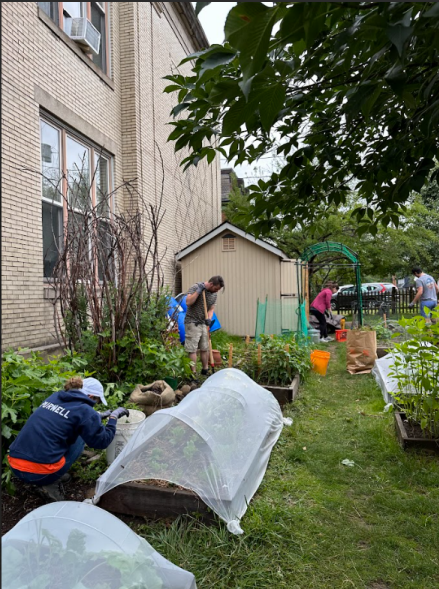
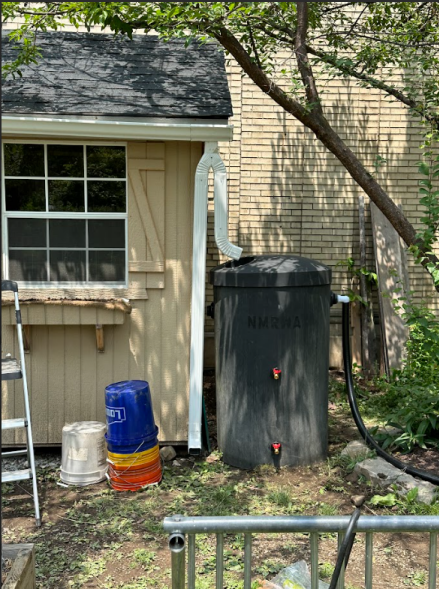
With 8 teachers and 100 students between 3-5th grade involved, as well as parents and the team from Upstream Pittsburgh, this Alcoa W5 project introduced many new community members to the work that The Environmental Charter School is doing through their school garden. For the students, they not only learned about the water cycle through books but also got to put their knowledge into action. And the cherry on top – they’ll be able to water their school garden with captured rainwater for 50 days of the year!
The Alcoa W5 project of Environmental Charter School supports the following SDGs:
Kicking Off of Environment Week with an Action Day!
Farsund Primary School, Norway
Students at Farsund Primary School have been part of the Alcoa W5 project for several years now, so this year, they decided to get everyone involved! To kick-off their Environment Week, a whole-school Action Day was organized for all 340 students to participate in.

Sitting between two fjords, Farsund Primary School is part of the Farsund Municipality located in the south of Norway. The surrounding landscape is made up of peninsulas, islands, fjords and straits, with several nature conservation areas nearby. Inspired by Farsund Secondary School, students at Farsund Primary School decided to launch their school’s project week with a whole-school day of action on World Environment Day on the 5th of June.
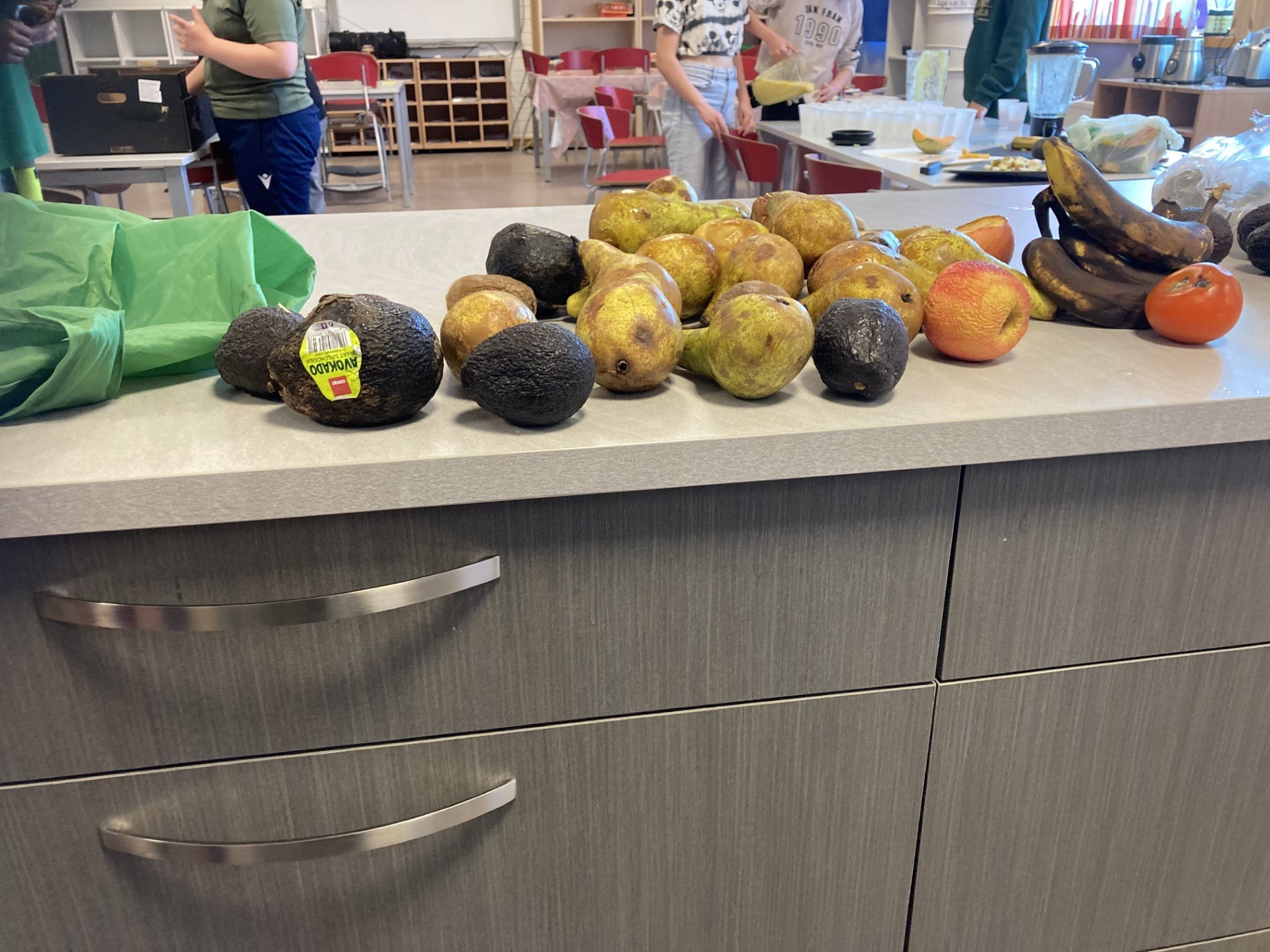
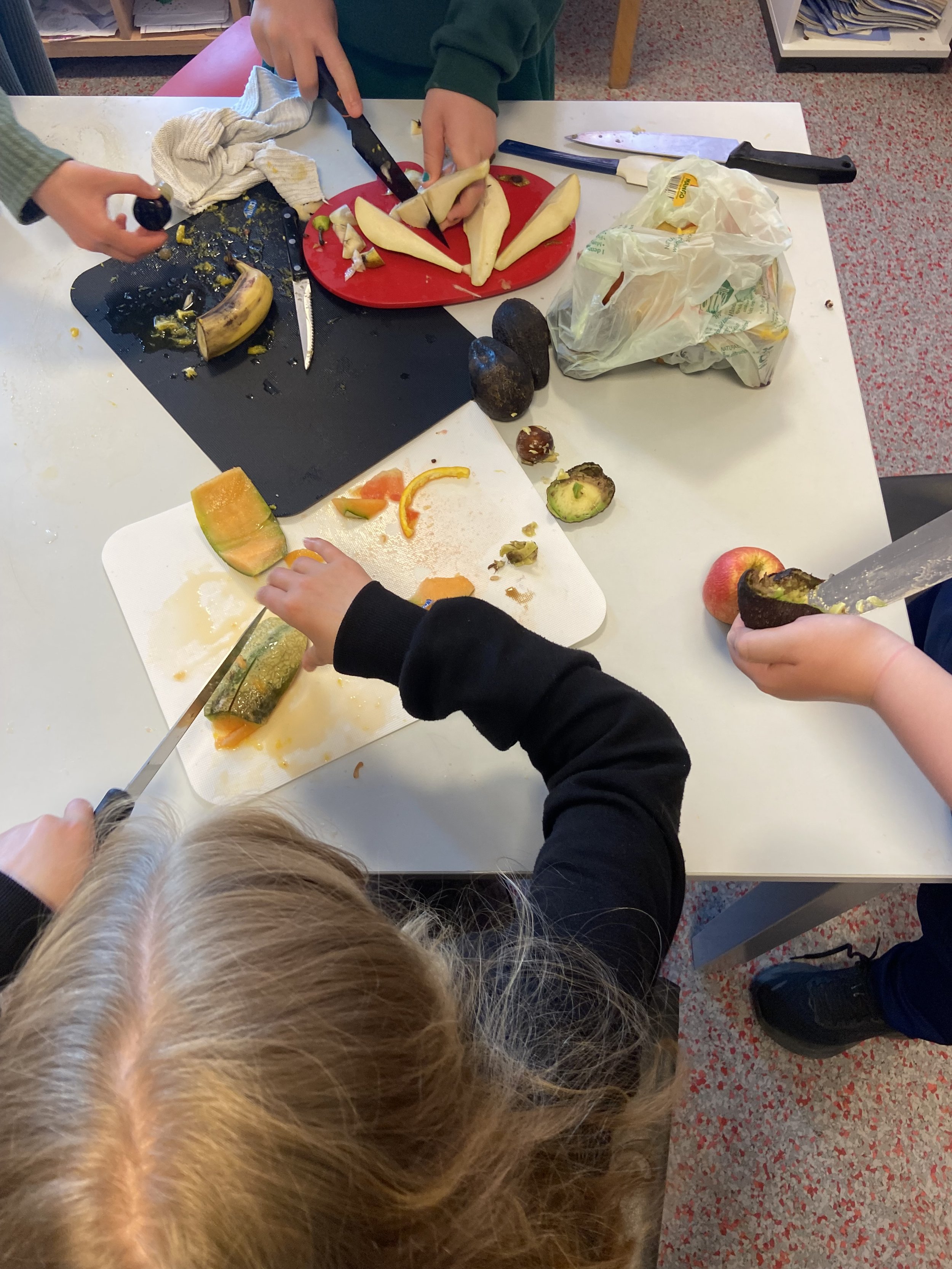
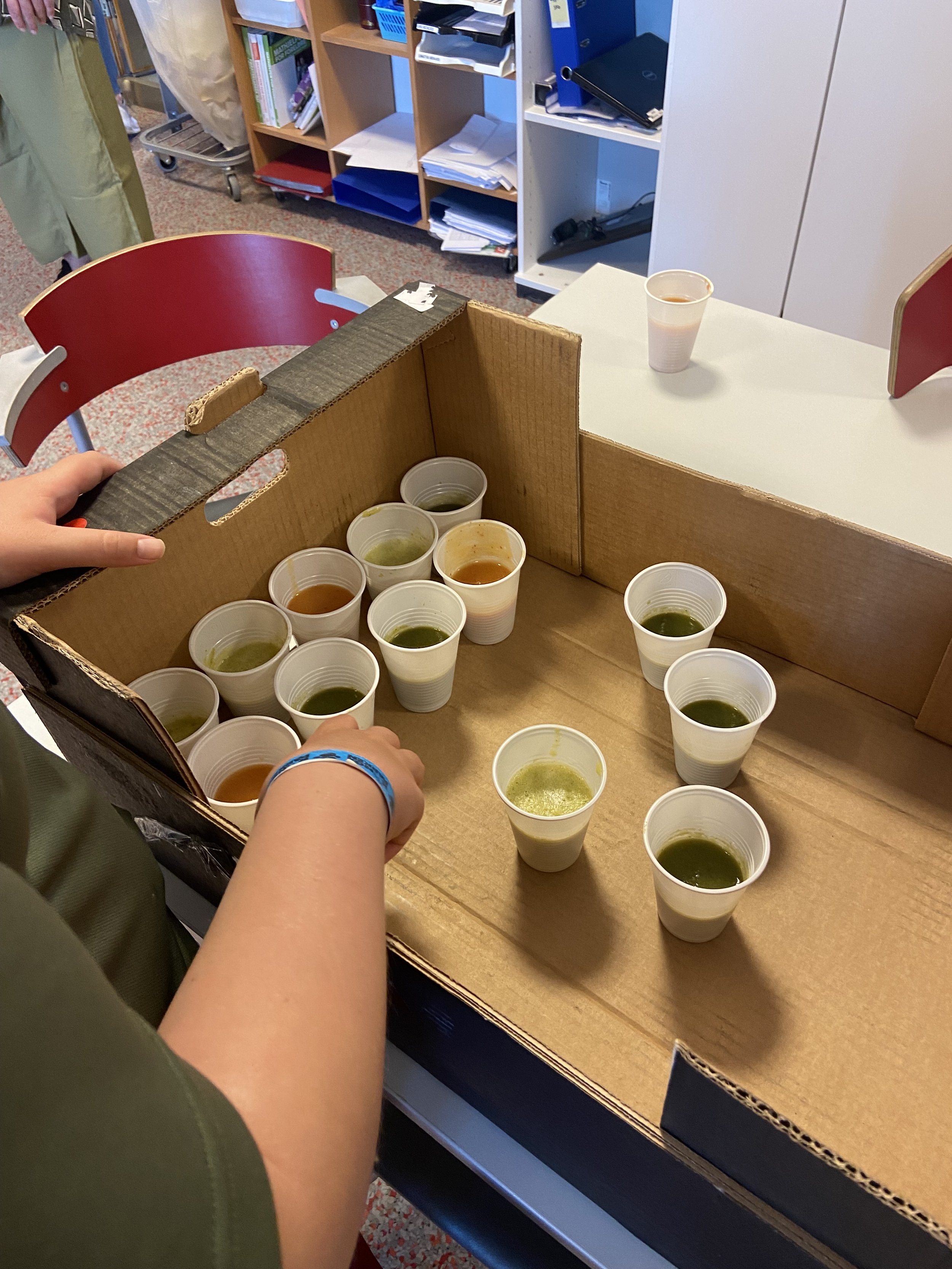
Their Action Day started with a celebration and the raising of the school’s Green Flag. Throughout the morning, there were several activities including throwing seed balls, smoothies made by the Eco-Committee with surplus fruit from the local grocery store, and group art project and several games made from recycled waste products. This kicked-off each grade’s projects for the week.
"A fantastic kick off to a whole week with "environment". The Environment Week creates a unique sense of unity in the school. It feels very meaningful that the whole school works together for a good environment". – Teacher, Farsund Primary School
The 1st graders learned about insects and made an insect hotel from old milk cartons and various natural materials they had found on a walk. In 2nd grade, students learned about wind energy and created a wall newspaper together. The 3rd graders learned about different bird species, including endangered ones and how to protect them. They also studied the connection between littering and threatened birdlife. The 4th graders participated in national fundraising campaign ‘The Battery Hunt’. They successfully collected 185 kilos of batteries and landed in 17th place in Norway! In 5th grade, students learned about flora and fauna found along the beaches, while the 6th graders learned about bees, and even got to visit a beehive and taste some honey. Lastly, the 7th graders learned about renewable energy and wind power, paying a visit to the local windmills.

Through their Action Day and Environment Week, students learned about a variety of topics, with these activities serving to strengthen students’ action competence. It also allowed them to develop a greater appreciation for the richness of nature surrounding them, prompting them to find out ways in which they can help preserve it.
The Alcoa W5 project of Farsund Primary School supports the following SDGs:
From Dust Patch to Pollinator Paradise
Environmental Charter School, USA
The 2nd graders at the Environmental Charter School in Pittsburgh, USA were happy to see their Discovery Garden space being used by the whole school, but noticed that the grass that had been planted was slowly turning into dusty dirt (or mud, when it rained). As part of their Alcoa W5 project, they decided to develop the dusty lawn into a green space that would be more inviting for wildlife and their fellow students!


The students started by learning about the benefits of native plant species. Each student chose a plant species to learn about and shared their new knowledge with their class. Then it was time to get to work! The 2nd graders got their hands dirty working to break up the packed down dirt in their Discovery Space to prepare it for planting. Then they added topsoil and fertilizer to help ensure that their plants would thrive. With the help of other students, teachers and volunteers the students planted a tree, a spicebush and added almost 4 m2 of other native pollinator plants.


Through their Alcoa W5 project, students gained a deeper understanding of native plant species, giving them a greater sense of connection to nature as they saw the plants, they had learned about appearing in the Discovery Garden. Knowing the benefits of each plant gave the students a sense of ownership over the new pollinator garden and their excitement was shared with their families and teachers.
The Alcoa W5 project of the Environmental Charter School supports the following SDGs:
A Whole-School Approach to W5!
Vanse Primary School, Norway
With 45 teachers and 330 students from 1st to 7th Grade, Vanse Primary School is a small school located in Vanse, a village on the Lista peninsula in the southwest of Norway. The school is nestled among beautiful natural areas, with access to the sea, wetlands, and other hiking areas. The Lista wind farm is also near the school.
Despite their smaller size, Vanse Primary School truly embraced their Alcoa W5 project, turning it into a whole-school activity that went beyond the five original W5 themes (Warming-Waste-Water-Watts-Wildlife) by adding Wind and World! With seven grades and seven themes, Vanse Primary School launched their Sustainability Week, with each grade focusing on a theme.
The Sustainability Week was officially launched on World Environment Day with speeches from the principal and students and smoothies for everyone made from surplus fruit donated by the local grocery store. A representative from FEE Norway was also able to attend. Throughout the week, each grade participated in different projects and activities:


The 1st Graders learned about Water, including the plastic problem in the ocean. They also did a beach clean-up and created an art piece out of the plastic waste they found.
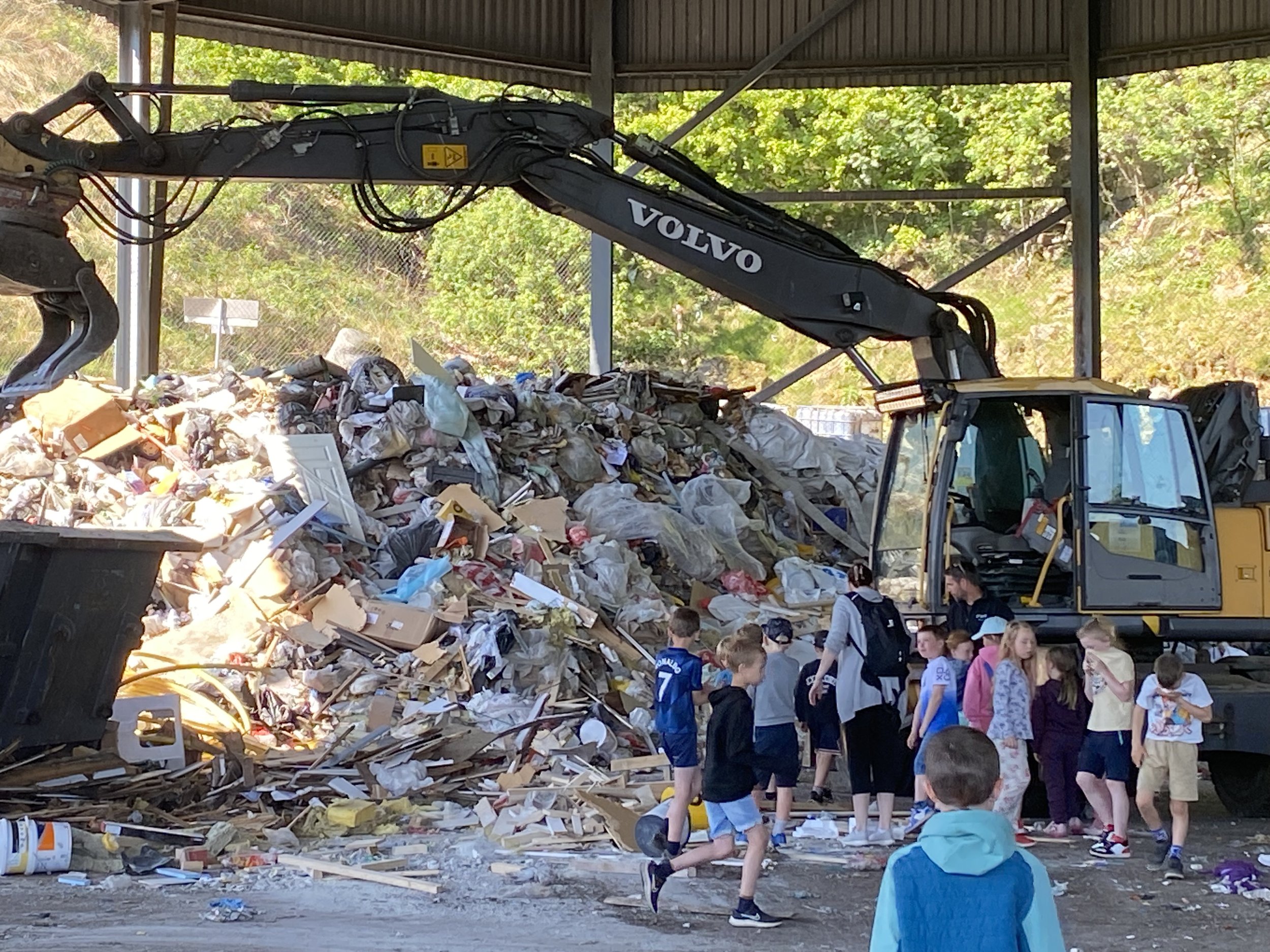
In 2nd Grade, the students focused on Waste by doing a litter pickup in the town, and visiting the municipality’s waste disposal facility to learn about what happens to the waste, and the importance of waste sorting.
The 3rd Grade worked on wildlife, learning about biodiversity and the importance of bees, and building a large insect hotel which now stands in the schoolyard.
The 4th Grade took on the bonus theme of Wind, creating a functioning model of a city supplied with energy from windmills that they built. They also got to go visit the nearby wind farm and learn about wind power!
In 5th Grade, students focused on Warming (climate change) by visiting the municipality’s bioenergy power plant to learn about renewable energy, making model greenhouses and calculating their CO2 footprint from being driven to school. In the end, they encouraged the whole school to start walking or cycling to school.
The 6th Graders worked on the other bonus theme of World where they learned about the connection between consumption and waste and the global consequences it entails. The students interviewed people in Vanse and visited a second-hand shop, getting to work with reused textiles and redesigned clothes.
Lastly, the 7th Grade focused on Watts and the idea of an energy-efficient society of the future, by designing and presenting sustainable and energy-efficient homes built with sustainable materials and supplied with renewable energy.

The Sustainability Week ended with a visit from Farsund's mayor and municipal director, who were impressed by the work done by the students. The mayor invited the Eco-Committee to visit the City Hall to talk about their experience during the Sustainability Week at Vanse Primary School.
This Alcoa W5 project is a great example of how an entire school and the wider community can get involved in supporting sustainable initiatives. As one teacher expressed, "It feels good that all grade levels are working together on a common theme. It is unifying for students and staff." While students in each grade learned about specific themes, they also learned from one another and different members of their community about the seven Ws!
The Alcoa W5 project of Vanse Primary School supports the following SDGs:
Recycling and Gardening for Climate Action!
Turtle Creek Elementary STEAM Academy
As part of their Alcoa W5 project, students of the Turtle Creek Elementary STEAM Academy engaged in climate action by learning about gardening and organizing several school-wide recycling activities. Through Project Based Learning, students learned about how to reduce climate change and its impacts and were encouraged to carry out such actions in their school.
Students were highly engaged in the planning and maintenance of their school garden during the whole academic year. Through this Alcoa W5 project, three new trees were planted on the school campus, and five raised garden beds were installed. At the start of their academic year, students harvested crops and planted winter cover crops to ensure the survival of their garden over winter, and in spring new crops were planted. Through these activities, the students also learned about healthy living and eating.


“Gardening is a great way to eat healthy foods and reduce climate change.” – Colette Ciocco (4th-grade student)
Aside from the planting and maintaining of their campus garden, students at Turtle Creek Elementary were also involved in recycling activities, as a school-wide recycling programme was implemented and maintained. They participated in the “Unwrap the Waves” candy wrapper recycling programme with the Loggerhead Marine Science Center, and joined a “Recycle Regatta” – a community event – in partnership with Educational Passages.

Through all the different activities in this project, students at Turtle Creek Elementary learned about the importance of working together to reduce the impacts of climate change. They also gained valuable insights into the connection between recycling, gardening, and climate change reduction, all while learning about healthy eating and living habits.
The Alcoa W5 project of Turtle Creek Elementary supports the following SDGs:
From Seed to Plant
Sentrum Preschool, Norway
Sentrum Preschool is located in idyllic Gullestad, near the River Kvina and the Gullestad forest in the southwest of Norway. Teachers and students share a love for the outdoors and are out in their local environment all year round. There is a strong focus on sustainable development in the everyday life and how to raise good citizens of the world.

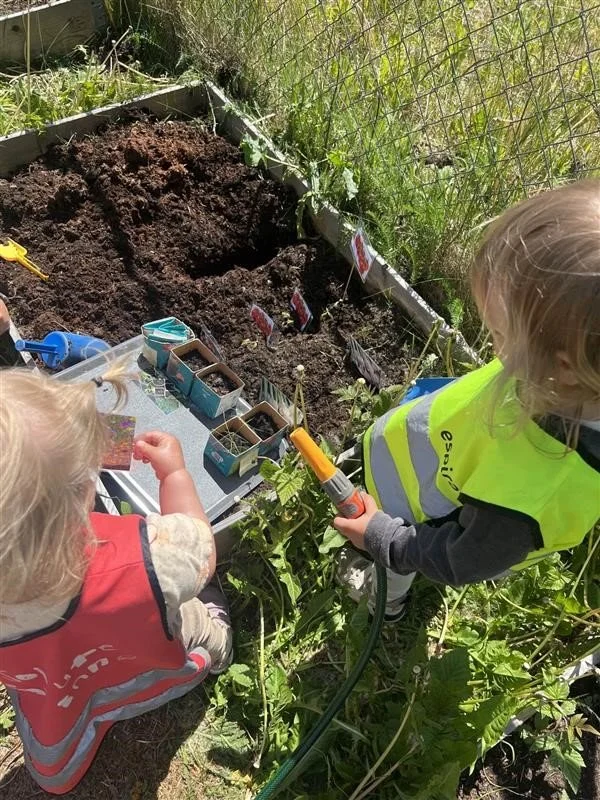
Building upon their existing kitchen garden, Sentrum Preschool decided to expand and develop this as part of their Alcoa W5 project. Parents, teachers, and 36 students between the ages of four and six worked together to create a plan for this year’s garden, and the students got to work!
Earlier this spring, the children started sowing many different seeds indoors, including various species of flowers, herbs, vegetables, and fruits. The children then took part in planting the sprouts outside, watering them, and weeding. They planted vegetables that could be harvested in early summer such as radishes and carrots, as well as vegetables that would be ready in the late summer and autumn.
"We have to be careful not to dig here anymore. Now the plants will grow up here.” - Student, Sentrum Preschool
Through this process, children learned about how vegetables grow from seeds to plants and the value plants bring in terms of food and biodiversity. They also cultivated microgreens in the shape of peas and arugula this year! Along the way, the children have eaten the sprouts on a slice of bread or as a snack. Many thought it tasted good - with the pea-sprouts being a particular hit among the children!


This Alcoa W5 project helped the children develop new skills such as sowing seeds and cultivating microgreens. They also gained knowledge about the reasons why planting and protecting biodiversity is good for the environment and sustainable development.
"We experience great commitment and a lot of joy with the project, it is something that both kids, teachers and parents in Sentrum Preschool can gather around." - Jan Rune Strømland, Prinicpal at Sentrum Preschool
The Alcoa W5 project of Sentrum Preschool supports the following SDGs:
Climate Action at School
Madison Elementary School, USA
Madison Elementary School is a public school in rural northern New York with just over 400 students. As part of their Earth Science class, the Grade 6 students began learning about weather and climate, including the causes of climate change and its impacts on humans and our planet. The outcome: an Alcoa W5 project that will be enjoyed by generations to come!

Students started by researching how trees produce oxygen, reduce carbon dioxide in the atmosphere and act as carbon sinks. This knowledge, combined with learning about climate change, motivated the students to plant trees at their school. The students chose to plant two species of maples after researching native tree species with long life spans. The trees will provide shade in the summer and a beautiful colour show in the autumn for future students.
“I love trees in October. They are always so beautiful when they change colour. Now I know their beauty goes WAY beyond that.” - Student, Madison Elementary School

Through their Alcoa W5 project, the students not only learned about how to reduce their carbon footprint but also worked with the local greenery to find the best time for planting the trees and with the local utilities to get permission to plan them in their community. When the extreme smoke from the forest fires in Canada delayed their original planting, the students were even more motivated to plant their trees.


“I never knew that those trees behind the school and in our yard were so important… I didn’t know other places didn’t have any, and now I know how important they are to Earth’s health.” - Student, Madison Elementary School
The Alcoa W5 project of Madison Elementary School supports the following SDGs:
Never Too Little to Learn about Waste!
Espira Husebyparken Preschool, Norway
Espira Husebyparken Preschool sits just outside the Alcoa Environmental Park in Farsund, in the southwest of Norway. Close to the forest and the beach, Espira Husebyparken is a new preschool that fosters curiosity and exploration among its students. Last year, the children began a kitchen garden at their school. This year, the entire preschool was invited to be part of "The Ocean Monster", an initiative by Farsund Secondary School.
Cooperation with Farsund Secondary School was the key to success. With the secondary students as role models, the Preschool’s Alcoa W5 project aimed to give the children experience of waste management through wonder, exploration, and active actions. Waste is an important topic to work on at any age, as it can help increase positive actions and a sense of responsibility. The children learnt about plastic in nature, decomposition time, and the danger to animals and birds, helping them develop a closer relationship with nature.
Like the students from Farsund Secondary School, who have used the whole municipality as their classroom and have contributed to keeping the sea, beach, and land litter-free, the 62 children (all under the age of six!) and 14 teachers at Espira Husebyparken Preschool were busy throughout the spring, going on many trips in the local area in search of waste in nature. They have cleaned up along paths, roads, the city centre, and beaches. On every trip, children brought gloves, grabbing sticks, and waste bags.


"Plastic is not good for the environment, so we must clean up waste on our trips, and we must also tell people that no one should throw waste in nature." – Student, Espira Husebyparken Preschool
This Alcoa W5 project gave the children at Espira Husebyparken Preschool the chance to not only play, wonder, and explore in nature, but also to learn about different types of waste. Children used their senses, observed different types of waste, and learned about where to dispose of different materials. As a result of this, and despite their young age, the children have begun to develop an understanding of why we must protect nature and keep it litter-free.
"It is inspiring to see that what we do has a positive effect. The students are eager to learn even more." – Teacher, Espira Husebyparken Preschool
In the long term, this understanding can help build action skills and a sense of responsibility for the environment and our planet.
The Alcoa W5 project of Espira Husebyparken Preschool supports the following SDGs:
Grow, Garden, Grow!
Nightengale Elementary, USA
In the northern part of the state of New York (United States), a group of 13 students and their teachers learned about healthy eating habits by growing their own vegetable garden at school!
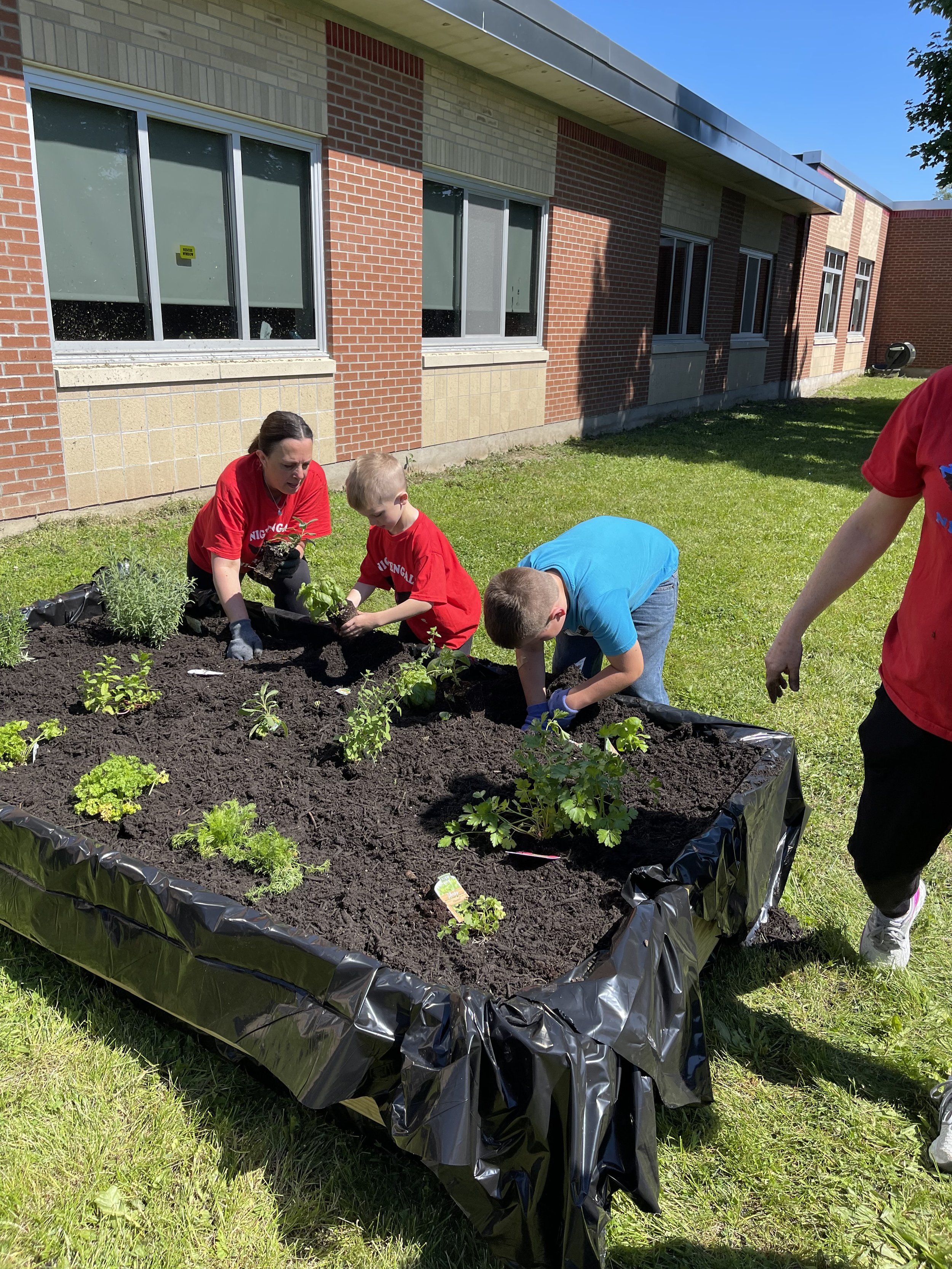
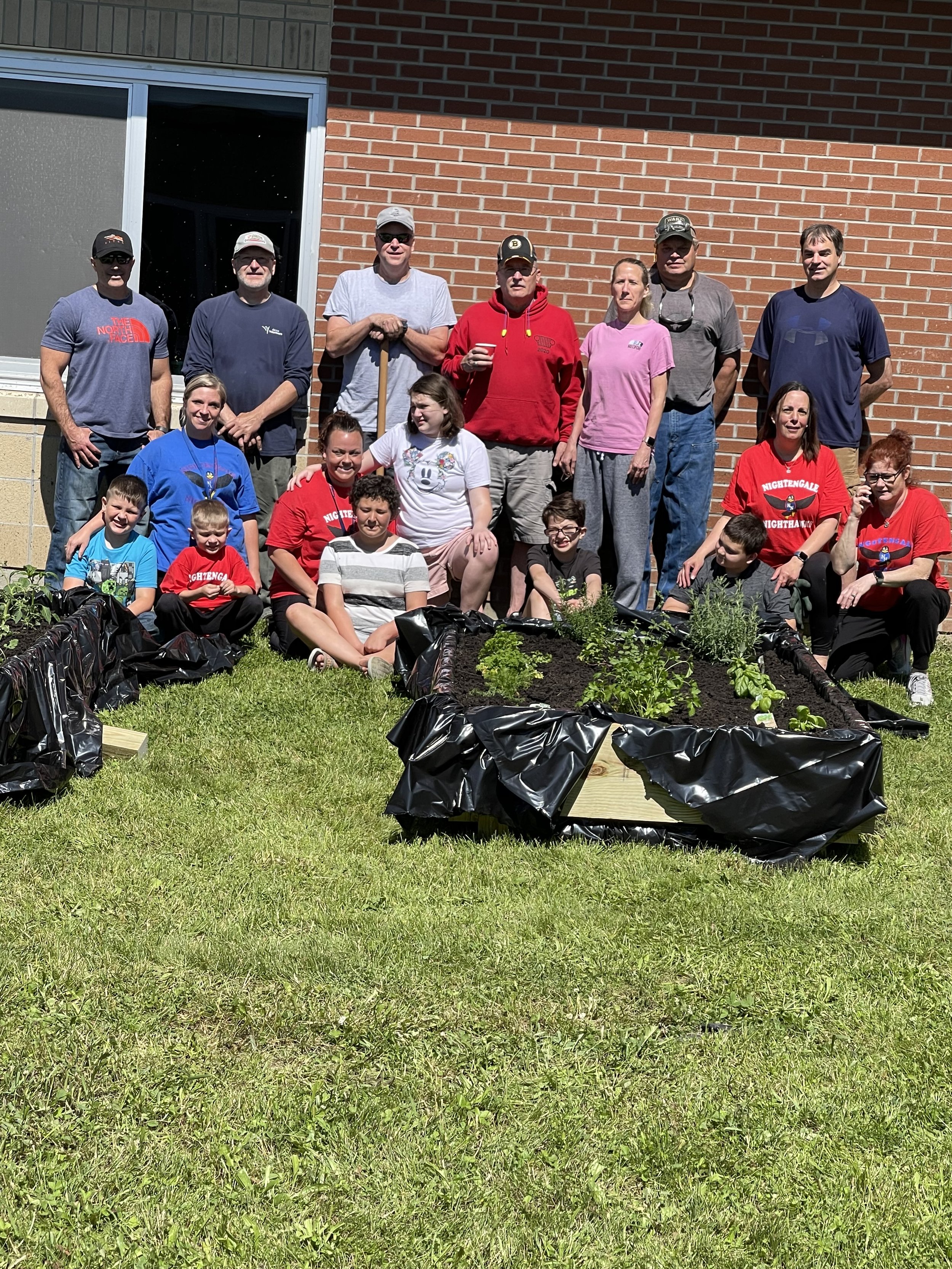
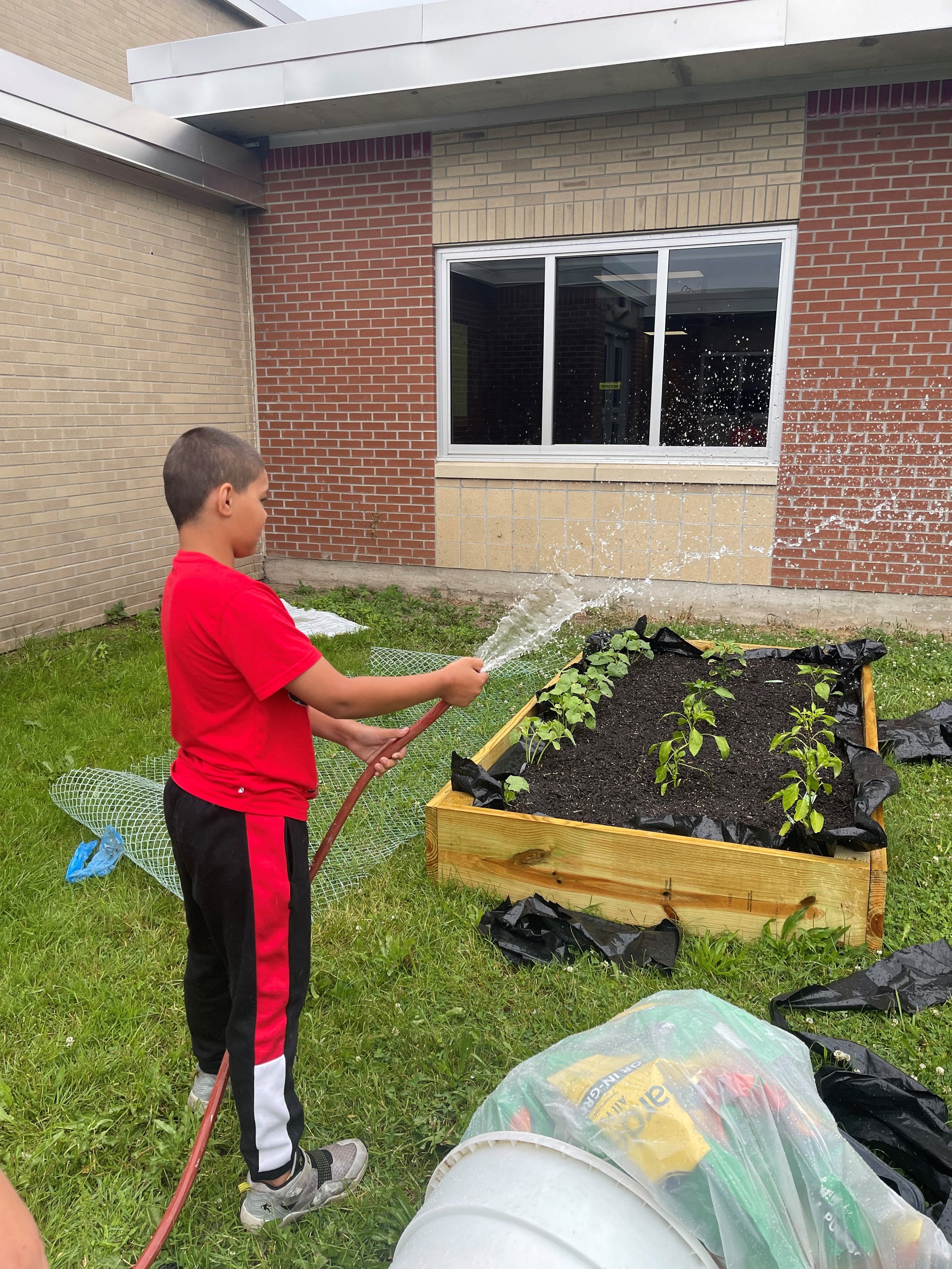
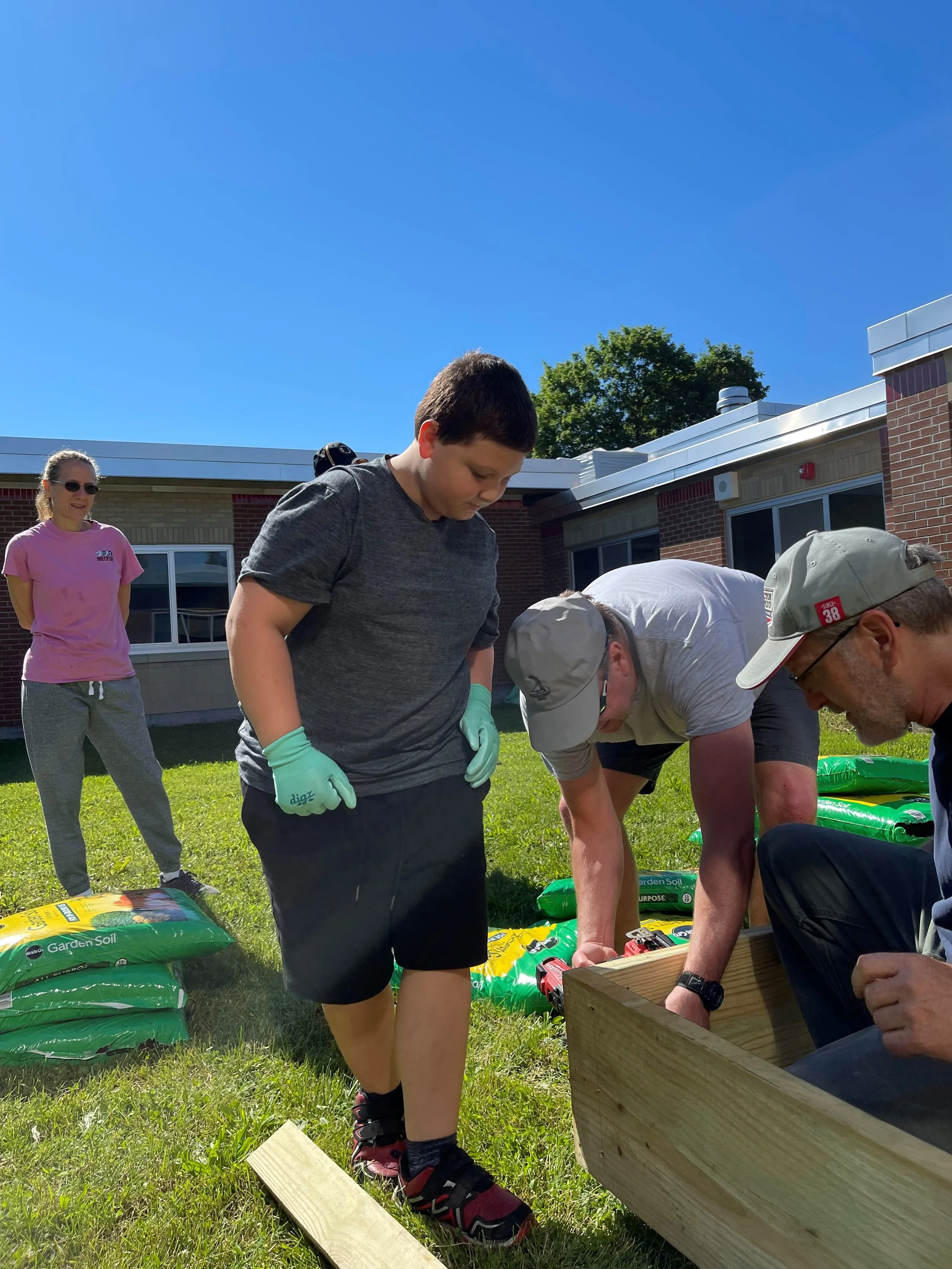
As part of their Alcoa W5 project, teachers at Nightengale Elementary aimed to educate their students on how to eat healthy, and how to plant and grow a garden for the whole school to enjoy. In the summer of 2022, the school had some Alcoa volunteers come help them build beautiful garden beds for the school’s outdoor area. The volunteers furthermore gave a hand putting soil in the garden beds and helped plant vegetables and herbs. Teachers, teacher aides, and more importantly students all came to help the volunteers with the construction of the garden!
By planting their own school’s garden, students grew some plants right from seed and were able to experience the whole process right up until the plants were placed in the ground. The students furthermore participated in transplanting the vegetables and herbs from their single pots into the planter beds.
“I like planting our garden because it is fun to plant seeds, watch them grow, and then plant them into our soil in our gardens.” - 6th Grade Student
But the process wasn’t without challenges, as the students of Nightengale had to adapt to harsh weather conditions, and the irregular weather patterns made it difficult to determine when the perfect time was to plant their garden. Nevertheless, they established that, due to the harsh winters in northern New York, gardens had to get weeded out before the snow came and had to be restarted at the beginning of spring. During winter, the plants were moved inside the classroom where the students took care of them until the weather allowed them to be replanted outside.
Through this project, students learned the importance of eating healthy and acquired relevant gardening skills. The process helped them understand how many people can benefit from one little garden and its produces, and therefore the significance of building such a garden in the community. Through this Alcoa project, students realized the significance of food and have learned that hunger is an issue in parts of the world, and that food should therefore be cherished. Finally, students have gained insights regarding the benefits of growing their own vegetables and herbs and have been able to enjoy some of the produce themselves.
“I think this project was very successful for our school as well as for our community. Our goal is to replant the garden beds every spring for the whole school to enjoy - even throughout the summer months!” – Teacher, Nightengale Elementary
The Alcoa W5 project of Castle North Middle School supports the following SDGs:
Learning about Biodiversity in the Local Stream
Liknes Primary School, Norway
In the rural municipality of Kvinesdal in Norway, students and their teachers sought out the help and expertise of local fishermen and hunters to learn more about their local ecosystems, specifically about the stream that runs through their village: the Helldalsbekken.
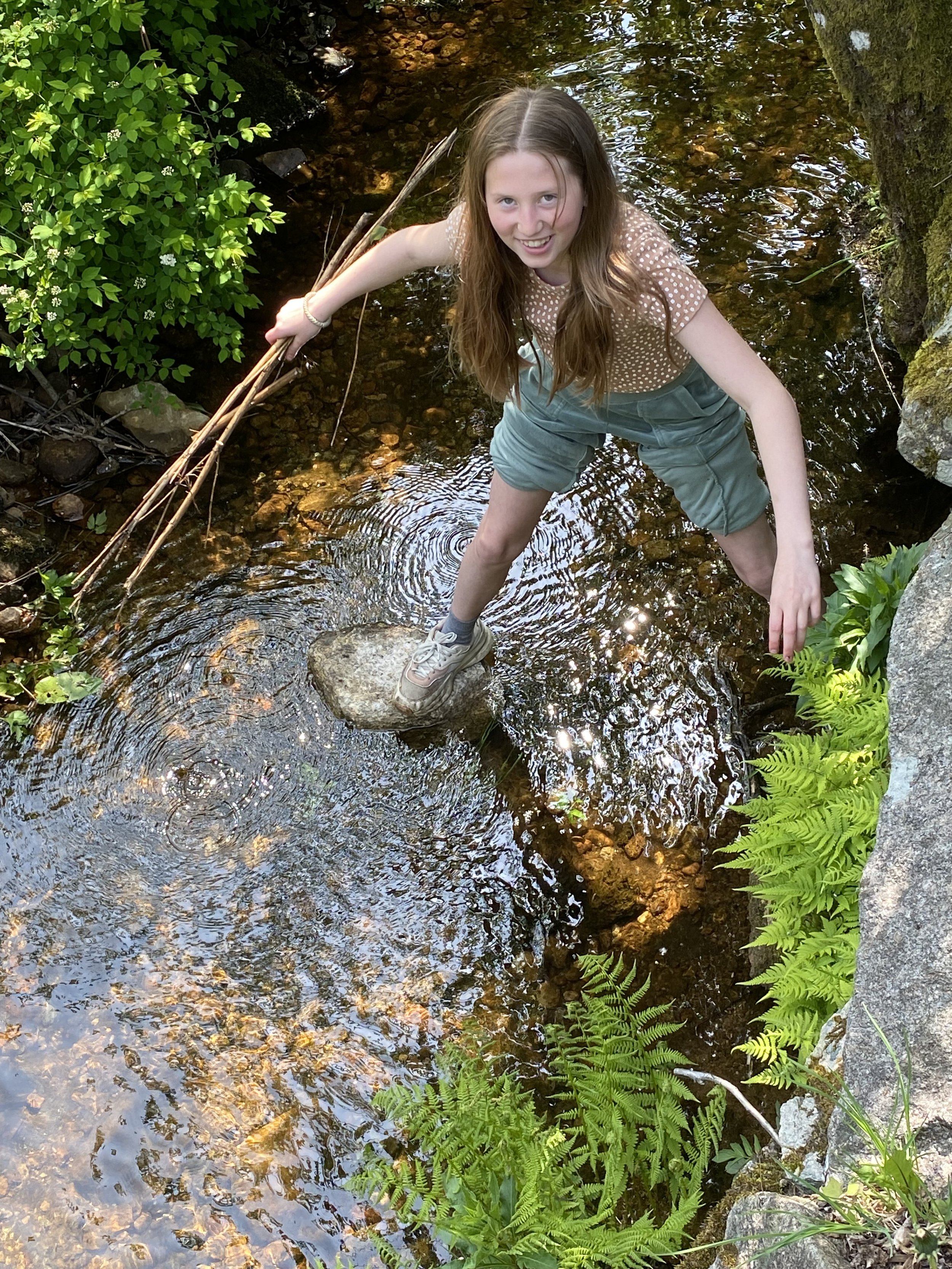
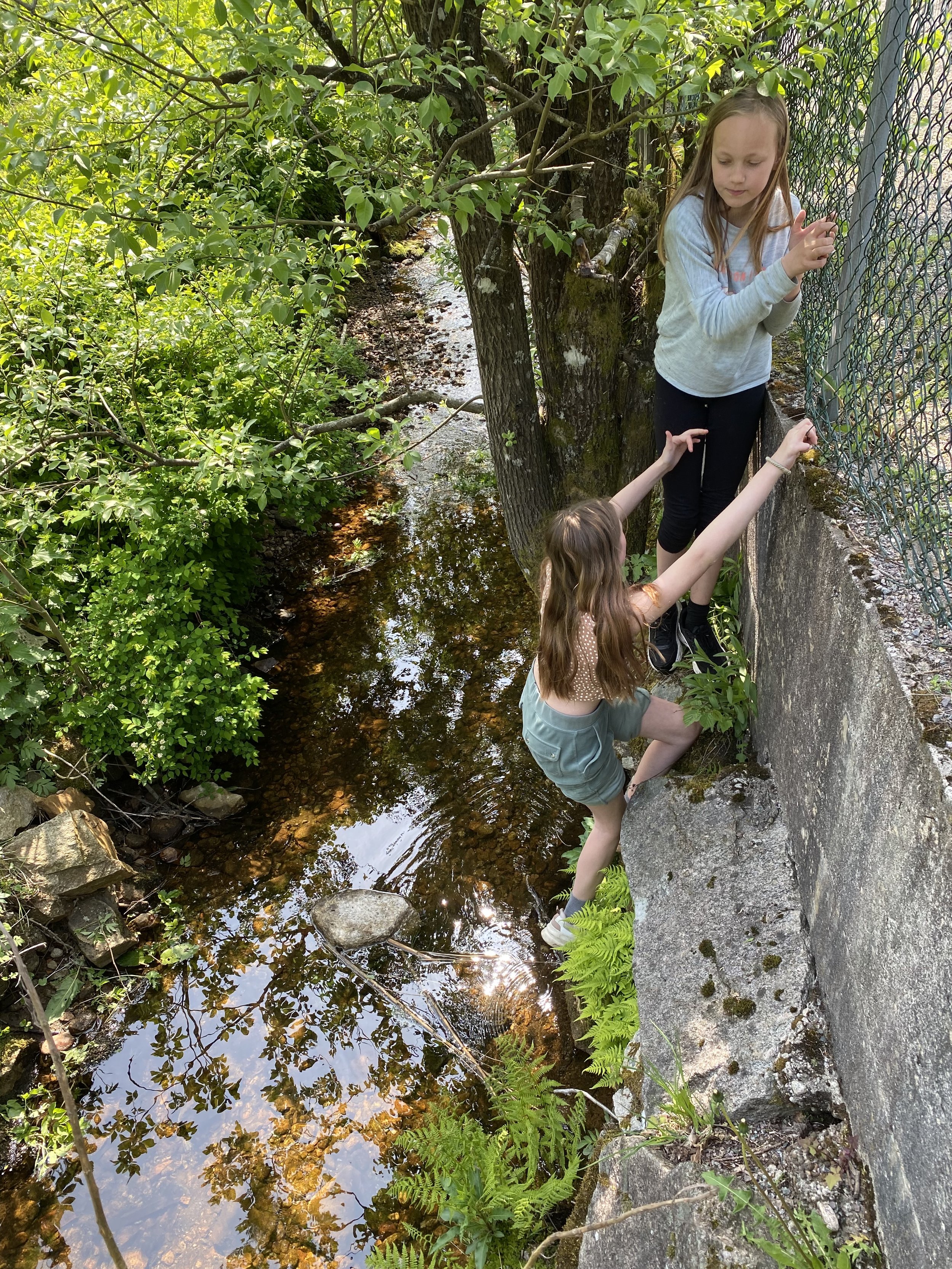
At Liknes primary school, as part of the Alcoa W5 project, the 6th grade teachers aimed to teach their students about water, natural diversity, and the interconnectedness of nature. What better way to do so, than to look in their own backyard to study the water cycle and the way it links so many different ecosystems? The 6th grade students and their teachers therefore frequently visited the local water stream, the Helldalsbekken, to learn about water and to study their local ecosystem and the different species that are part of it.
During their multiple visits to the Helldalsbekken, students learned about water in its different forms and how to check the stream’s water level. They examined the water quality and pH value, both of the stream’s water and of clear drinking water. Additionally, they evaluated their own water consumption at school and at home, and came up with ways to reduce it to protect their local environment.
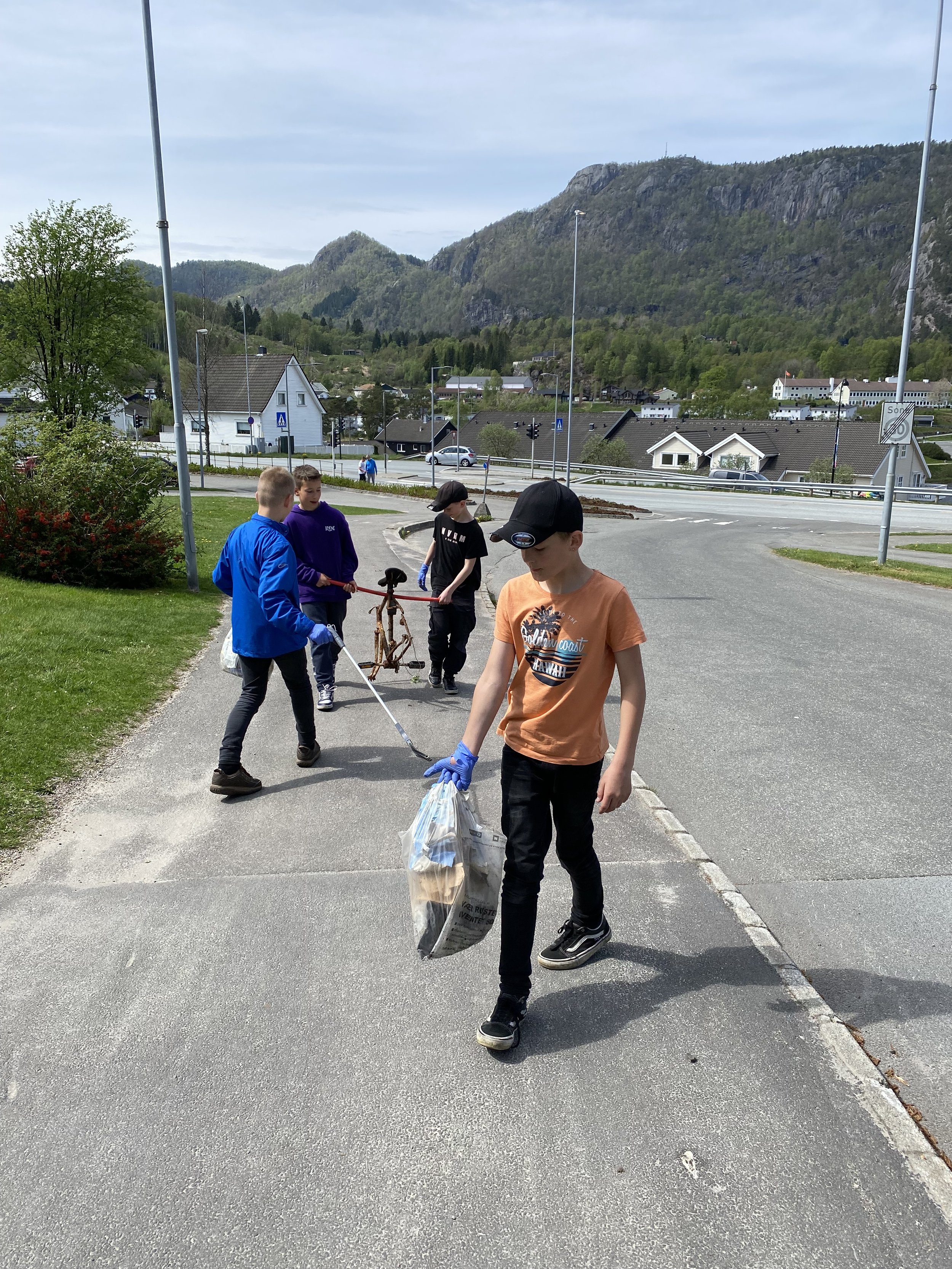
Aside from learning about water, the visits to the local stream taught the students about local biodiversity. Students registered small animals, small fish and small insects, and mapped which species lived where, all with the help of local fishing and hunting experts from the community. And since they were already there, why not clear rubbish from the stream and its surroundings, to help protect the ecosystem and the species they had encountered?
But in order to learn about the interconnectedness of nature, the students had to move away from the local stream to a larger scale. Therefore, they studied the salmon’s life cycle and how the species move up from the sea to rivers such as the Helldalsbekken to hatch their eggs. This example helped them gain an understanding of how local phenomena affect life and ecosystems further away. They learned that the small stream in their outdoor area was connected to much larger water bodies, and that it is part of the global water cycle.
Through this Alcoa W5 project, the students learned about the vulnerability and interconnectedness of nature, and the importance of taking care of life in the Helldalsbekken stream. By exploring their local environment, students of Liknes Primary School discovered that the small stream outside their school is part of a bigger picture and that life in the stream is crucial for life in the larger rivers and in the sea.
The Alcoa W5 project of Liknes Primary School supports the following SDGs:
Expanding our Pollinator Garden!
John H Castle Elementary School, USA
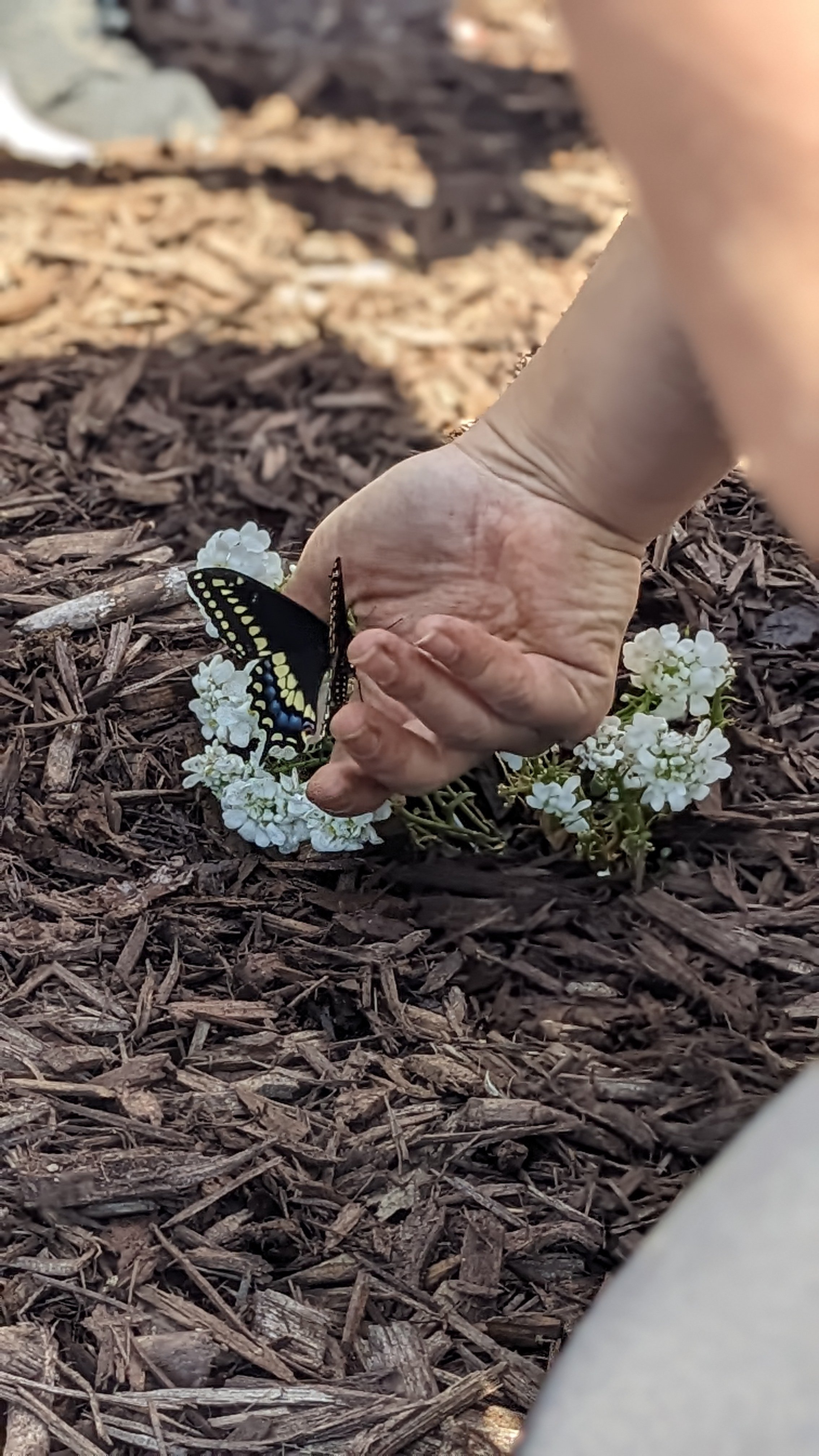
As a continuation from last year’s Alcoa W5 project, the new Green Team at John H Castle Elementary School (Indiana, United States) expanded their courtyard garden and planted many more native plant species on their school grounds to enhance local biodiversity.
At the beginning of the school year, a Green Team was established with 4th grade students. Their role this year would be to carry on with the expansion of the school’s courtyard garden and enhance biodiversity on the school grounds.
Throughout the year, the project taught students about gardening, helping them gain new skills. The students also gained knowledge on the life cycle of plants and insects, as they watched plants grow, and insects thrive in their garden. They also learned about the nuisance that invasive species can cause to the environment, and why native plants are important for local ecosystems and biodiversity.
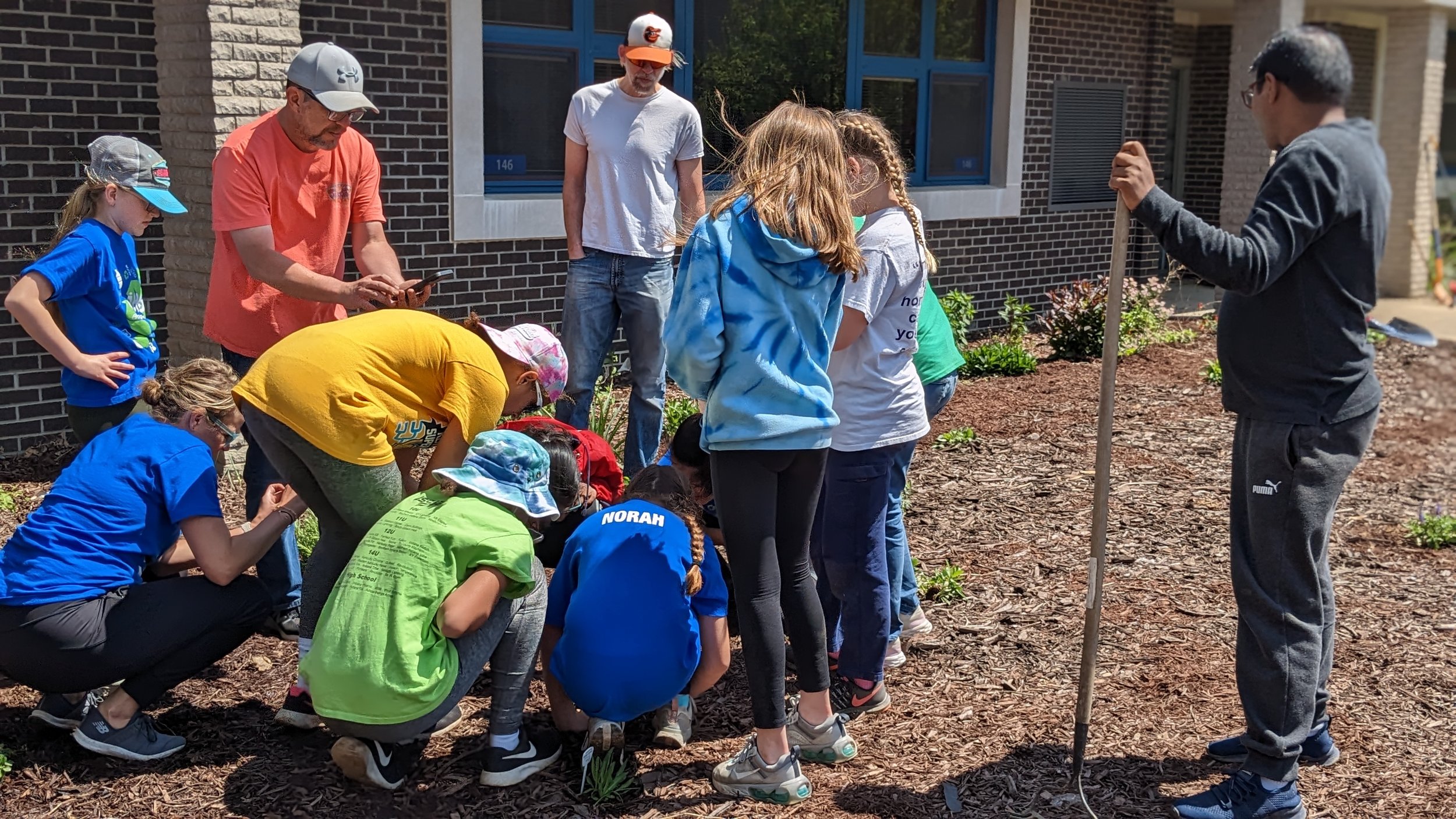
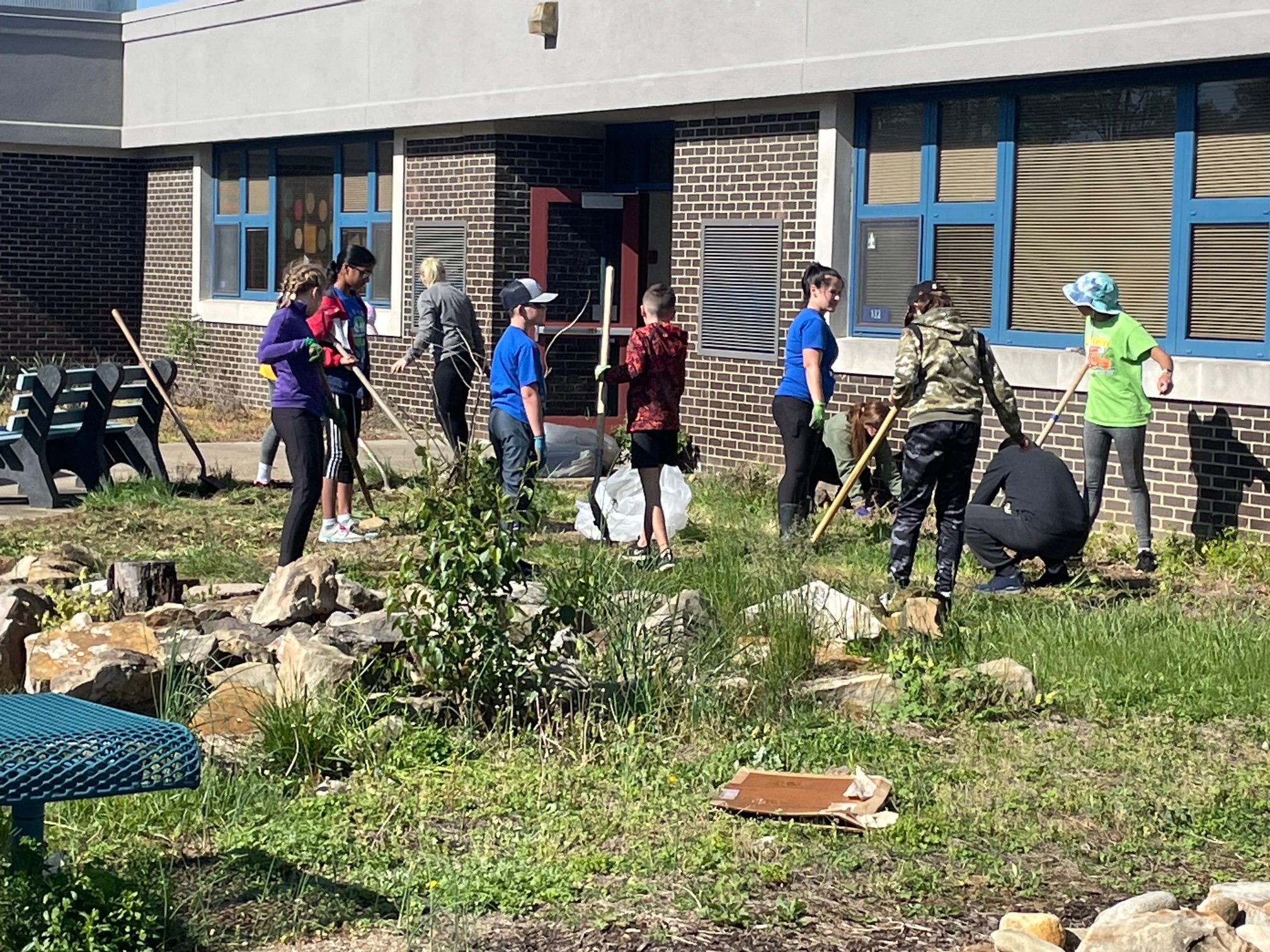
At the end of the year, an action day was held during which the courtyard garden was expanded, and the students got to apply the gardening skills they had acquired during the year. In total, more than 20 students and their families helped on the action day to tear out the invasive species, expand the garden size by 50 square feet (4.65 m2) and plant 10 new native plant species in the school courtyard!
“This year was amazing. We actually got to plant and see such a huge transformation to the garden. There are so many beautiful plants coming back from last year and we just planted so many more today.”- Student at John H Castle Elementary School
The hard work and dedication of the students – who worked in all types of weather – allowed them to create a courtyard full of biodiversity, in which they can now watch, experience and learn about the life cycle of native plants and insects. This project has also helped implement outdoor education at John H Castle Elementary School, as the tranquil garden will now often be used as a classroom for hands-on learning. But even more importantly, this project ensured the protection and enhancement of local biodiversity, by restoring native plant species that are beneficial to local insects in the courtyard.
The Alcoa W5 project of John H Castle Elementary School supports the following SDGs:
Turning Food, Farming, and Sustainability into Reality!
Environmental Charter High School, USA
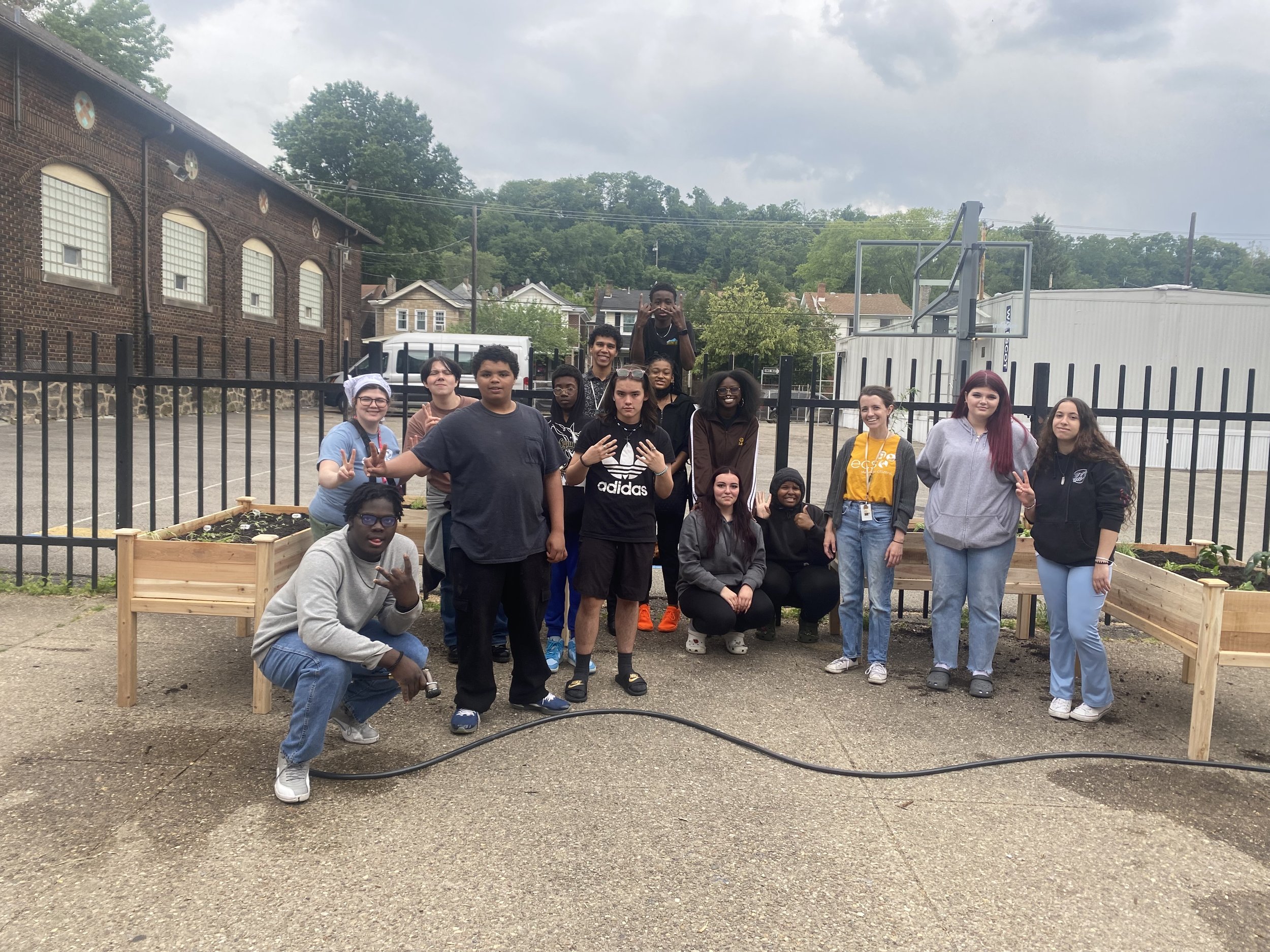
When students in the Food, Farming and Sustainability class at Environmental Charter High School found that they didn’t have access to land where they could put their ideas into practice, they decided to do something about it.
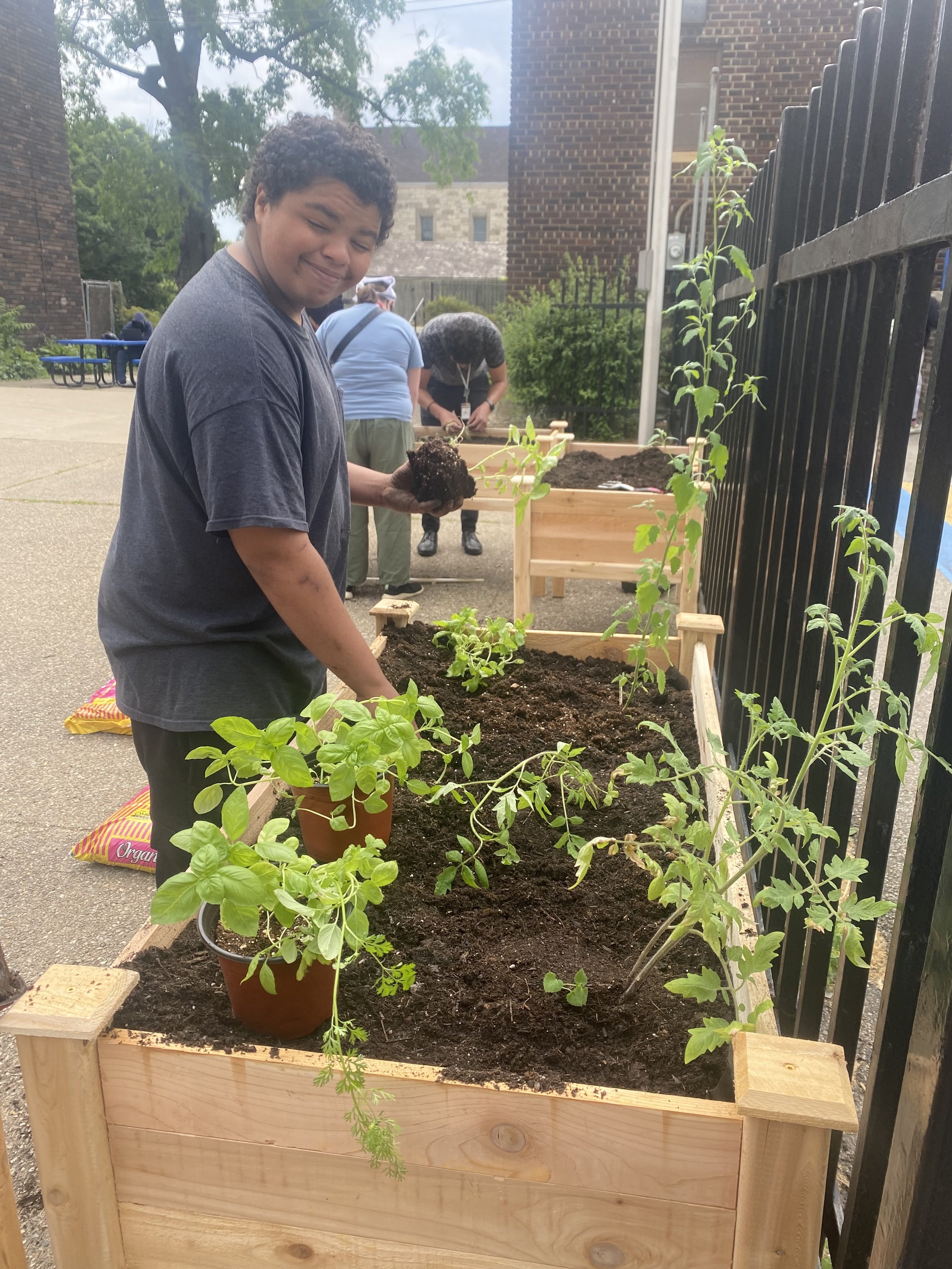
Environmental Charter High School (ECHS) is an urban public high school serving low-income students in Pittsburgh, USA. Finding inspiration in their Food, Farming and Sustainability class, a group of students decided to create a school garden to put the ideas they were learning about into action. What started as a discussion around access to food, health and education, led to the creation of a green space that will be used to not only support learning around nutrition and food sources, but also promote outdoor education and beautify the school grounds and surrounding community.
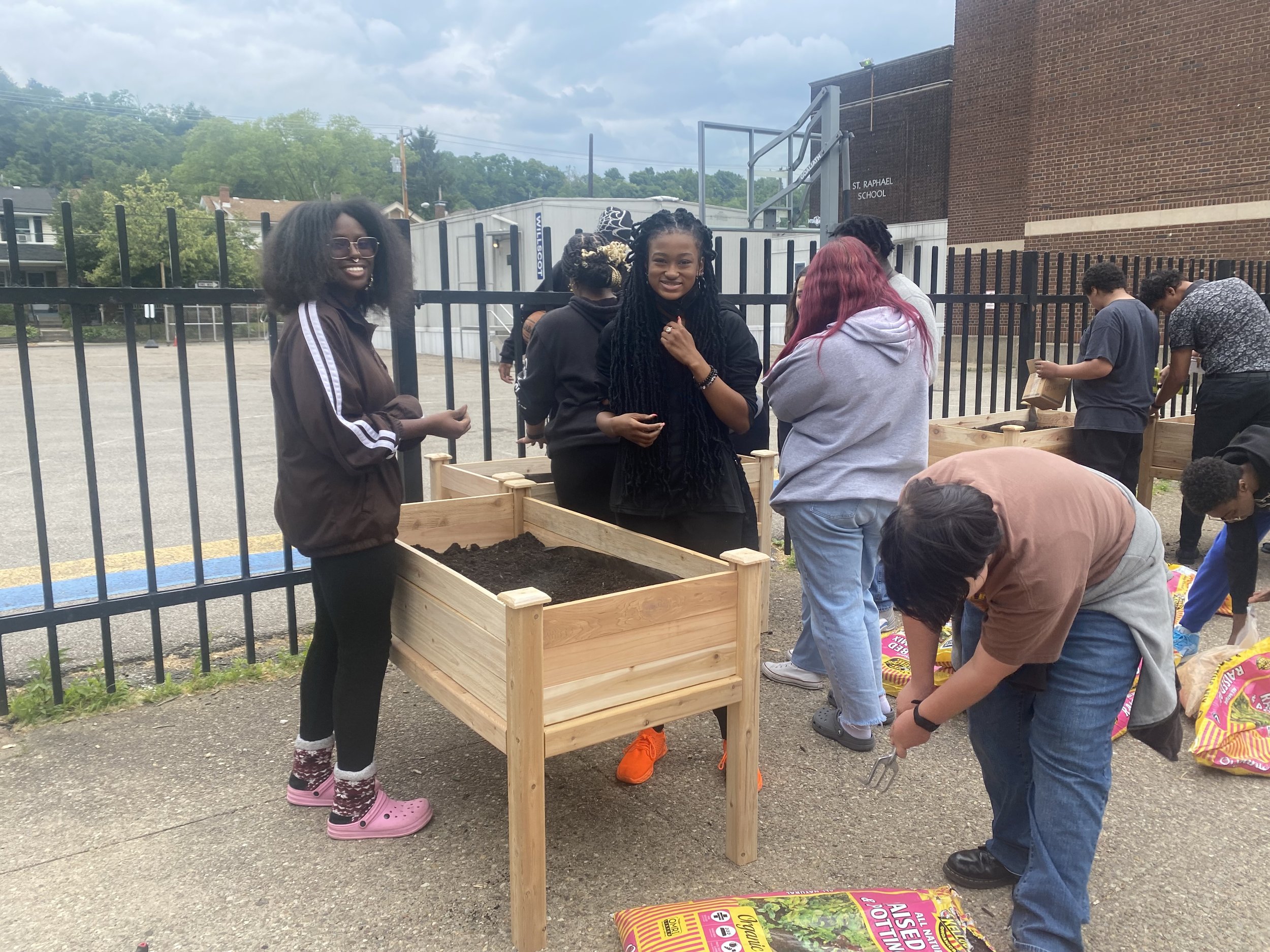
Through this Alcoa W5 project, 13 ECHS students began by working together to survey and evaluate possible garden sites near their school, developing a design and materials that could be easily transported to a new school site in the future, as the current school space is rented from a church. They brainstormed garden layouts and plans, sourced materials to build their garden, and grew plants from seed. The result: four beautiful raised garden beds created and built by the students with the support of their teachers and school community. The raised beds are handicap accessible and available for the entire school or about 150 ECHS students to engage in outdoor learning. The students even established a garden club and watering and maintenance plan to ensure continued care of the gardens.
"Getting to work on a collective community project that everyone at our school will be able to enjoy and view was an amazing opportunity for our students and staff. Students were able to work together to build something tangible that will be reusable year after year!" - Donovan Brown, Teacher
This Alcoa W5 project was an opportunity for students to directly engage in hands-on, outdoor learning, creating a space for students who may normally not be heard to take on leadership roles. As a result, students gained practical garden planning and management skills that they’ll be able to draw from throughout their lives. Growing one’s own food, which had previously only been discussed in hypothetical terms in their Food, Farming and Sustainability class, became a reality for the students.
The Alcoa W5 project of Environmental Charter High School supports the following SDGs:
The Right Path to Recycling!
Castle North Middle School, USA
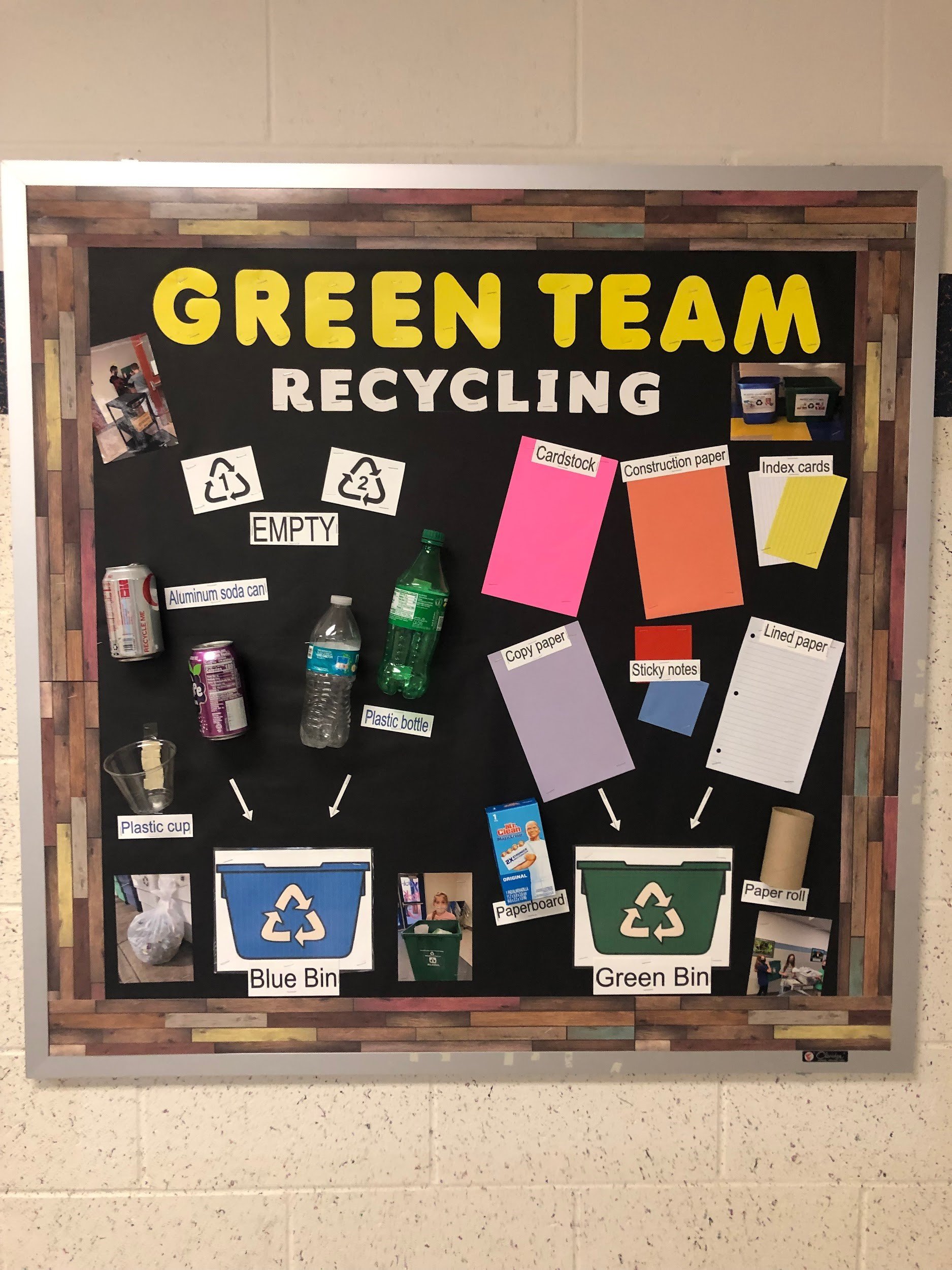
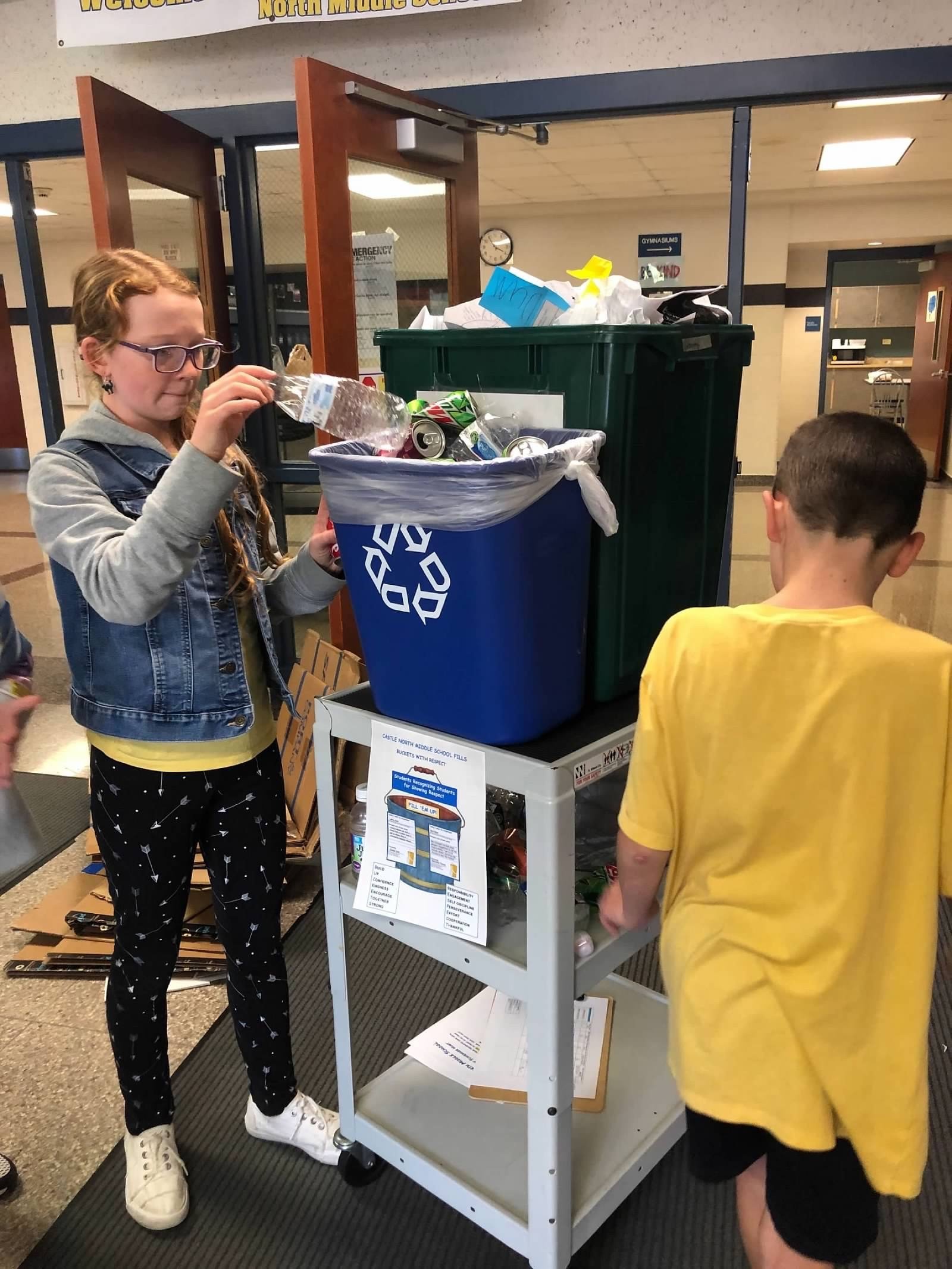
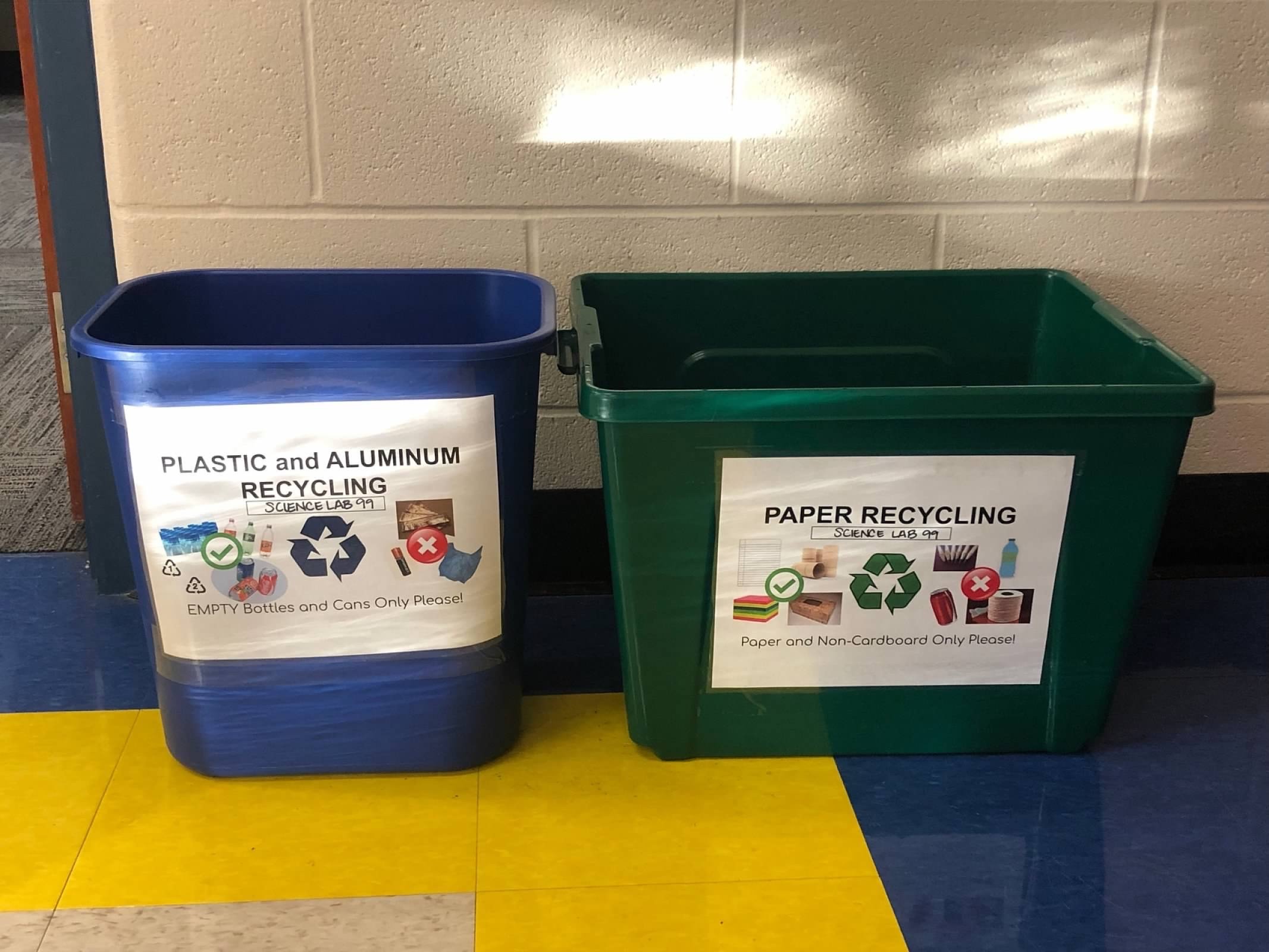
In rural Indiana, Castle North Middle School’s Green Team noticed that waste items were being placed in the wrong recycling bins and decided to address this issue throughout the school and local community. Their overarching goal was to ensure efficient recycling to reduce their impact on landfills and to use fewer natural resources.
Although recycling had been a norm for a long time at Castle North Middle School, the Green Team and their two teachers found that students and teachers did not fully understand the recycling process, often misplacing waste in wrong bins. This led to some challenges, as the Green Team had to spend time during their meetings going through the bins to re-sort misplaced items.
Therefore, the Castle North Middle School Green Team decided to refresh their school’s understanding of recycling. With a bit of creativity, the Green Team made posters to hang up around the school, as well as a recycling bulletin board, to show their peers what can and cannot be recycled. They created awareness of the issue during morning announcements and shared informative presentations with other classes and teachers, to make sure that everyone at school understood the correct way to sort their waste and the importance of doing so.
And their efforts paid off! Since the beginning of the school year, they managed to recycle almost 5000 plastic bottles, and 2000 aluminium cans, as well as 280 full bins of paper.
“We believe that understanding the importance of recycling is beneficial for everyone! We have observed less trash leaving the school in the dumpster. Every time we recycle, we are surprised by how much is being recycled.” – Kara Grooms, teacher.
In addition to resetting their school on the right recycling path, the Green Team organised a Community Action Day in April! Students, parents, teachers, and other local helpers picked up over 600 pieces of trash around the school and collected a large number of aluminum cans which were then recycled by Alcoa. They also used some of the day working in the school’s garden rebuilding flower beds, giving a boost to local biodiversity.
The Alcoa W5 project of Castle North Middle School supports the following SDGs:
Energy Efficiency in School and Beyond
Jefferson Elementary School, USA
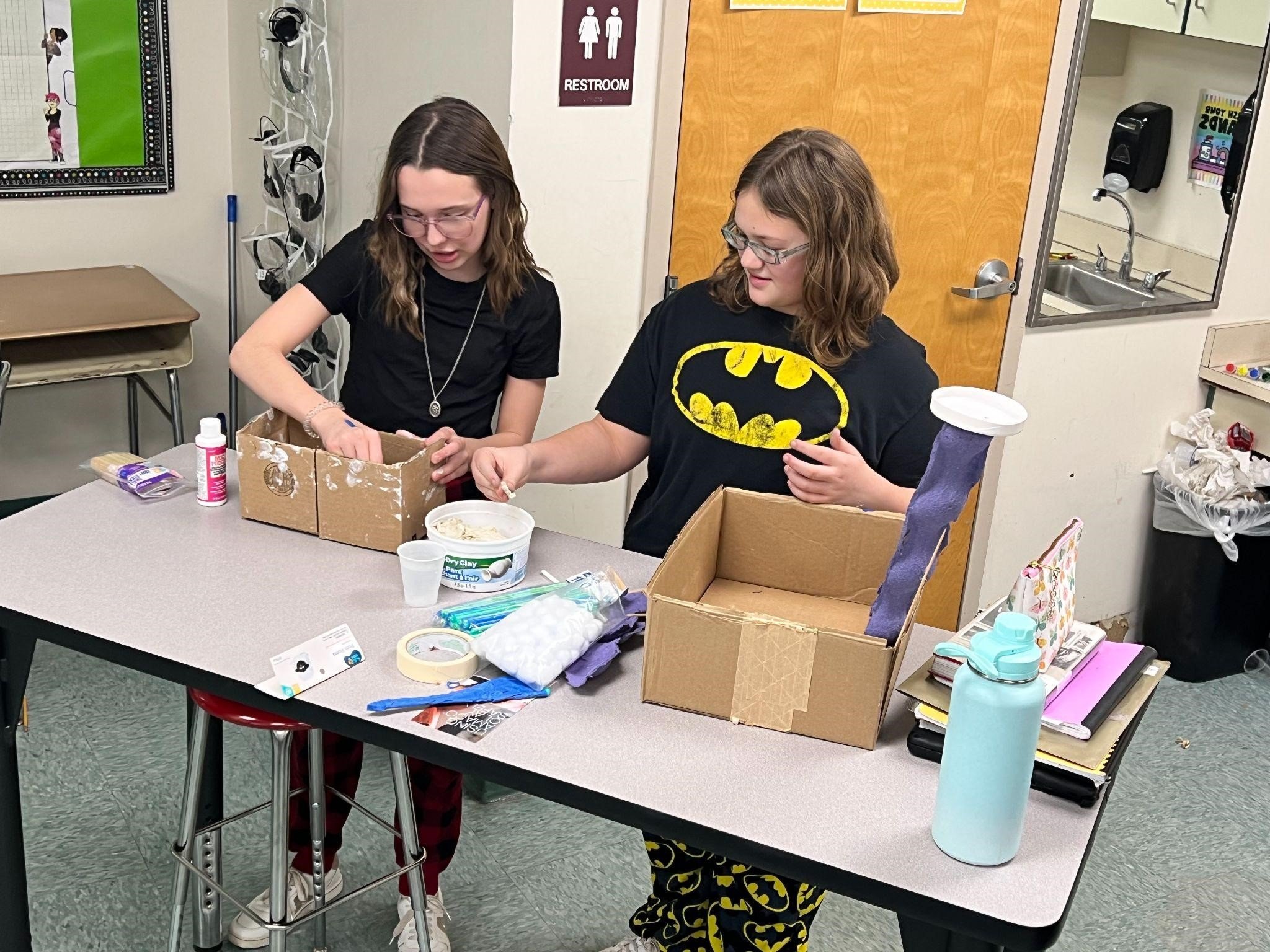
In the rural north of the state of New York, Jefferson Elementary School reduced their impact on the environment through two W5 themes, namely Watts and Warming. Students undertook a schoolwide Energy Patrol contest to save energy and put their creative minds to work by designing real-world solutions to greenhouse gas emissions!
With the goal of reducing their school's energy consumption, a group of students first conducted a schoolwide energy audit to determine the best course of action. Starting in their own classroom, the students looked at lights, heating, ventilation, air conditioning, and other electric appliances to establish their energy usage and efficiency. Using a light meter tool, they determined the “just right” lighting following the recommendations of the Illuminating Engineering Society. Finding this “just right” lighting was possible since all the school lights were previously switched to LED, and all had a dimmer switch. This “just right” lighting formed a standard for all lighting in the school's classrooms, therefore making it easier to assess how energy efficient the rest of the school was.
Once this baseline was defined and communicated with the rest of Jefferson Elementary, the group of students organised a two-week Energy Patrol Contest! During these two weeks, the Energy Patrol Team designed a grade level and went around the school three times a week to assess whether classrooms were meeting the new energy standards. The Energy Patrol Team would look for different energy efficiency indicators, for which each classroom would get points. These indicators included whether the lights were at the earlier established “just right” lighting, whether windows and doors were closed to keep heat in, and whether appliances were off or on sleep mode. At the end of the two weeks, one classroom was named the most energy efficient classroom, and won the contest!
“The students have learned more about their own environmental impact and simple ways to reduce it. They understand how they can make a difference.” - Paige Arcet, Teacher
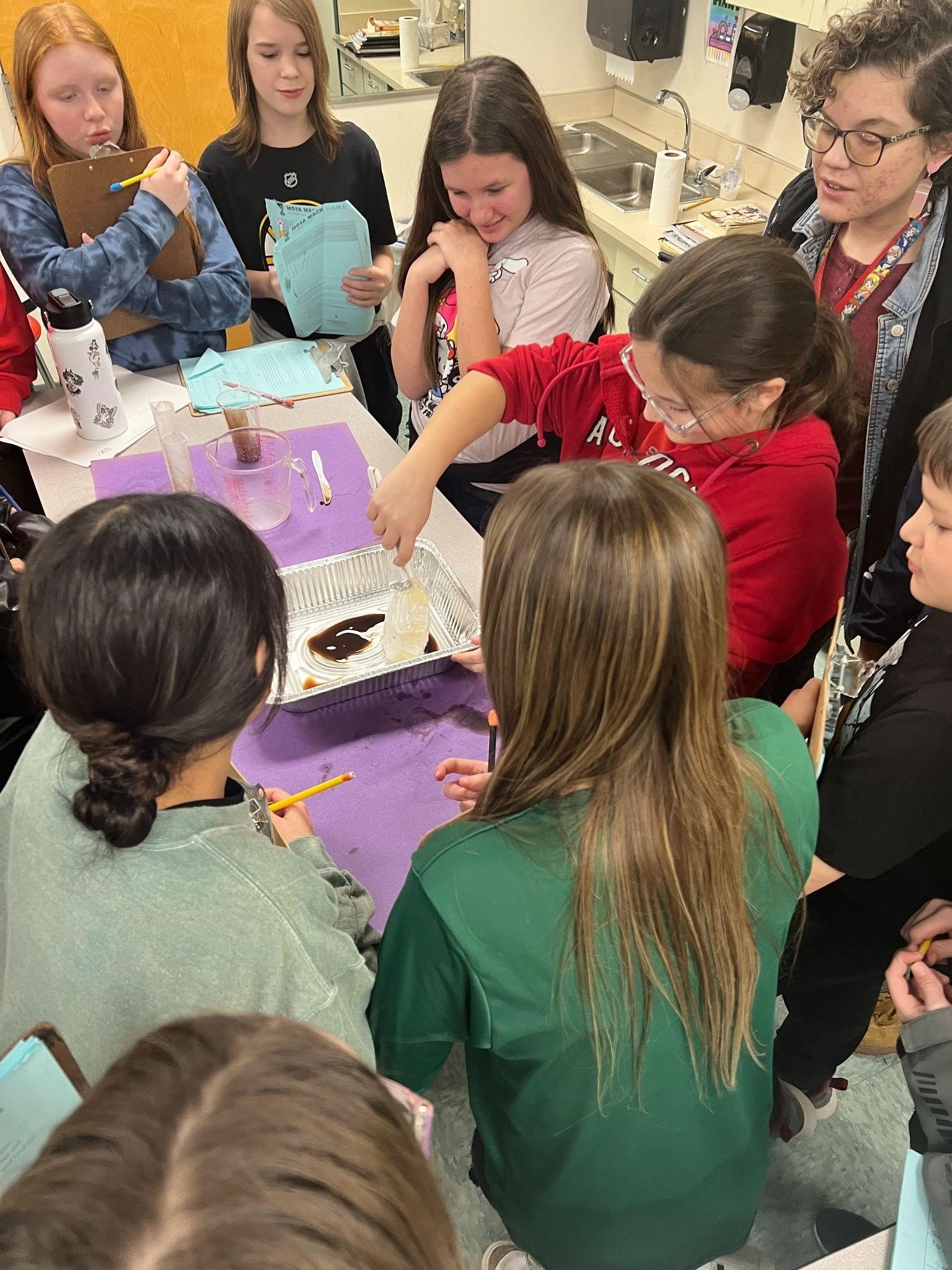
Students also used the Lehigh University Carbon Calculator and discussed ways to reduce their own carbon footprints based on their findings. The results surprised them, especially regarding their transportation and food impacts. Reflecting on those findings, the class came up with creative ideas to reduce their carbon output and were encouraged to implement them in their everyday lives.
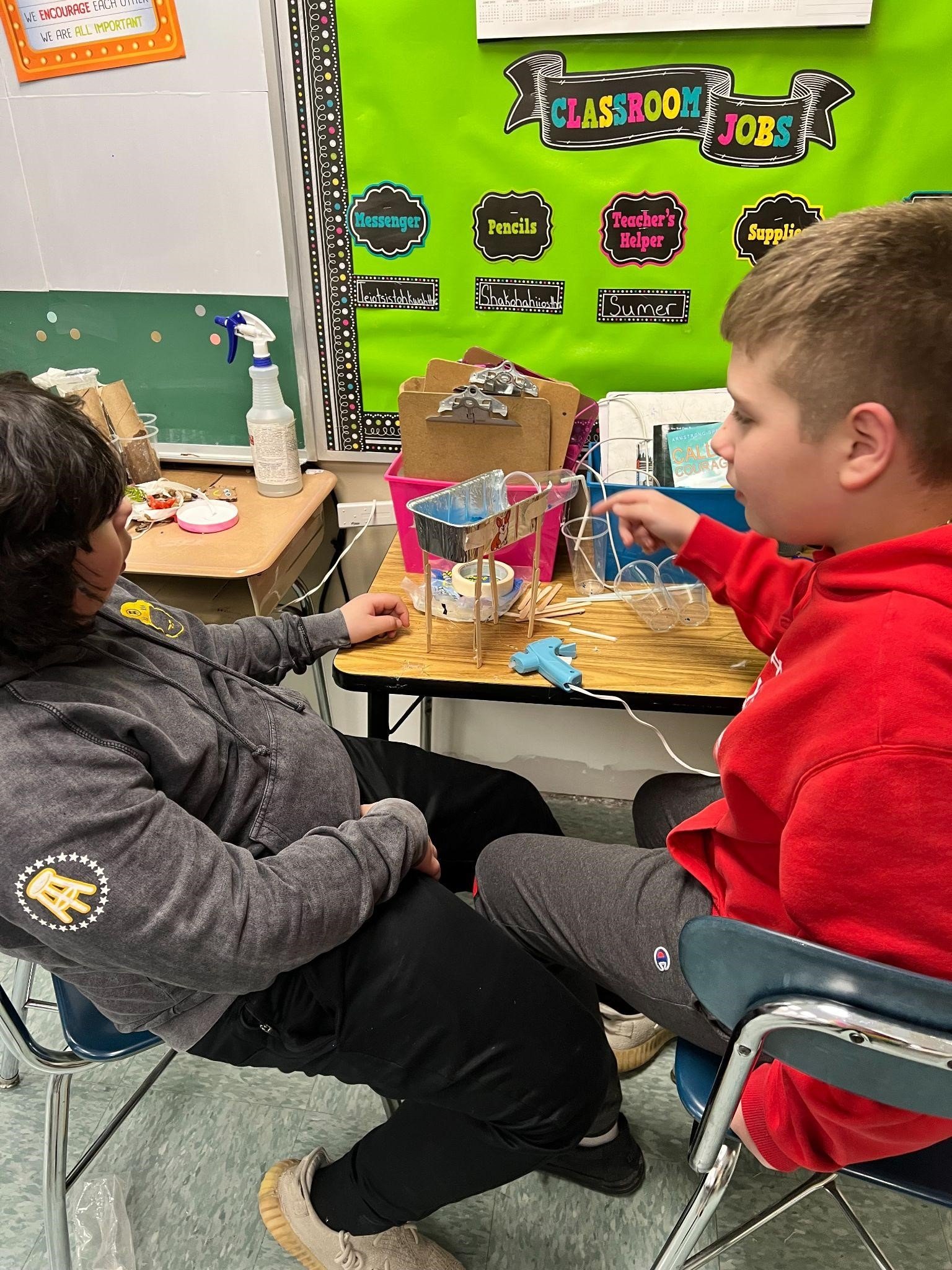
Using the U.S. Environmental Protection Agency website, students also learned about different sectors, such as agriculture, industry, and transportation, and their respective greenhouse gas emissions. Through group discussions, they came up with creative solutions to reduce CO2 emissions in each of the sectors. Their solutions varied greatly: while some groups decided to improve existing designs to decrease emissions, others designed brand-new prototypes! Their teacher encouraged them to be creative, but also realistic, taking different factors into account, such as financial constraints of their inventions. Students pitched their designs by presenting their findings and research facts, explaining how their designs reduced emissions, and arguing why the public should adopt their innovations.
All in all, through their Alcoa W5 project, students at Jefferson Elementary School not only learned about electricity efficiency and greenhouse gas emissions, but also discovered solutions to real-world environmental issues.
The Alcoa W5 project of Jefferson Elementary School supports the following SDGs:
Birdboxes for Biodiversity
Norlandia Solstua Preschool, Norway
How a Group of Preschoolers in Norway Became Bird-Watchers
In the rural municipality of Vanse in the south of Norway, sits the Norlandia Solstua Preschool, where children are seen as project managers, and nature education through experience and practice is highly valued. With spring coming, flowers starting to blossom, and birds about to lay their eggs, children at this small pre-school decided to take action to not only protect but nurture biological diversity in their school’s outdoor areas.
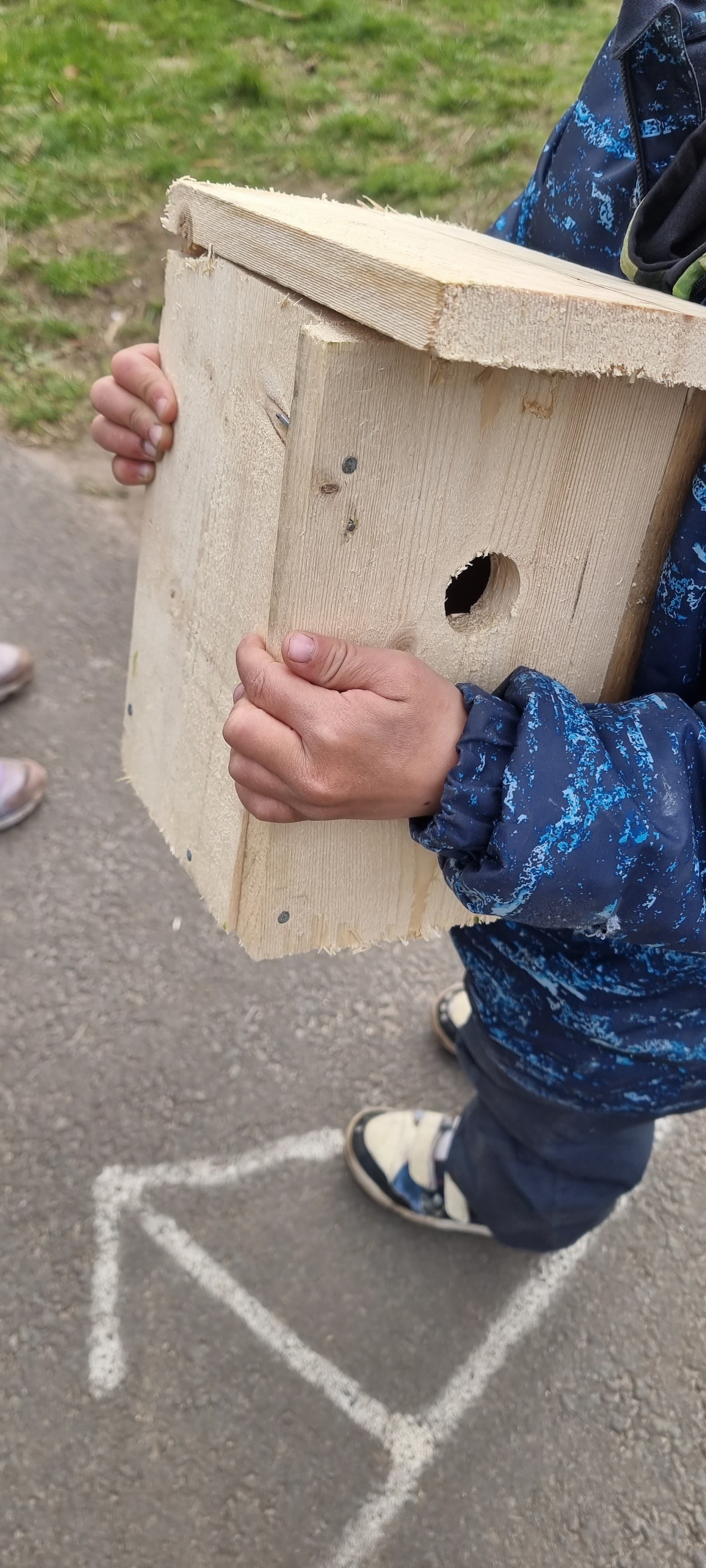
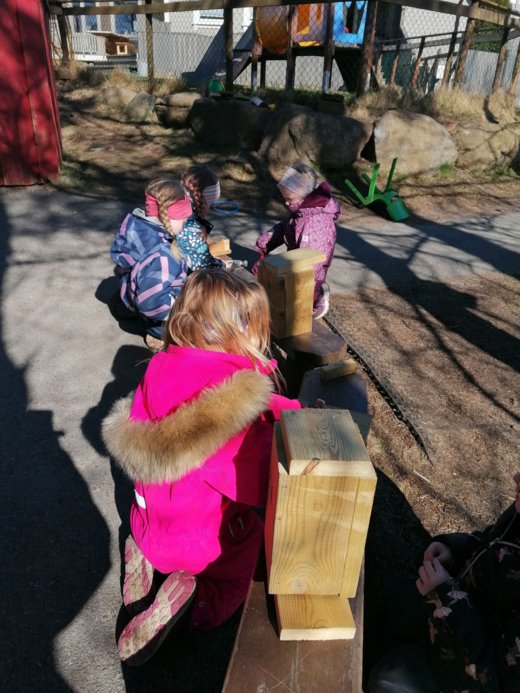
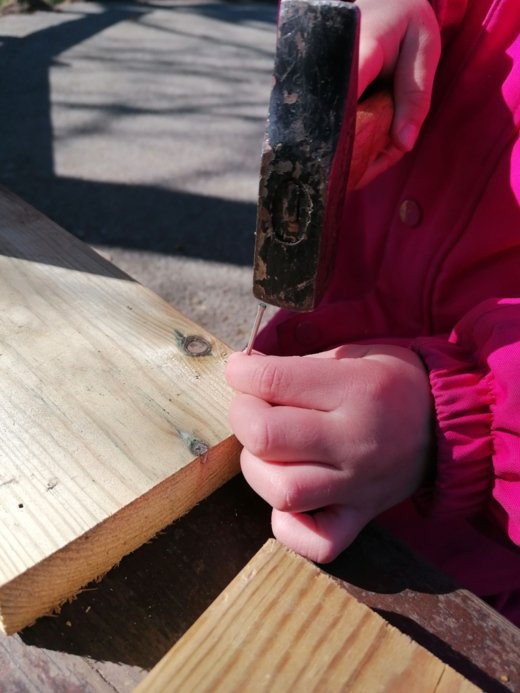
To do so, the preschool realized they would need new bird boxes to help the smaller native bird species thrive. It only made sense to empower the “juniorgang” (the oldest pre-school children between 5-6 years old) to take on the task, as part of their Alcoa W5 project. With the help of Byggfag, a local company that donated some of the necessary materials for the project, the children were able to plan, design and build two bird boxes!
By planning and designing the boxes, the students learned about different bird species in their immediate environment. They also learned that birds make nests, lay eggs, incubate and hatch, and raise their young. Just as important as their knowledge of local biodiversity and biology were the practical skills the students gained, such as planning, designing, and constructing, as well as carpentry. Discussions and continuous reflection during the process were also important as it allowed the children to rethink their design (making sure to include an entrance for the bird to come in and out of the boxes)!
One of the teachers shared that:
“The children gained experience with the use of tools, and we had nice conversations during the project, from planning to doing. The children reflected on how they were going to solve the task of building the bird boxes and why it is important to build houses for the small birds in the neighborhood."
The hope is that small bird species will nest in the boxes, lay and hatch eggs in them, and raise young birds around the preschool area. This will allow the juniorgang to see and experience the birds in their natural habitat in their school’s backyard, as well as to learn about birds and their natural processes this spring and for years to come. The impact of the bird boxes doesn’t end there though, since the other students at Norlandia Solstua and future generations of children will be able to see the birds fly around their school’s outdoor area and learn about their local environment by seeing and experiencing it.
All in all, students were left with valuable knowledge about the importance of taking care of the environment and how to preserve biodiversity by allowing it to thrive in their school’s yard. Through this project-based Alcoa W5 project, students of Norlandia Solstua Preschool have learned that if we care for it, nature can thrive as close by as our own school grounds.
The Alcoa W5 project of Norlandia Solstua Preschool supports the following SDGs:
Recycling takes more than buying bins!
Tecumseh High School, USA
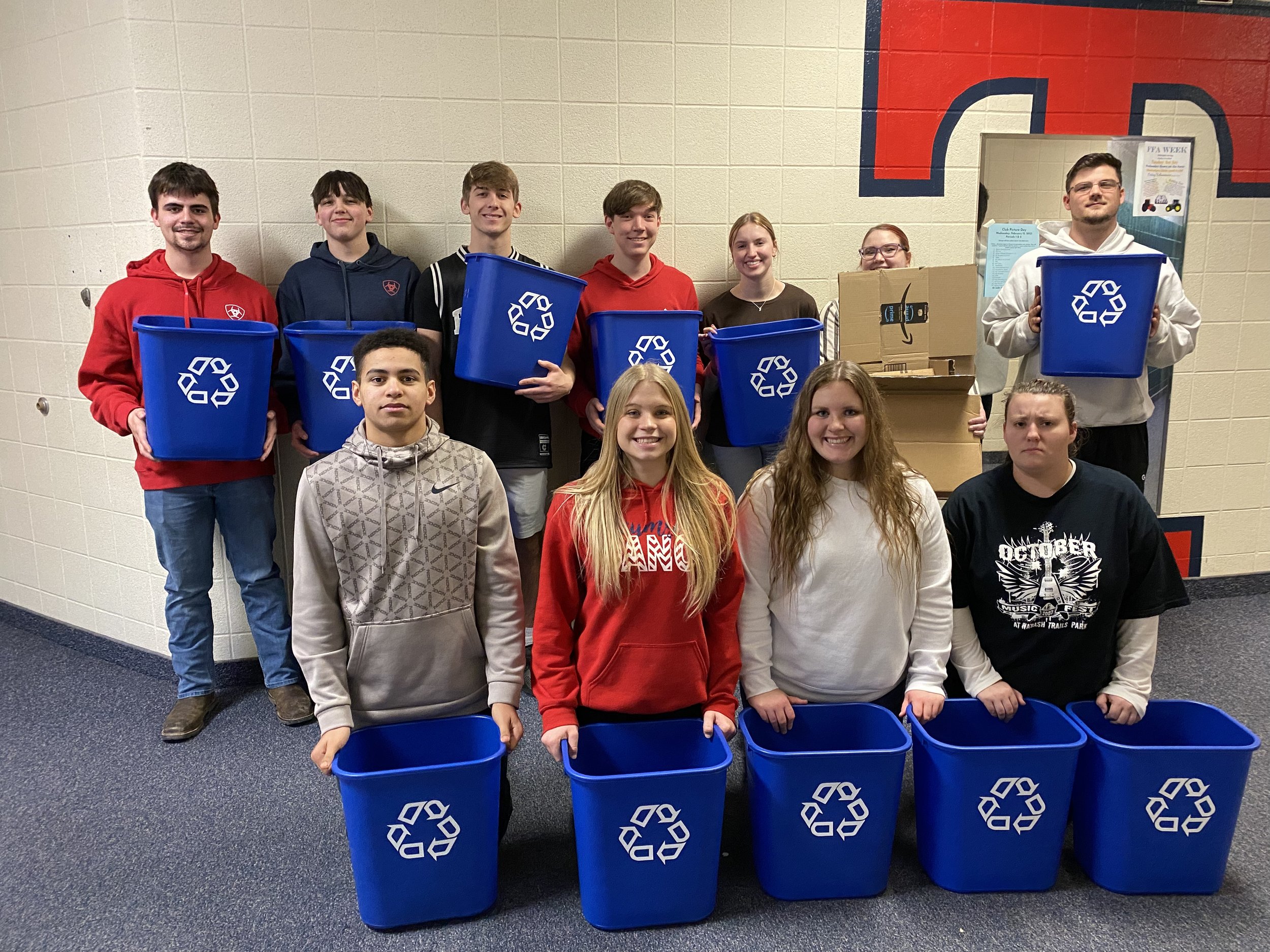
At Tecumseh High School in rural Indiana, a group of 15 students and their environmental class teacher set up a goal for their school: to reduce its waste impact on landfills as much as possible. How? By doing research, planning, collaborating, and creating awareness!
After having recycled paper in the school for years, Tecumseh High School wanted to take their efforts a step further. Through the W5 project and with the support from the Alcoa Foundation, they were able to start recycling metal, plastics and cardboard throughout the whole school.
Before implementing this new project, the students did research on waste and its effect on the environment. The information they gathered not only helped them gain a better understanding of the importance of separating waste, but also increased the awareness of everyone at the school, as informative posters were created and disseminated. Motivated by the alarming numbers they found during their research, the students started the process of implementing the schoolwide recycling plan.
First, the environmental class contacted nearby schools who they knew had elaborate recycling programmes. This helped them establish the different resources they would need and the organisational processes they would have to carry out. Then, local providers that could come to the school and pick up the recycled waste were contacted.
The head custodian helped pinpoint the activities that generated the most waste in the school, and accordingly plan where the bins should be located, and how often they should be emptied. The creation of this plan required great coordination with the cafeteria manager, and the school principal, as well as the head custodian.
“It’s amazing how much recycling has reduced the amount of trash in our dumpster. We should have started this years ago.” - Susan Smith, custodian
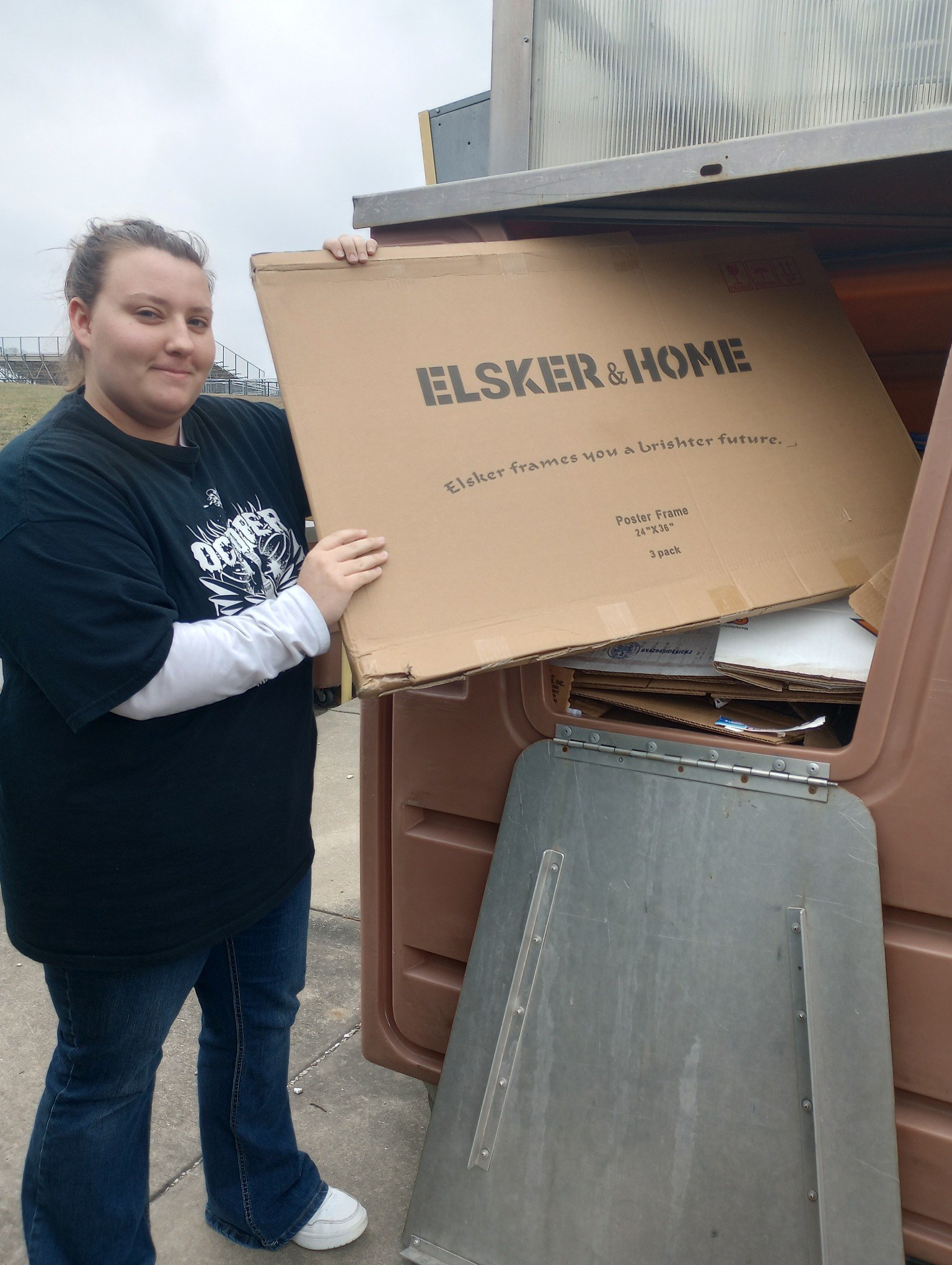
However, the team of students did not stop at the local district for their research and resources, but rather took their project a step further by contacting PepsiCo and asking them for their support. The positive effects of the projects were recognized, and they offered to provide the school with three large bins, to help them recycle plastic bottles in the school gym and cafeteria. Additional large bins were purchased and placed in hallways and classrooms, to make sure recycling did not stop at the doors of the cafeteria, and that everyone in the school could easily contribute to the schoolwide recycling.
The only thing left to do was to communicate the new recycling strategy with the rest of the school - students and staff. To do so, the environmental class created signs to put on the bins, as well as in the hallways and outside, to inform what waste should go in which bin. Together, Tecumseh High School kept 30 bags of plastic bottles away from the landfill in just a few months! They furthermore recycled two large bins of cardboard a week, resulting in the school dumpster for general waste only having to be emptied half as often as before the implementation of the programme.
But even more important is the change in attitude of a lot of students and staff towards recycling. By allowing this change of behaviour within the school, Tecumseh High School’s environmental class has empowered individuals to take action to reduce the whole community’s footprint on landfills.
“Even though we are a small school, we still have the ability to make a big difference in our community and world.” - Stella Hahn, senior
The Alcoa W5 project of Tecumseh High School supports the following SDGs:
Keeping Farsund Litter Free
Farsund Ungdomsskole, Norway
In Norway, Farsund Ungdomsskole has been participating in the Alcoa W5 project for years, and they keep raising the bar! Students at this secondary school have taken it upon themselves to increase awareness of the issues surrounding plastic waste in the ocean and find ways to deal with them.
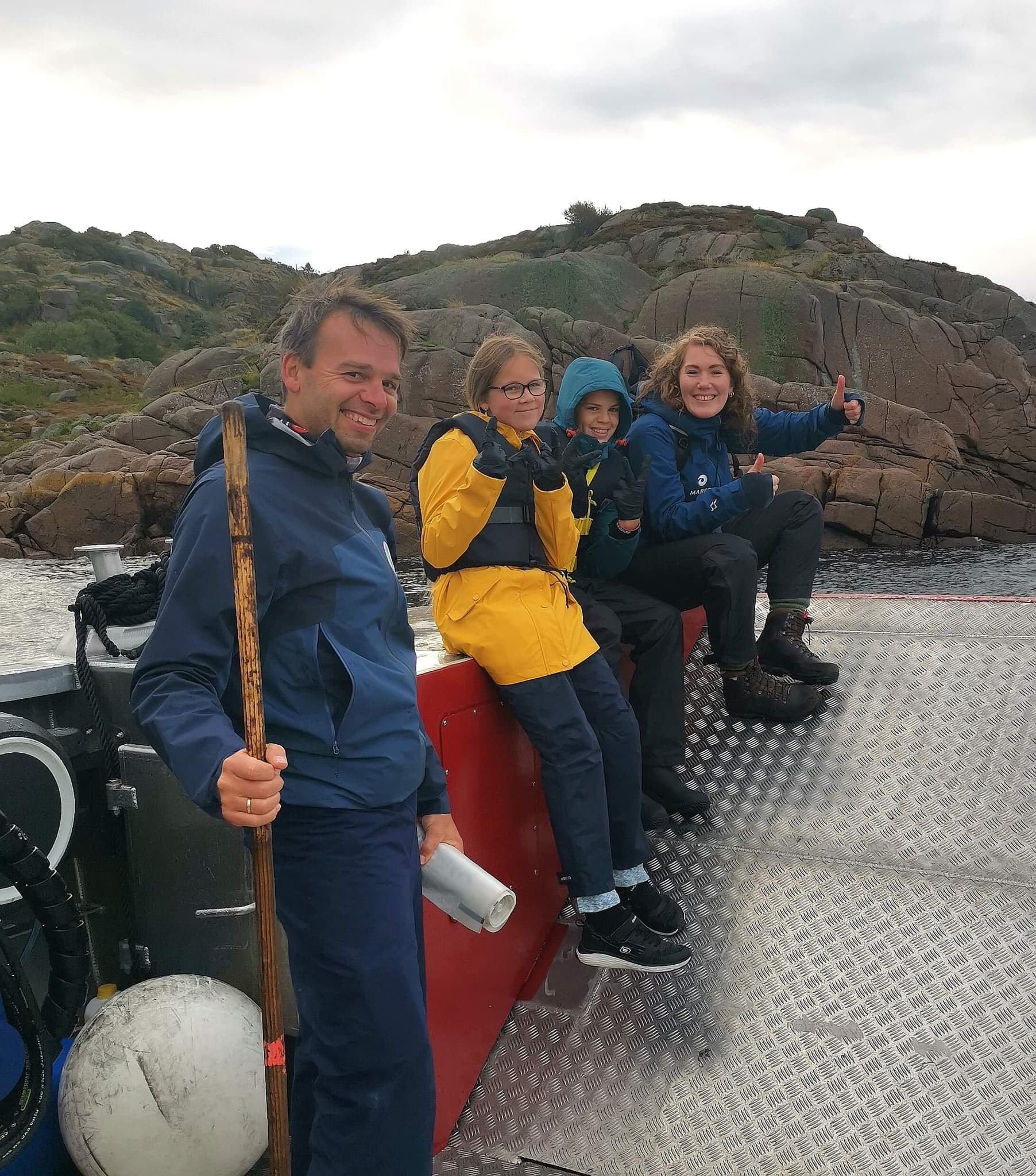
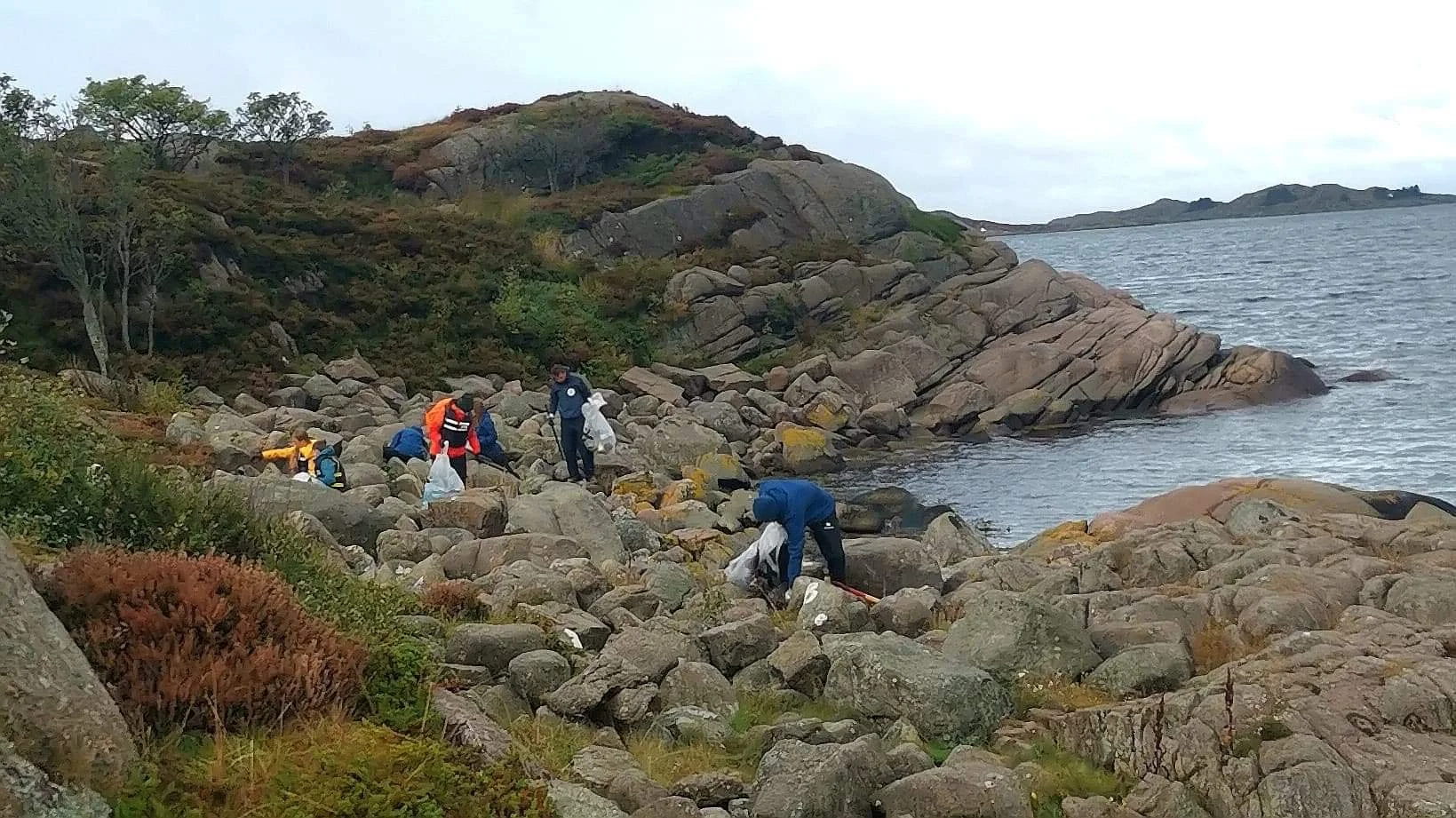
As part of their efforts to tackle marine pollution, students from Farsund Ungdomsskole’s Eco-Committee took action during last year’s Strandryddeuka, or ‘Beach Cleaning Week’. Accompanied by three ocean experts from MARFO (the Norwegian Centre against Marine Litter), five students travelled by boat to Spinfjord, an area of the sea just outside of Farsund, having heard that this area was a ‘hotspot’ for accumulated marine waste.
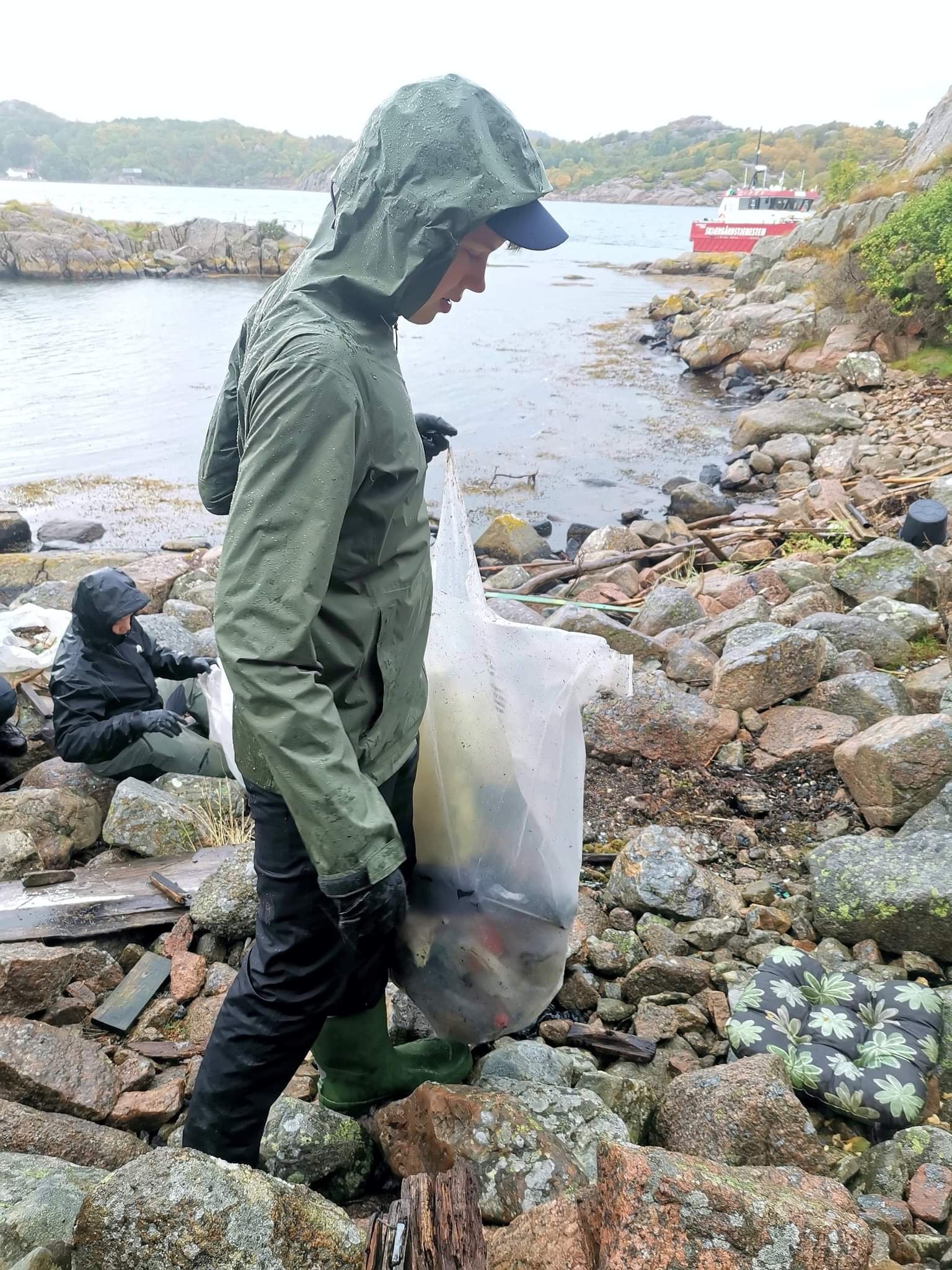
When they arrived at the first island, the students were shocked to find a large amount of plastic waste. The litter on the island’s beaches included large items such as life vests, ropes, and Styrofoam, many of which appeared to have been there for several years. Within a few hours, the students had collected 134kg of waste!
After collecting the litter on the first island, the students travelled to a second island. In contrast to the first, this island was littered with layers upon layers of small pieces of plastic. Despite this, the students worked hard and managed to pick up 70kg of plastic.
Reflecting on the experience, Jonas Ketil Bjorge, a 10th grade student, said,
“I found this activity very exciting, and the crew from the MARFO had a lot of knowledge. The amount of rubbish was shocking to find. We found a lot of garbage that was several years old, and many things that don’t belong in nature.”
Charlotte Lundekvam, a teacher at Farsund Ungdomsskole, noticed the impact this project had on the students:
“Being part of the Eco-Committee gave the students a chance to actively contribute. I noticed how proud they were about their involvement. Traveling into the archipelago and having a different school day outdoors had great value. Everyone was serious and put effort into the activity. The students got to talk to employees of MARFO, the Lista outdoor council, and the archipelago service, and they learnt what other people are doing for the environment. The students also shared their learnings with their classmates. I believe that such experiences can help shape their identity, fuel their commitment, and remind them of the importance of working together.“
Not only did the students from Farsund Ungdomsskole collect over 200kg of rubbish from the shores, contributing to a cleaner coastal zone, but they also learnt about the issues surrounding marine waste including the formation of ‘hotspots’, the production of microplastics, and the subsequent impact on marine life. The experience left the students wanting to encourage the whole community to care for their local area and motivate everyone to do their part in keeping their environment clear of plastic waste.
The Alcoa W5 project of Farsund Ungdomsskole supports the following SDGs:
School Work to Ground Work; raised garden bed construction
Nightengale Elementary School, USA
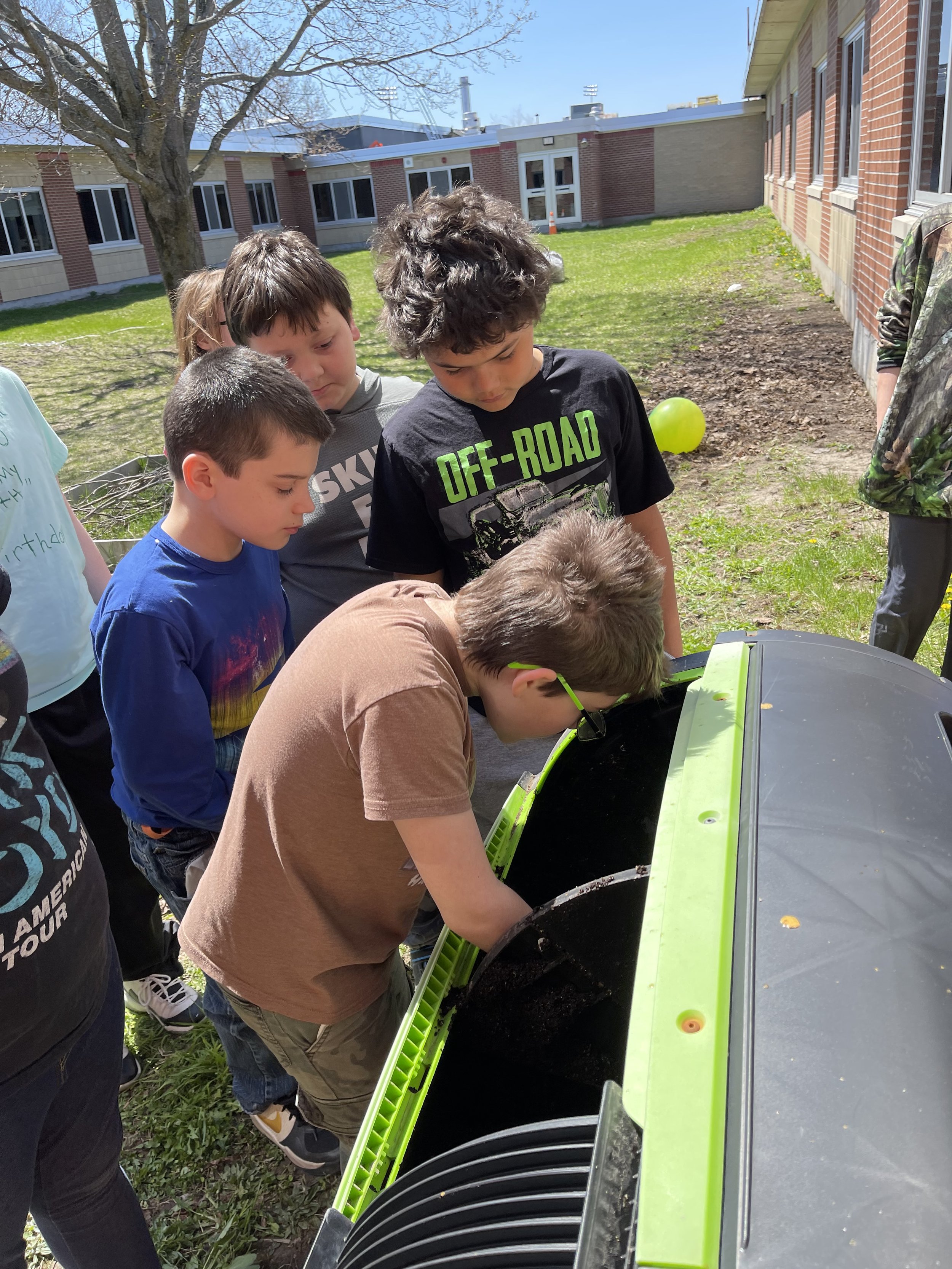
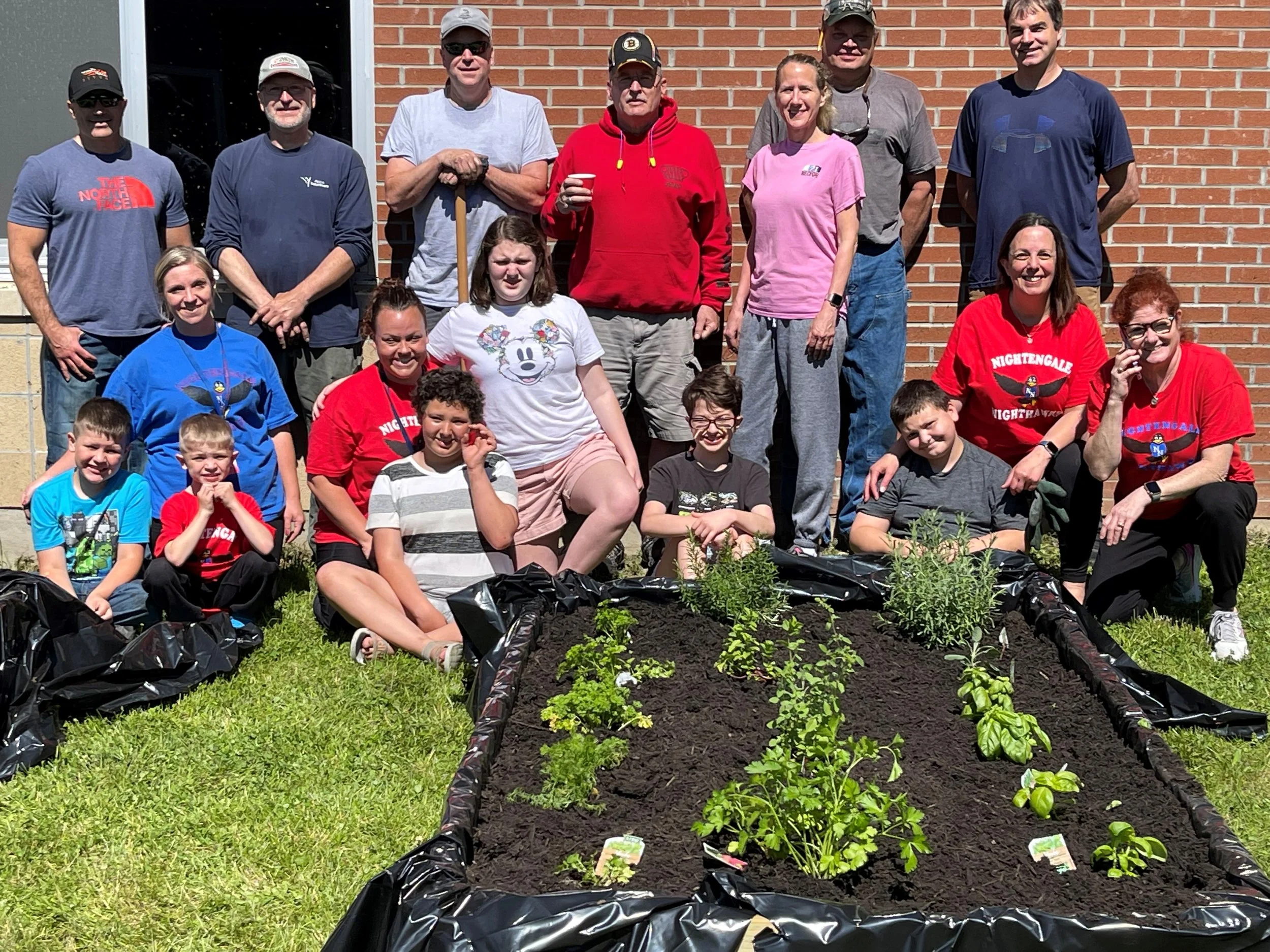
Through the Alcoa W5 project, Nightengale Elementary School in the U.S. wanted to learn about the benefits of composting and of eating home-grown food products!
First, students learned about plants, soil, composting, and everything that growing a garden entails. They talked about how eating vegetables is healthy and how growing their own can have many benefits! Students learned about the properties of soil, why it is important to plants, and the benefits of using compost. Students also learned how plants grow and what plants need to grow.
They then came up with blue prints of how they were going to construct garden beds in their school. Students went outside throughout the week to monitor where the sun hit the courtyard the most and would write down their observations. This helped them decide where they were going to place the planter boxes. They also used their math skills to measure and determine the appropriate lengths for the garden beds.
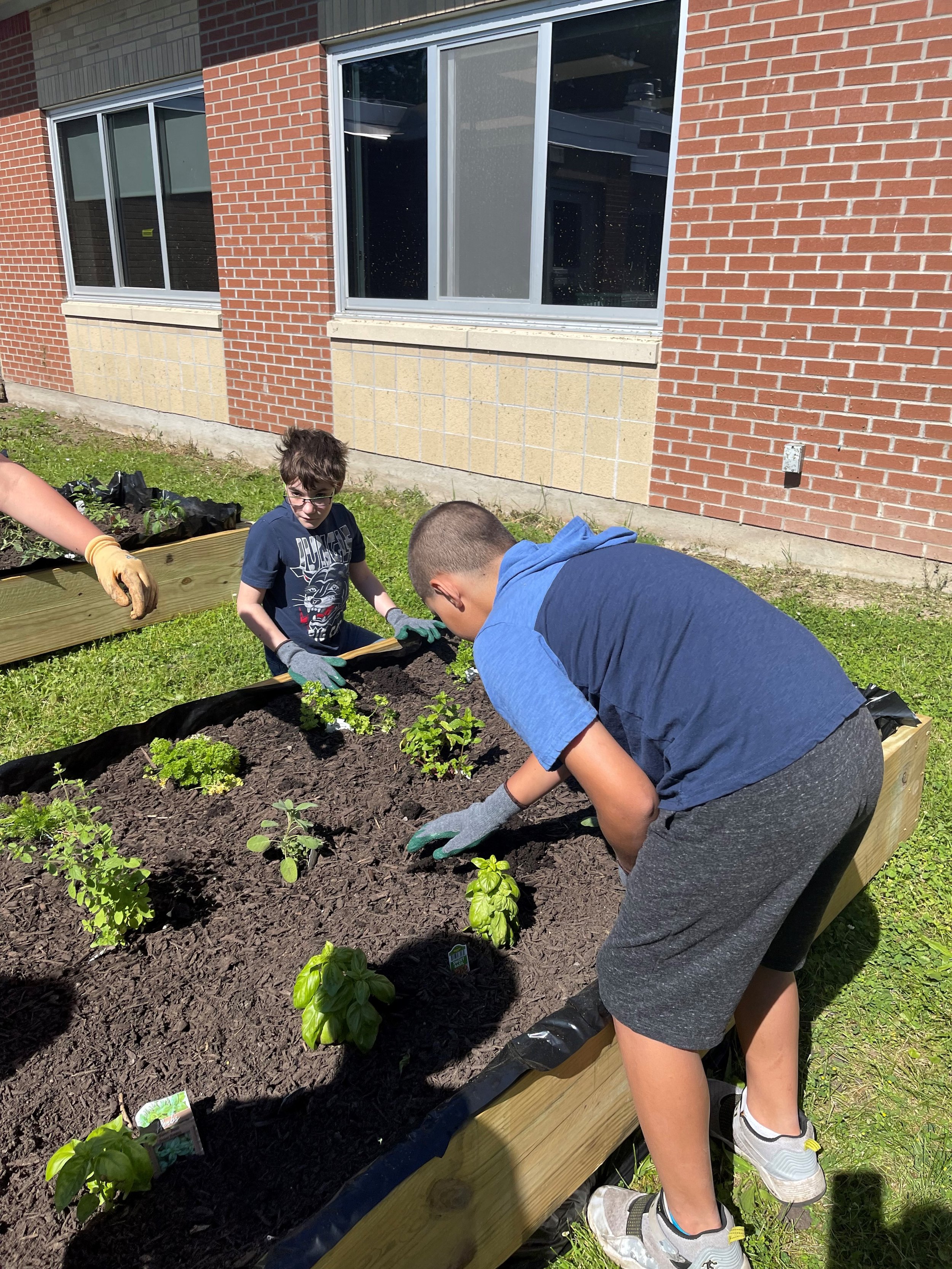
Meanwhile, they had compost going in a composter for most of the school year. Once the compost was ready to go, boards were cut to size, and all the soil was transported and readily available, a Community Action Day was organised. Friends, family, and five Alcoa workers came along and helped construct three planter boxes, filled the boxes with gardening soil, and then planted vegetable plants and herbs.
“I really liked doing this project because I learned a lot about gardening and how to make a garden. I am excited to see what plants we get from our garden.” -Dakota LaPradd (5th grade student in Mrs. Blanchard’s class)
The school is excited to continue their garden project! Next school year, they are planning to only buy seeds (instead of already grown plants) in order to follow the whole process from seed to plant.
The Alcoa W5 project of Nightengale Elementary School support the following SDGs: