PLAN’EAT Food Sustainability Education Toolbox
The PLAN’EAT open-source educational toolbox, licensed under creative commons is aimed at promoting healthy and sustainable food behaviours among learners by providing educators ready to use pedagogical resources that support knowledge sharing and learners’ engagement.
THE PLAN’EAT proJECT
PLAN’EAT is a Horizon Europe research project. It aimed to transform food systems and environments toward healthier and more sustainable diets. By studying the factors that influence eating habits and food choices, the project developed effective tools, strategies, and interventions that can be adapted to different context and population groups.
TOOLBOX USER GUIDE
The toolbox is intended to educators and teachers who wish to integrate food sustainability into their teaching, both inside and beyond the classroom. It encourages engagement with the wider school environment and local community through project-based learning activities and school-wide campaigns. The toolbox guide offers an overview of the resources available and supports users in getting started with food sustainability education.
Pedagogical resources
The winning Lesson Plans
submitted by Eco-Schools teachers
46 high-quality Lesson plan were received from 14 countries during the FEE Lesson Plan Competition 2025-2026, on the theme ‘Healthy People on a Healthy Planet’. While five of the 24 shortlisted lesson plans received awards, the remaining 19 received a special recognition. The five winning lesson plans which have been compiled in a booklet stood up for their outstanding creativity, strong connections to climate action and food sustainability, clearly defined learning objectives, and meaningful opportunities for learners engagement and real-world impact.
Discover the winning Lesson Plans by downloading the English booklet:
Lesson Plans include:
The Symphony of Nutrition: Listening to the Sound of the Food System - by Gülgün Kaynakçı, Türkiye
Super Food Hero Market - by Siti Noorazlin Binti Mohammad, Malaysia
Geometry for Good – Zero-Waste Origami Packaging - by Stephen Coates, Brunei
My daily fuel - by Maja Kalezič and Biljana Krivokapić, Montenegro
Healthy People on a Healthy Planet: Transforming Food Behaviours - by Olivera Lučić, Montenegro
Food Sustainability Curriculum Framework
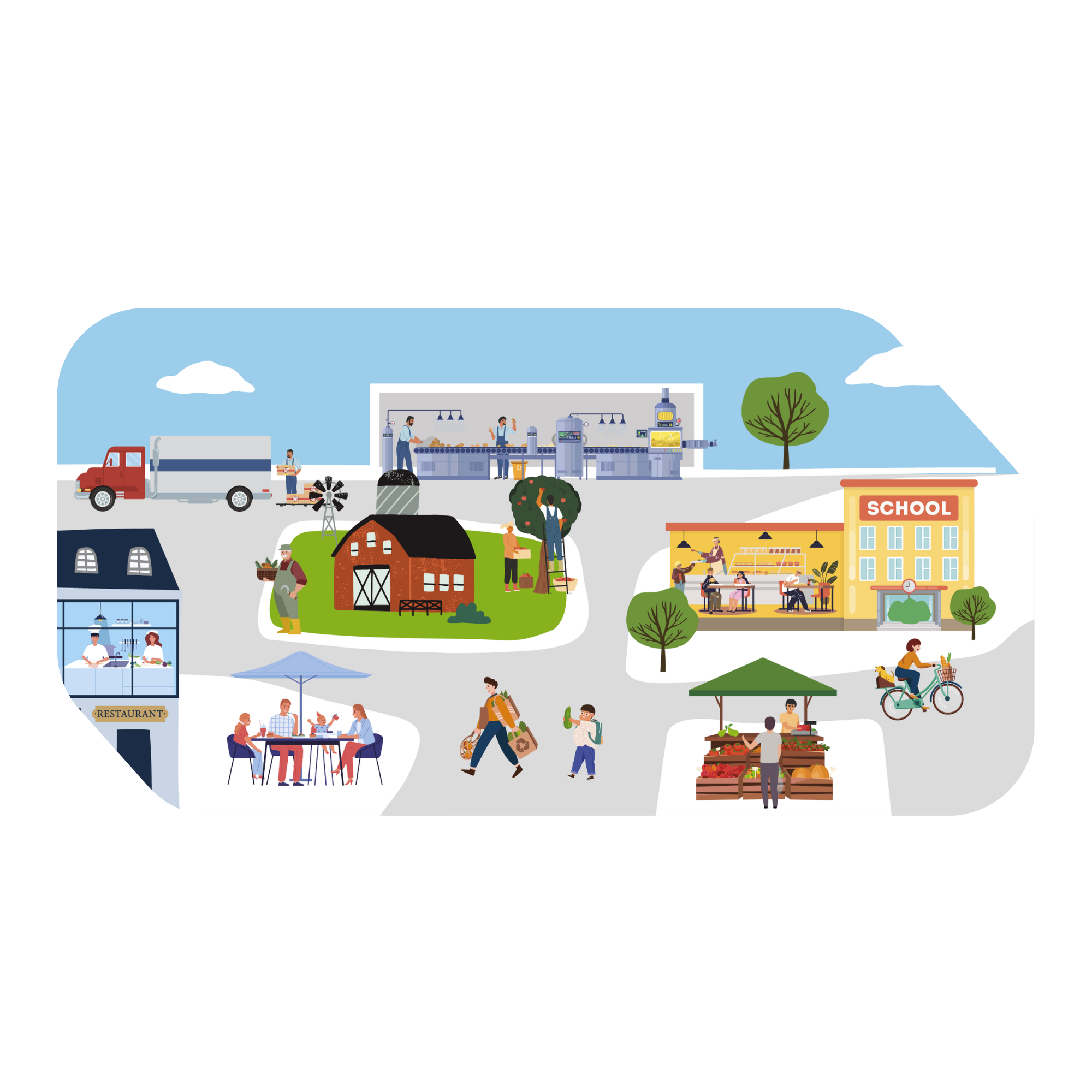
The Curriculum is a comprehensive framework dedicated to curriculum developers, teachers and educators outlining what effective sustainability food education looks like from a learning perspective. This framework titled “Healthy People on a Healthy Planet: Transforming food behaviours for sustainability” builds on insights and guidance from the 2025 EAT Lancet’s Planetary Health Diet, and the PLAN’EAT project recommendations, while aligning its competencies with the European Union’s GreenComp Framework.
The learning outcomes are organised around three key behaviours: shifting towards the Planetary Health Diet, reducing food waste, and supporting local and seasonal food systems. To ensure age-appropriate learning, the framework is designed for four age groups (3–5, 6–8, 9–12, and 13–15 years old), enabling educators to adapt activities and learning objectives to the developmental needs of their learners.
Discover the English Curriculum Framework, the learning outcomes poster (A2 format) and the PLAN’EAT Food guide by downloading them below, as well as the Curriculum Framework translated in:
Thematic Fact Sheets
Seven easy-to-understand Fact Sheets offer practical insights on healthy and sustainable food systems, supporting educators with concise and accessible key information and extra references for further exploration. The Fact Sheets support and enhance the Lessons by providing clear and concise background information on food sustainability. The downloadable booklet covers the following themes. Each theme is also available as a short, 2-minute video.
Click on each title to watch the corresponding video and download the English booklet and the translated versions below:
The fact sheets booklet is also available in:
Food Sustainability Lesson Plans
The seven ready-to-use lesson plans are designed for teachers and educators and can be adapted to different age groups and teaching contexts. Aligned with the Curriculum Framework learning outcomes, they include suggestions for extending learning and inspiring action, while offering the flexibility to meet the diverse needs and interests of learners.
Explore the themes of the Lesson Plans below and download the English booklet:
Lesson Plans include:
How can we take care of our health and our only planet?
Farm to Fork: What journey has my food taken?
Food labelling: how to identify healthier & sustainable food?
Is my food Ultra-Processed?
Food Print: What is the footprint of my food?
Should we eat local?
What is the real price of my plate?
The Lesson plan booklet is also available in:
Project Based Learning Activities
The four ready-to-use Project Based Learning (PBL) activities extend the lessons, enabling learners to explore key food-related topics in greater depth through collaborative, hands-on learning.
Explore the themes of the PBL activities below by downloading the English booklet:
Activities include:
Can we create a tasty Meal Plan that keeps us healthy, saves money, and respects the planet?
How can you nudge sustainable food behaviours?
How can our canteen improve our health, reduce the pressure on the planet, and stay within our budgets?
From food waste to circularity: what is the smartest approach for our school?
Early Years/
Pre-School Lesson Plans
submitted by Eco-Schools teachers
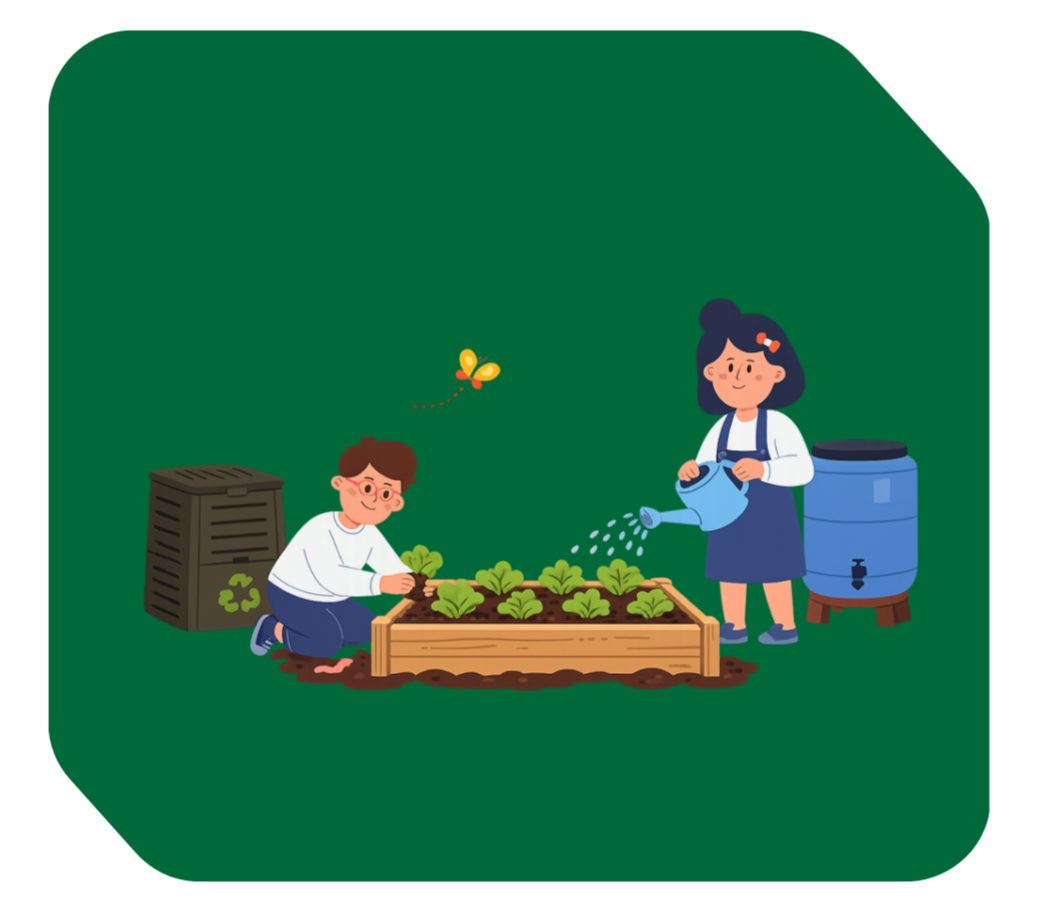
Based on the 24 shortlisted entries, a booklet containing five lessons specifically tailored for children under the age of six years old, was also developed.
Discover the Pre-School Lesson Plans by downloading the English booklet below:
Lesson Plans include:
The Forest is not only decorations during the holidays... They give us life in all seasons. The gifts of the forest on our table! - by Parziga Isidora, Greece
Zero-Waste Kitchen: Transforming food scraps into sustainable food- by Emine Öztürk, Türkiye
Little farmers will sustain it! sustainable agriculture through composting & permaculture - by Burcu Özparpucu Dilek, Türkiye
From Seed to Table: Experiencing the full sustainability cycle through lettuce growing, rainwater harvesting & composting - by Burçin Çulha, Türkiye
Healthy Individuals for a Healthy Planet: Transforming eating habits for sustainability - by Minire Yıldız, Serkan Aktaş, and Şeyma Nur Gözübüyük, Türkiye
Food literacy assessment tooL
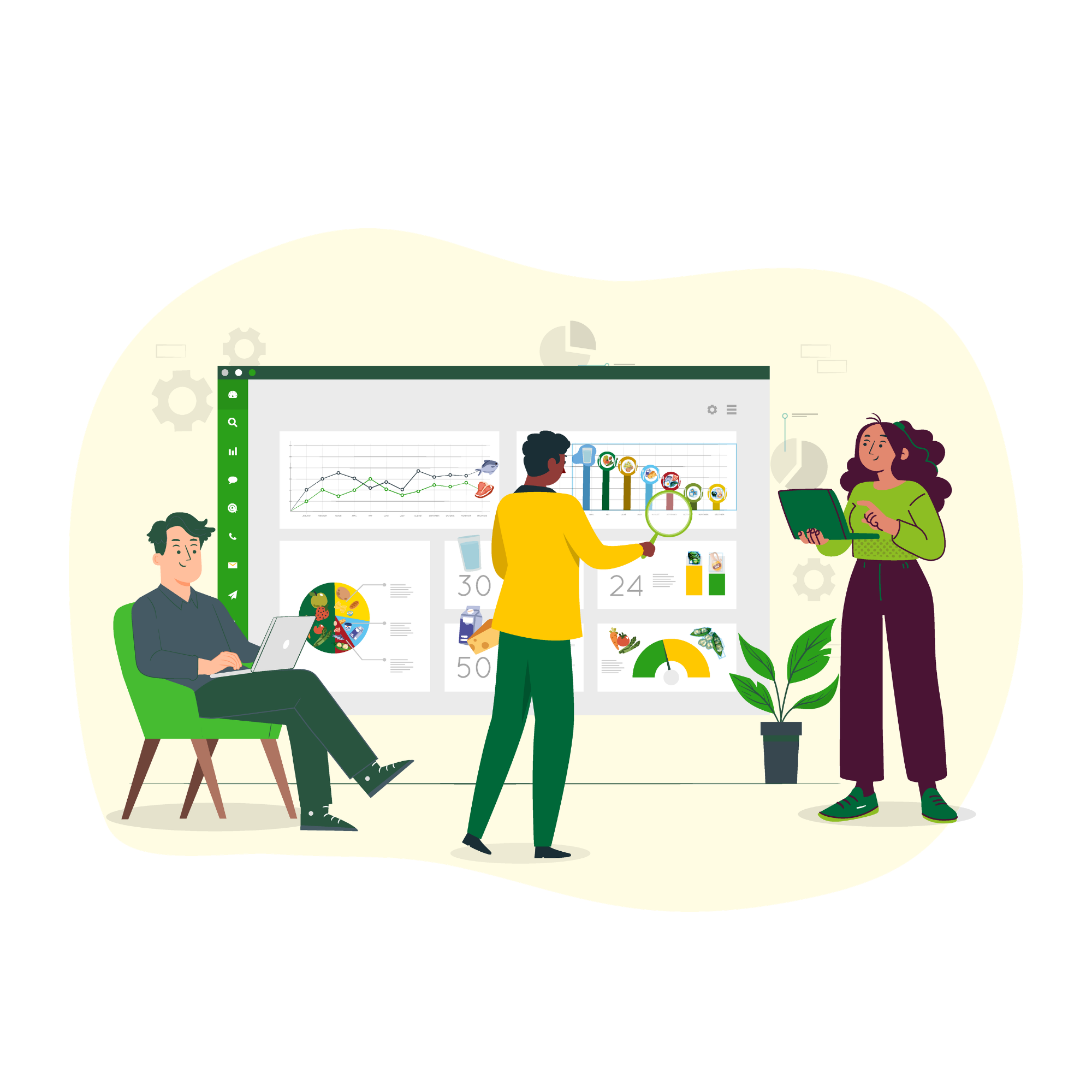
SENSE (Student Engagement in Nutrition and Sustainable Eating)
Schools need to understand what learners know about sustainable food consumption and what are their attitudes, intentions, behaviours, and family support related to food choices. Therefore a Food Literacy Assessment Tool has been developed and tested. It is intended for formative classroom for learners age of 14-16 to help teachers and programme teams:
Identify class or group-level knowledge gaps.
Understand students’ reported attitudes, intentions, and behaviours.
Identify areas in which students may need further learning or support.
Inform lesson planning and educational activities.
Assess changes following sustainable food education activities.
PLAN’EAT ONline LEARNING course
Developed as part of the PLAN’EAT project, the course “From Plate to Planet: Making Healthy and Sustainable Food Choices “ explores how the food we eat connects our health with the one of the planet, how everyday food choices influence environmental sustainability, and how people can take meaningful action. This course is designed for sustainability professionals, educators, chefs, restaurant managers, canteen staff, and for anyone who wishes to live a healthy life on a healthy planet!
Through experts’ interviews, videos and quiz, the course adopts a systems-thinking approach, encouraging learners to reflect, explore and act on ways to make our food systems healthier and more sustainable. It is divided into five modules and is entirely self-paced and asynchronous, to allow learners to progress through the course at their own schedule.

SCHOOL Food Campaign Guide
The step-by-step campaign guide helps educators design and implement school-wide campaigns that engage learners and the wider school community. It provides practical guidance for planning and delivering an effective campaign, using the theme of food as a running example. Drawing on the 2026 Global Action Days Food Sustainability Campaign, the guide offers inspiration, tips, and real-world examples to help educators bring the topic of food to life in their schools.
Food security & climate change resources
for Young Reporters for the Environment (YRE)
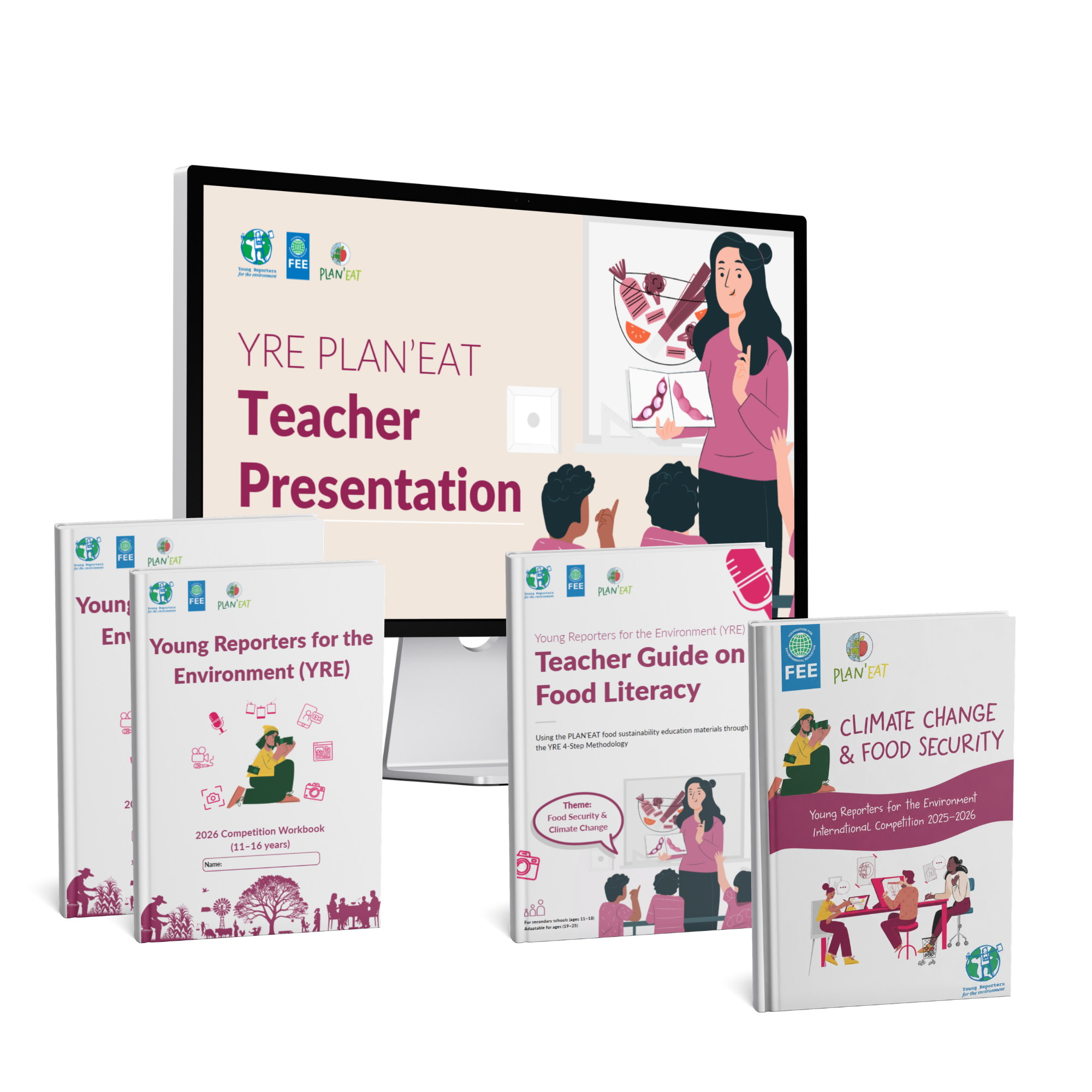
The 2025-2026 YRE international Competition theme was aligned to PLAN’EAT and centered around food security & climate change. This theme aimed to inspire young reporters to explore the behind-the-scenes of food systems around the world. They were invited to focus on several topics that connect most with their local reality and to reflect on an issue that they believe needs more attention.
Explore the practical guidance documents to inspire food sustainability learning and empower young reporters to take action.
ADDITIONAL RESOURCES
The We Eat Responsibly project supports Eco-Schools in nine EU countries in exploring ways to make more responsible food choices: Explore the materials available for teachers
As part of the Eco-Schools programme, GoodPlanet Belgium (FEE member in Belgium) implemented the Explore GoodCook challenge to help children explore seasonal fruits and vegetables, rediscover the joy of cooking, and develop a taste for healthy, more sustainable eating.
J’aime ma Planète (FEE member in Switzerland) created a toolkit designed to support schools of all types and levels that wish to explore sustainable food issues as part of their Eco-Schools journey: Explore the toolkit in French
FOOD 2030 is a Europe-wide platform that connects projects, networks, partnerships, and living labs dedicated to transforming our food system in line with European Union policies and strategies: Explore the toolkit for education
FoodSpan is a free, downloadable high school curriculum that highlights critical issues in the food system and empowers students to be food citizens. It is aligned to national education standards in science, social studies, health, and family and consumer sciences: Discover the 17 lesson plans
Food Educators provides tried and tested food education learning materials to teachers and schools across Europe. Discover lesson plans and activities by age group
“Be a Food Waste Warrior” WWF campaign: Discover a comprehensive K-12 lesson plans, activities, and classroom materials to teach students the environmental impact of school lunch.
The Centre for Collaborative Learning for Sustainable Development (CCL) in Norway published a toolkit “Food for thought” designed for secondary schools: Explore the set of activities
As part of the Erasmus+ project "Food in schools and climate change – what is the connection? I take action" Eco-schools from Slovenia and Greece developed educational cards on the environmental footprint of food, intended for use in primary and secondary schools and other educational institutions. The cards are used as learning tools to understand how the production, processing, transport, storage and consumption of different foods affect the environment: Explore the Footprint game, download the Instructions, the Game Cards, the Game Board and the Worksheets.
PLAN’EAT TOOLBOX & INTERVENTIONS AT A GLANCE
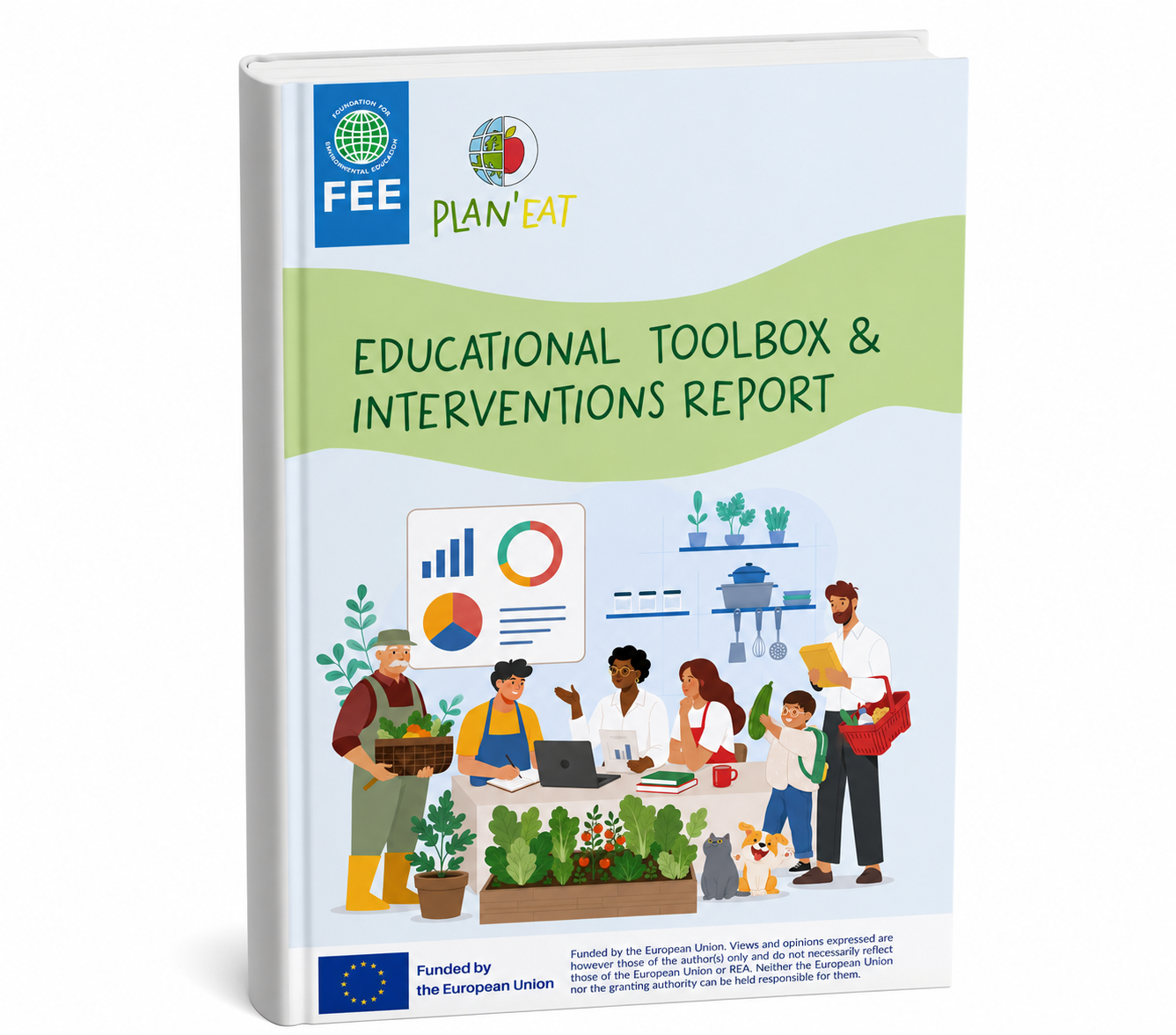
This report provides an overview of the pedagogical resources available in the PLAN'EAT Food Education Toolbox and brings together the key educational interventions implemented throughout the project, including the Food Campaign Global Action Days 2026, the FEE Lesson Plan Competition 2025–2026, and the Young Reporters for the Environment International Competition 2025-2026.
It presents key participation data, highlights major achievements, and showcases inspiring examples of action from around the world. Together, these provide a snapshot of the reach and impact of FEE's activities while illustrating how learners engaged with and explored the theme of food sustainability.
Have questions?
If you have any questions about the PLAN’EAT Food Sustainability Education Toolbox and its resources, please feel free to get in touch.
Jessica Mery
Education Programme Manager
jessica@fee.global