Compassion for Nature
Rockingham Beach Primary School, Australia
Students at Rockingham Beach Primary School in Western Australia were upset when they noticed that native baby birds were being blown out of tree nests after strong storms, so they designed a project to protect their local avian wildlife!
Rockingham Beach is situated about 45 minutes south of Perth on a beautiful stretch of coast. The primary school is surrounded by native trees that attract the diverse population of local birds. However, the coast is also susceptible to strong storms that can knock baby birds out of their nests in the trees.
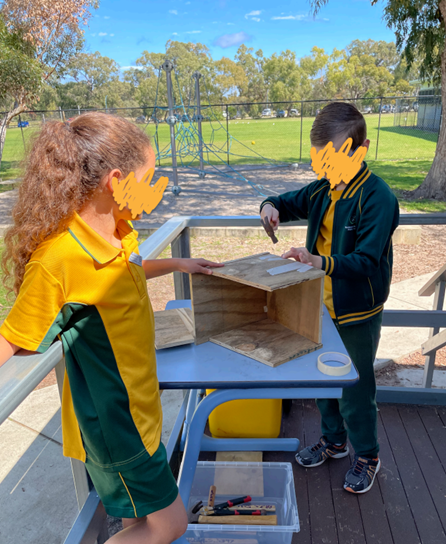
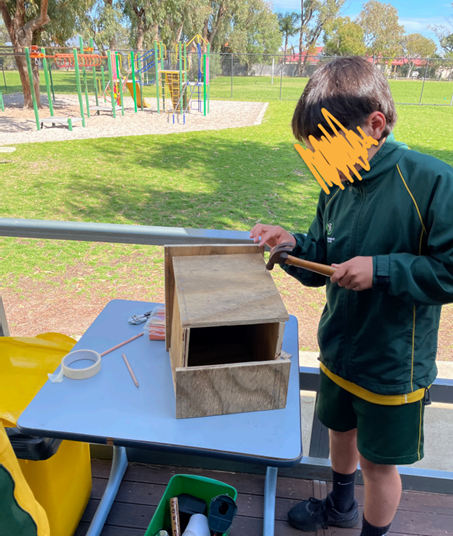
Through the Alcoa W5 project, students at Rockingham Beach Primary School decided to build nesting boxes that would shield baby birds from the wind and promote higher survival rates for native birds. They started by researching what kind of nesting boxes were most suitable for native bird species and designed the boxes so that birds would be attracted to building their nests there.
“It was amazing to see our students dive into this challenge, so many of them showed compassion for how they would make the nesting boxes feel like home. They were more worried about what the inside would be for the birds. This project was very rewarding for our students, it was great to see so many wanting to build some for their own trees.” – Teacher, Rockingham Beach Primary
The boxes are made from durable marine plywood so that they can stay strong against the coastal climate. Students built the new bird homes themselves and attached branches to invite birds into the nesting boxes. In addition to learning about what types of nesting boxes attract different species of birds, the students gained practical skills about designing and constructing sustainable products that will last into the future.
The project will continue next spring when the students observe whether their nesting boxes result in fewer baby birds blown to the ground. The students really enjoyed the experience of building the boxes and coming up with an innovative solution to an environmental issue that they feel passionate about!
The Alcoa W5 project activities at Rockingham Beach Primary School support the following SDGs:
Saving Water Is Cool!
Beckenham Primary School, Australia
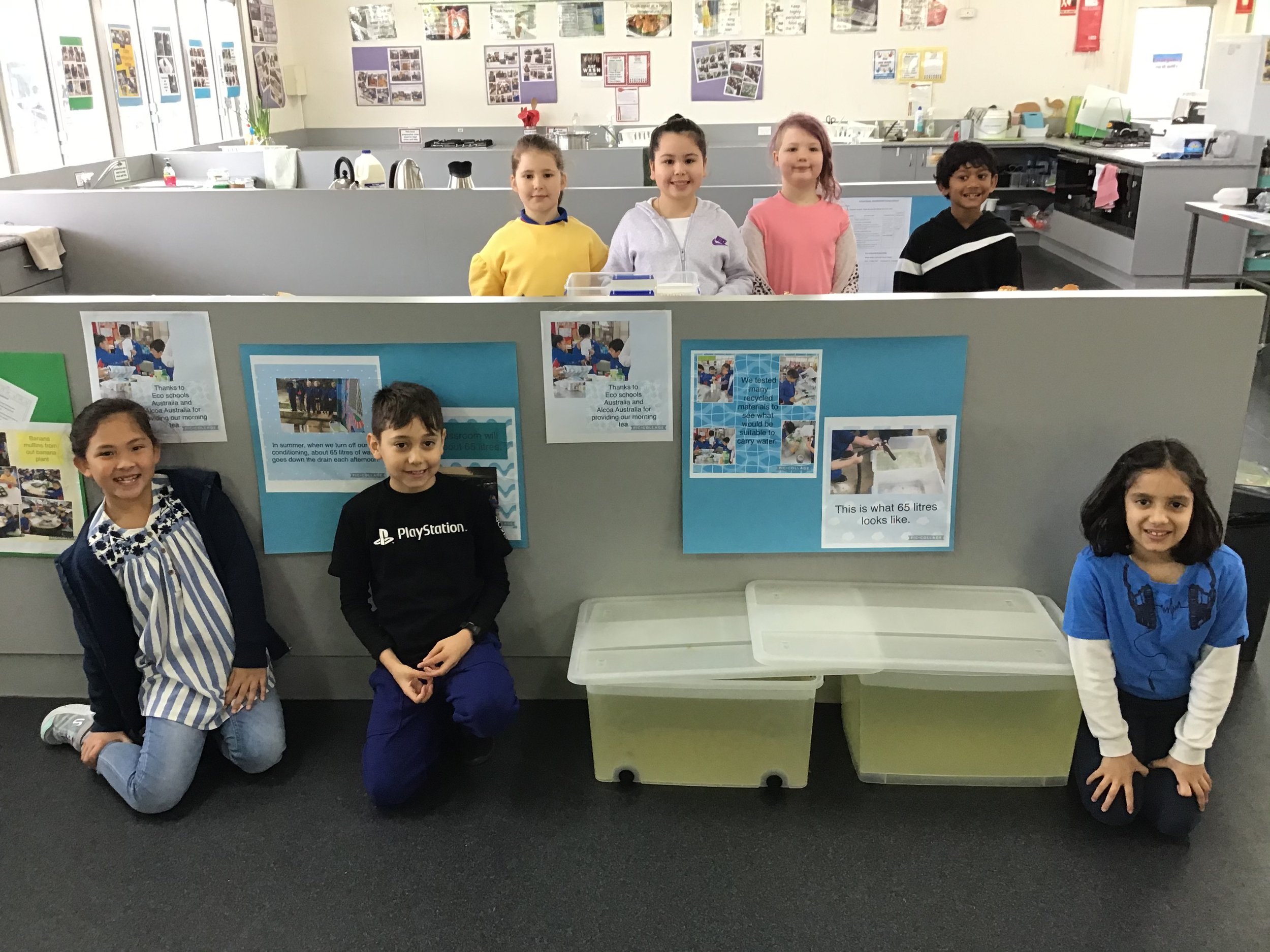
At Beckenham Primary School in Western Australia, students noticed that the air conditioning unit keeping their classroom cool would gush water whenever it was turned off, so they wondered what solutions they could come up with to reuse that wastewater.
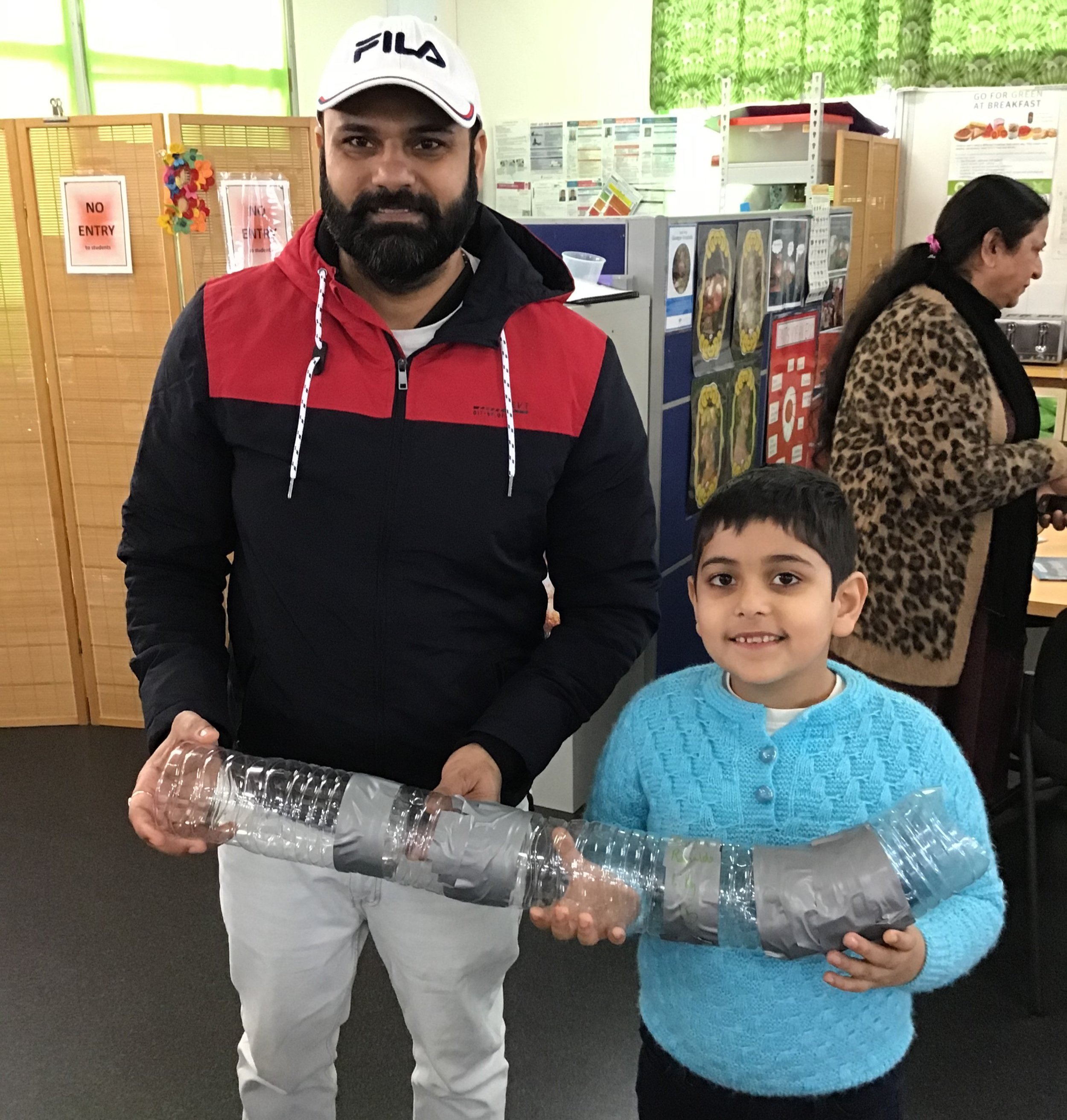
The students discovered that they could collect the water using old, reticulated pipes and hard plastic tubs, and then transport that water to garden areas around the school grounds. That way, the water is reabsorbed into the soil rather than just going down the drain, which helps make their school greener and more sustainable! The next step is to grow the project to include the other classrooms with leaking units, and eventually to install more permanent plumbing that directs the wastewater to the gardens.
As a result of this Alcoa W5 project, students are more aware of the importance of conserving water resources, even through small actions like turning off a dripping tap! The students also learned about how to design innovative solutions and use recycled materials and equipment to solve environmental problems.
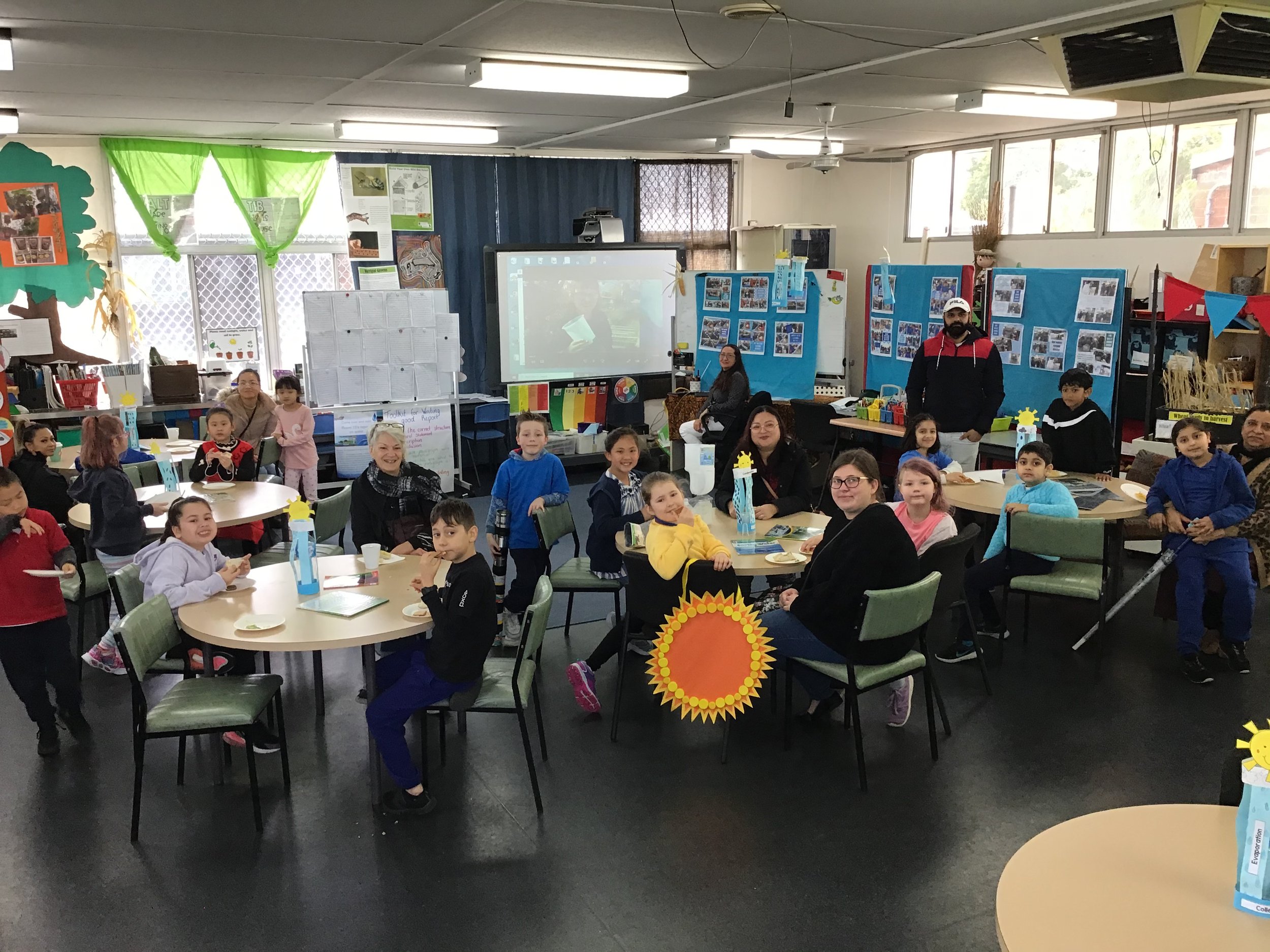
“It was fantastic to observe the children learning about water conservation and recycling. It was interesting to see the amount of water currently being wasted through the schools evaporative air conditioning system and the children’s enthusiasm to design solutions to reduce the wastage of water.” - Zoe Savill, Volunteer at Beckenham Primary School
Beckenham Primary is a very diverse school, where about 58% of students have two parents that were born overseas. There are also a number of Aboriginal and Torres Strait Islander families in the school community. Projects like this help bring the community together to create an inclusive and sustainable school environment that everyone can build and enjoy!
The Alcoa W5 project activities at Beckenham Primary School support the following SDGs:
The Recycling Ripple Effect
Moerlina School, Australia
The Moerlina School outside of Perth, Australia conducted a waste audit and found that they had a problem – there was a lot of misinformation about what types of rubbish can and cannot be recycled.
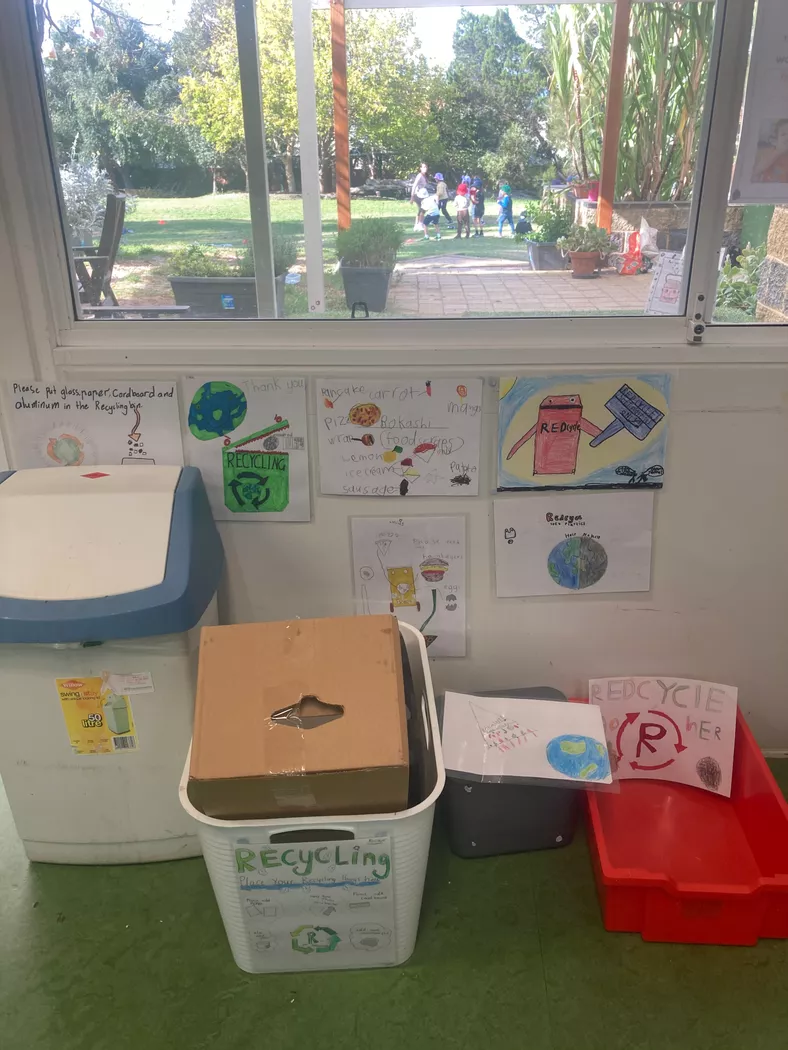
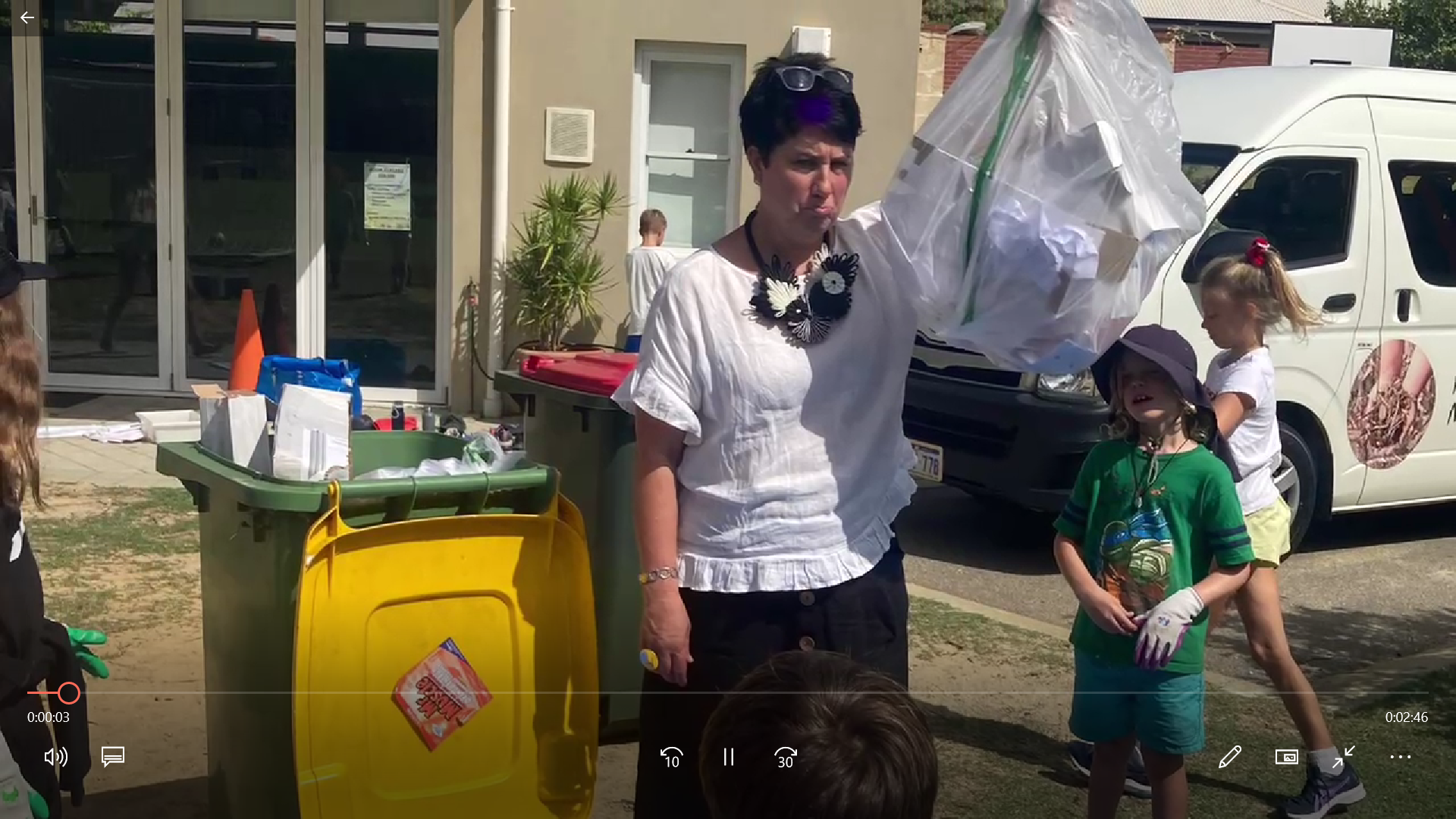
They found that recycling bins were being contaminated with unrecyclable rubbish, or the recyclable items were getting disposed of in the incorrect bins. So, the students undertook an awareness-raising campaign to make sure that all the bins were properly labelled and that everyone in the school knew what kind of waste can be recycled. This also required buy-in from teachers, parents and the cleaning staff, which helped build the students’ opinion leadership skills as well!
The students also introduced an industrial-sized compost system to reduce and reuse food scraps and other biodegradable waste, which they will continue to promote and maintain. They engaged in various environmental education activities about the properties of recyclable matter and how problematic soft plastics can be upcycled to make useful items. An informational newsletter about waste and sustainability issues was also shared with parents to help spread the message of environmental responsibility throughout the community!
“The project has encouraged children, adults and the school community such as parents, and grandparents to consider their waste and output. Parents have gone out to buy worm farms and other composting systems so they can replicate what we are doing at school in their homes. It is wonderful to see how lots of small changes can have a ripple effect to impact others to make changes.” - Dell Doherty, Moerlina School
The Alcoa W5 project activities at Moerlina School support the following SDGs:
From Waste to Masterpiece
Brentwood Primary School, Australia
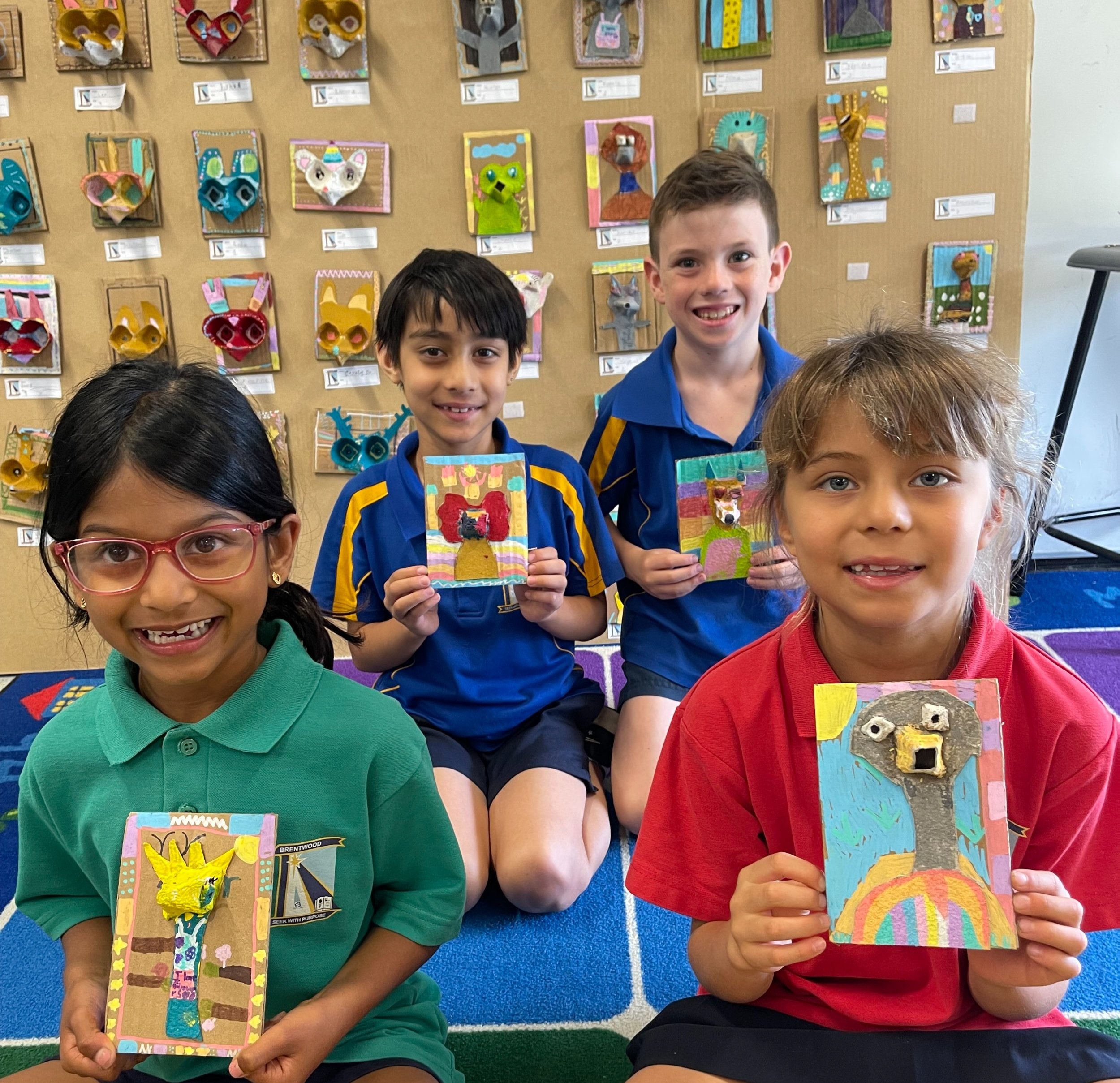
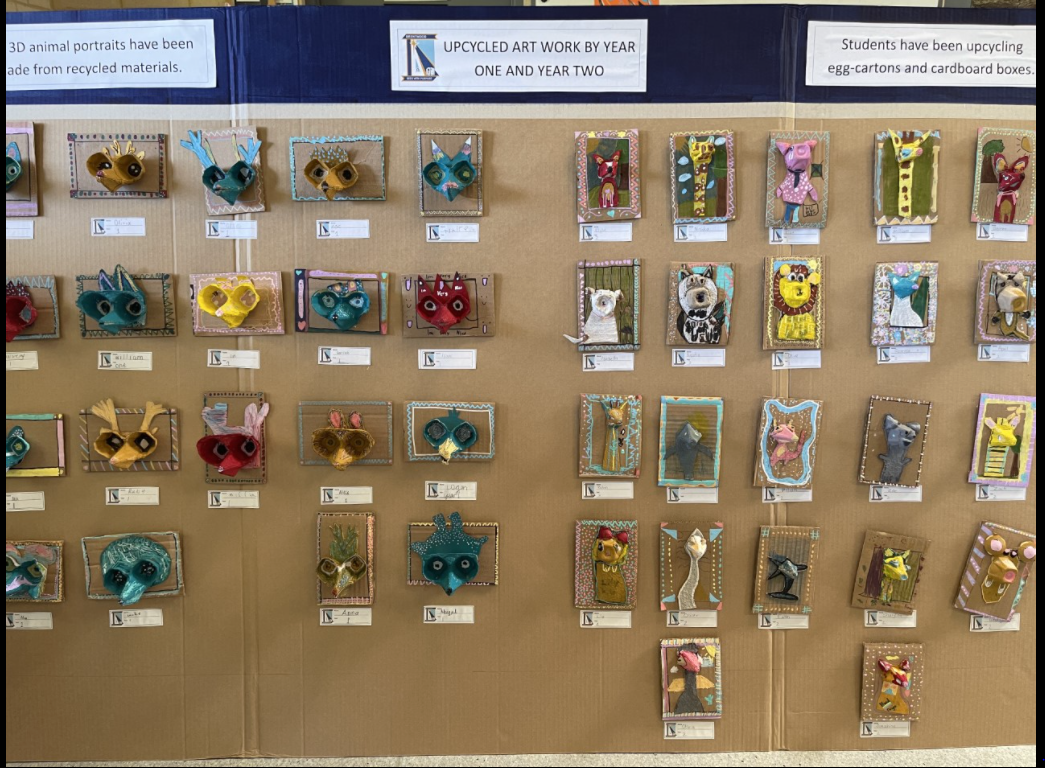
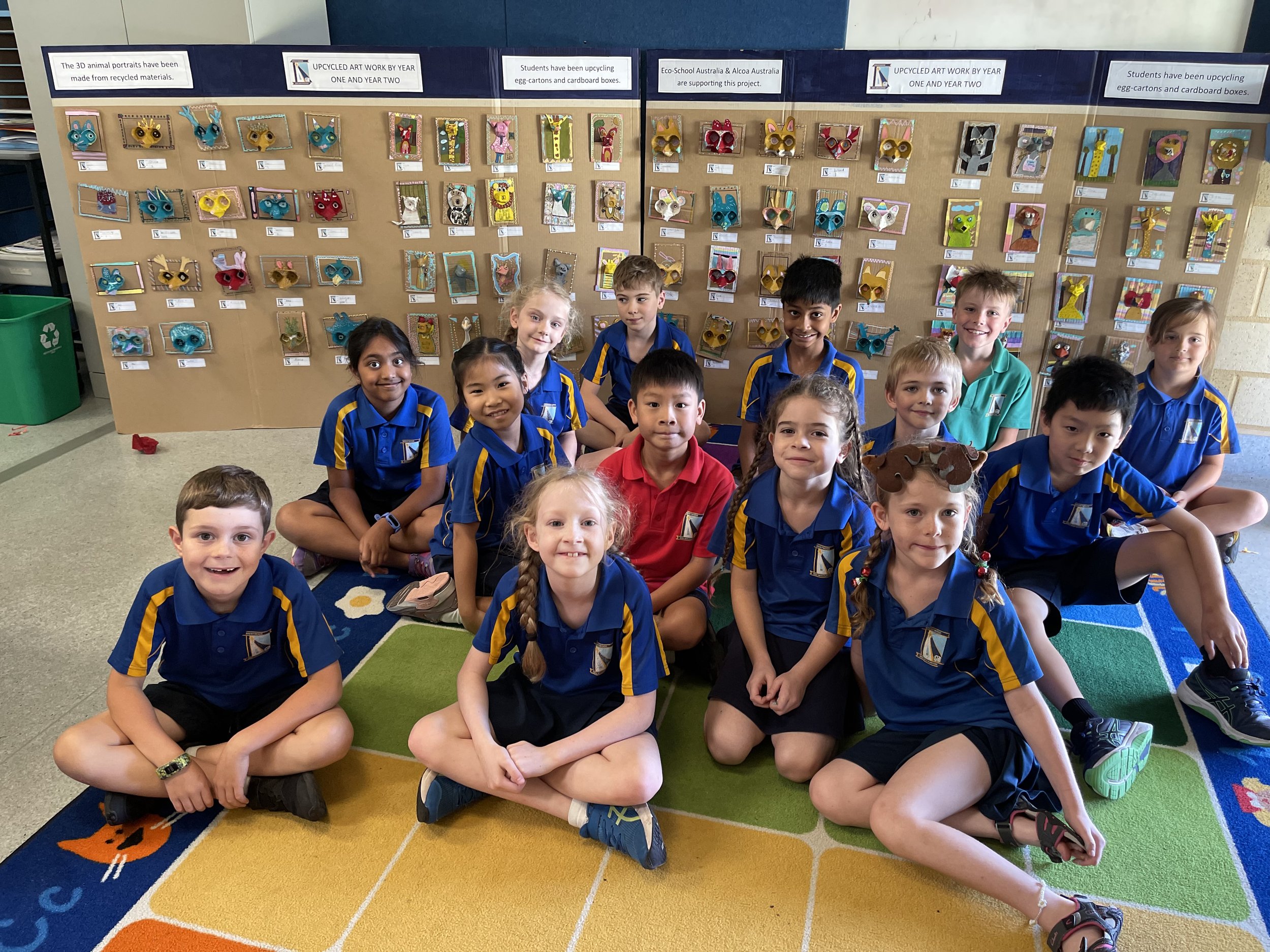
Students at Brentwood Primary School outside of Perth, Australia combined creativity and environmental education to craft upcycled art from waste.
One of the Alcoa W5 project activities at Brentwood was to create 3D animal portraits using old egg cartons and other types of common waste. The first step was for each student to make a sketch of the animal the wanted to feature - paying special attention to the essential features that make that animal unique, like a long neck for a giraffe or big ears for an elephant. Then they sought out waste that could be used to bring those animals to life in a 3D portrait!
Once the animals had been crafted on upcycled cardboard, they were put in frames to complete the portrait look. All the completed artwork was weighed, and it was discovered that the students had upcycled 8kg of cardboard that would have otherwise gone into the waste stream! The school also saved resources by using waste rather than purchasing new art supplies.
The artwork will be displayed for parents and the community to come see, along with the students’ reflections on what the project helped them learn about responsible consumption and production.
“It’s wonderful to see how the children view the materials they ordinarily recycle. Rubbish had been transformed in their minds to resources they can repurpose into unique masterpieces.” - Sonia Barker, Teacher at Brentwood Primary
This Alcoa W5 activity at Brentwood Primary School supports the following SDGs:
Litter Legends Applying Leadership Skills
Bullsbrook College, Australia
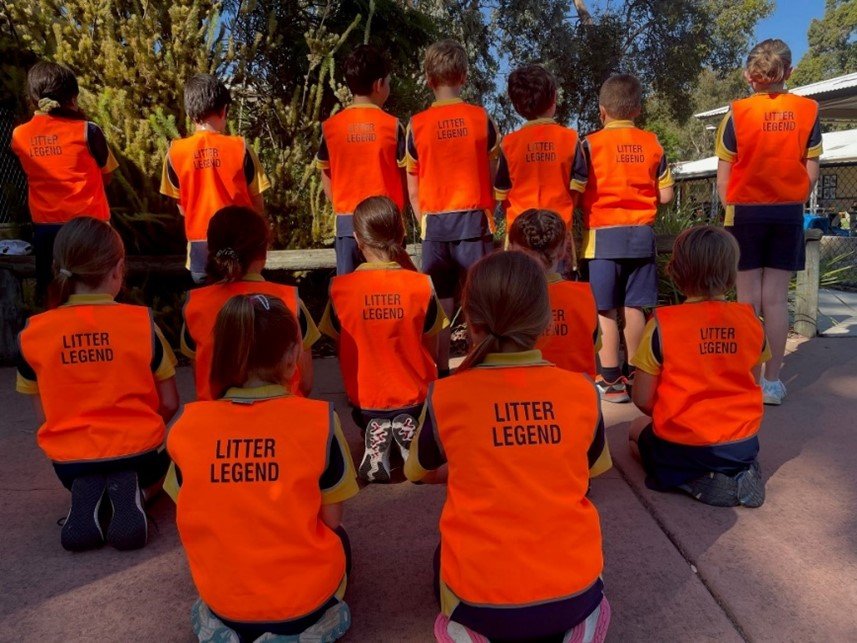
Concerned students and staff at Bullsbrook College near Perth, Australia took action to protect their local wildlife and school environment from the harmful effects of litter and promote greater education on waste issues.
Students started by collecting and sorting litter and waste from their school three times per week to better understand the types of materials that were being littered or thrown away. After sorting through the waste, students made sure that recyclable materials were redirected to the correct recycling bins. They found that paper products and food packaging were some of the most common, so they looked for solutions to minimise these waste items.
To help reduce the amount of food packaging going into the bin or onto the ground, the students organised “Waste Free Wednesday” lunches and encouraged parents to bring homemade snacks in reusable containers to school events. They also started their very own green waste worm farm and used the rich compost to nourish the school’s sustainable vegetable gardens!
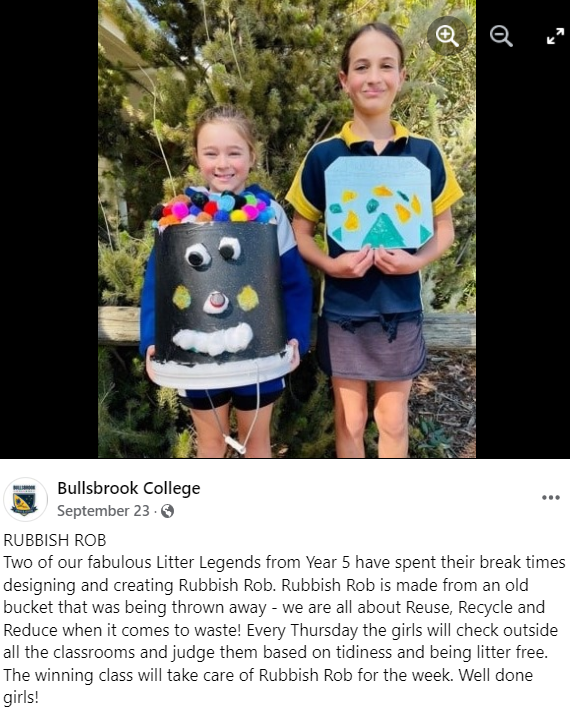
“It is pleasing to see our enthusiastic Litter Legends reducing the litter – the school is looking great and I love Rubbish Rob who is awarded for tidy areas.” – Deputy Principal, Bullsbrook College
In addition to these activities, students in the classroom learned all about greenhouse gas emissions from landfill, recyclable waste, green waste, and the different ways that litter and waste impact the environment. The school has seen an overall reduction in litter and waste since the start of this Alcoa W5 project, and the students at Bullsbrook College have enthusiastically embraced these initiatives to create a cleaner and more sustainable school environment!
The Alcoa W5 project activities at Bullsbrook College support the following SDGs:
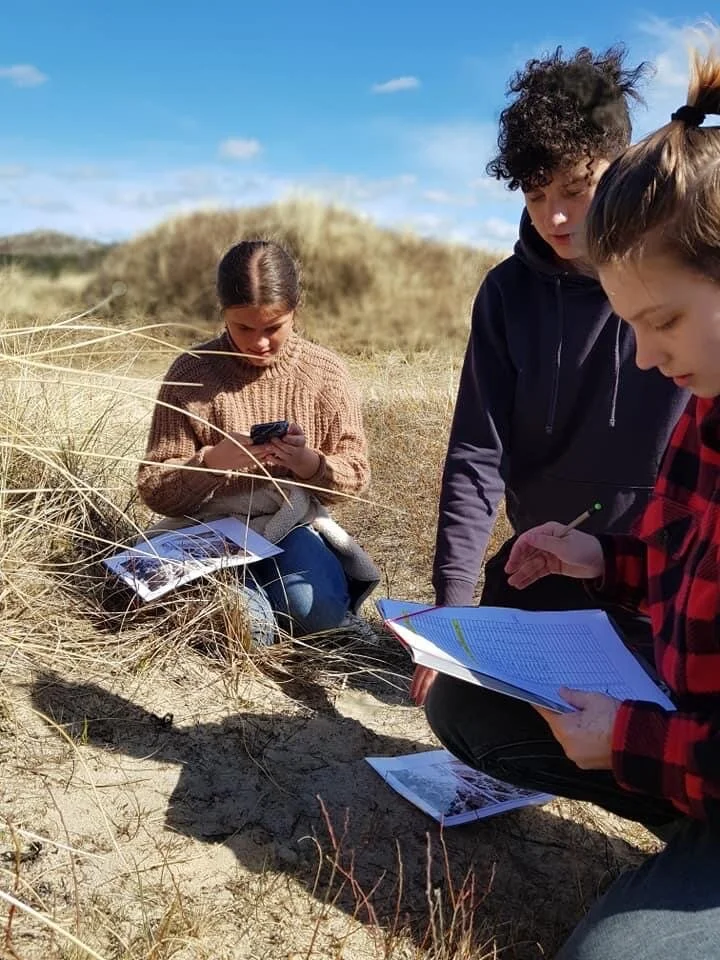
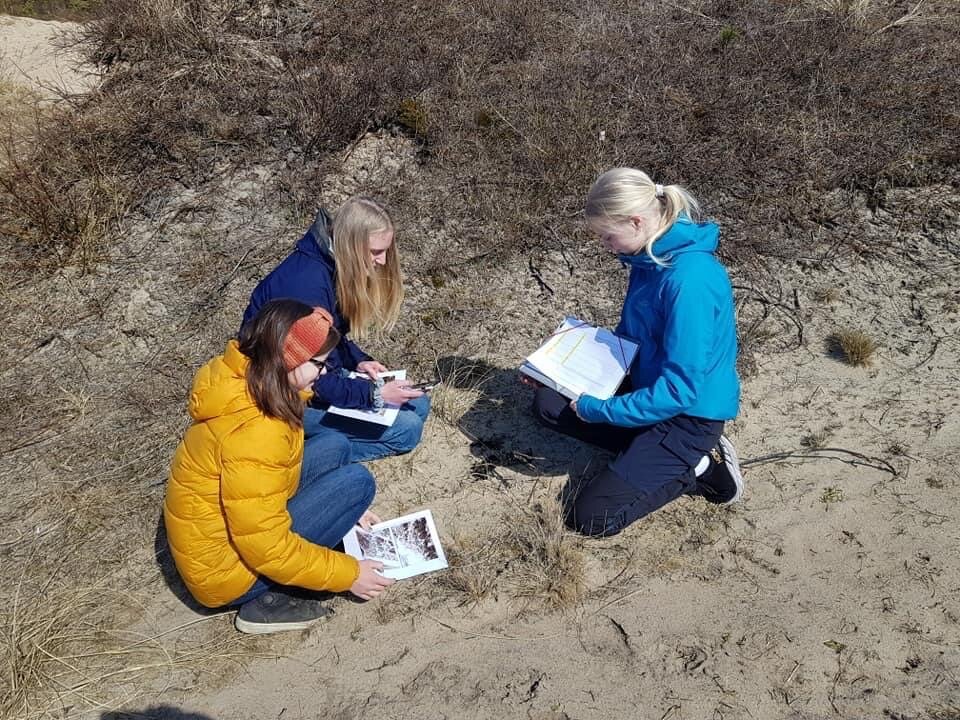
Students at Farsund Ungdomsskole protect unique wildlife in coastal area
Farsund Secondary School, Norway
This spring the students at Farsund Ungdomsskole in Norway have picked up 1700 kilos of plastic waste and removed stones and dwarf pine to help protect rare wildlife in their local costal area.
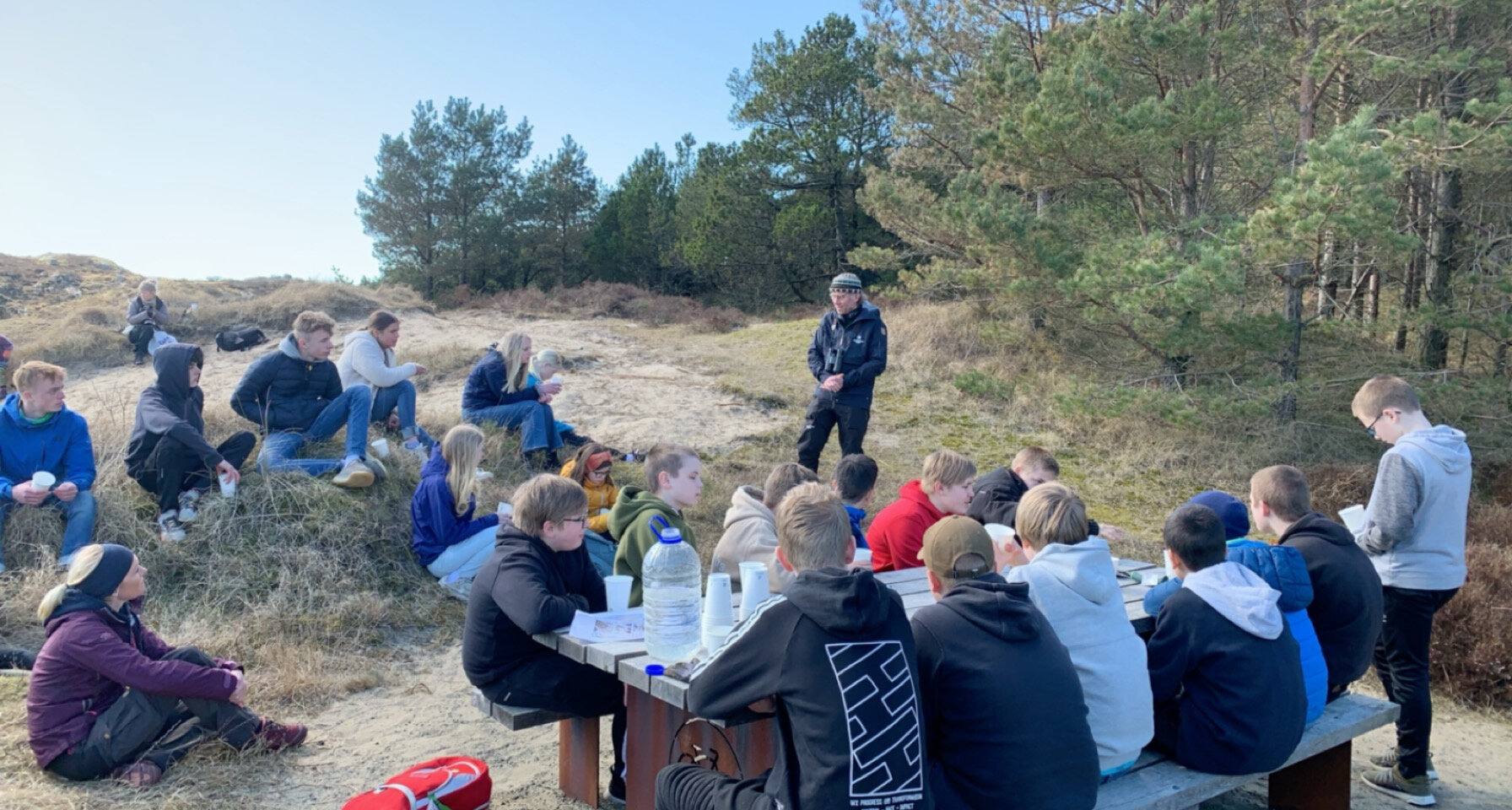
The Eco-Committee and students of the elective subject “Outdoor Life” at Farsund Ungdomsskole visited the area of Lomsen to study Sea Holly, pick up litter, and remove dwarf pine. Local resident Bjørn Vikøyr gave the students information about the Osmia maritima bees that are unique to the coastal area in Lista and Jæren in Norway.
Earlier this year, Farsund Ungdomsskole planned to arrange their annually “Sea Monster Week” (the sea monster in question: plastic waste). However, they had to cancel due to the pandemic. Instead, they focused on plastic waste and local biodiversity during this week and organised a plastic litter competition. The students cleaned local areas and removed a total of 1700 kilo plastic waste! The oldest students also helped a local farmer to remove stones from the fields to facilitate for rare plant biodiversity and grazing animals.
This year, Farsund Ungdomsskole is focusing on biodiversity in wildlife, food waste reduction, as well as waste sorting - as part of the W5 project.
““We remain committed to our previous objectives, but see our projects and goals growing as students and teachers bring in new ideas and perspectives””
Link to local newspaper:
https://www.lister24.no/nyheter/i/eKr03g/har-plukket-over-500-kilo-plast
Waste Water turns into Saved Water
Beckenham Primary School, Australia
The brilliant brains at Beckenham Primary School have been looking into the air-conditioner - waste water gushes and gurgles away down the drain. "We want to stop the waste and save this water and reuse it somewhere else!"
The students at Beckenham Primary School are planning to minimize the water wastage from the evaporative air-conditioners at our school and reuse it elsewhere on the school grounds. We are doing research to see if the water is useable in the kitchen garden to water our school vegetables or if it’s only suitable for decorative plants. This reuse of the waste water would make us a more sustainable school and that would align with the SDG Goal 11: Make cities and human settlements inclusive, safe, resilient and sustainable.
The plan is for our school to reuse waste water for our school gardens will reduce the amount of water we use from taps and reticulation for watering. Students are designing a system where the water can be moved along pipes or tubes to garden areas instead of the drain. Our school has 16 classrooms in the main section of the school each with an air-conditioning unit. If this works with one - perhaps it can be used for all of them.
“‘I could not believe the amount of water pumping out of the pipe when we turned the air-conditioner off. I had not considered what a waste of water this was!’”
If we spread the idea, perhaps future schools could take into account the collection of waste water when the schools are being built, so it is automatically reused in a sustainable way. Our school is 109 years old and many improvements have been added to the school over the years, but new schools have the opportunity to make the changes during the design phase.
