Eco-Schools Themes
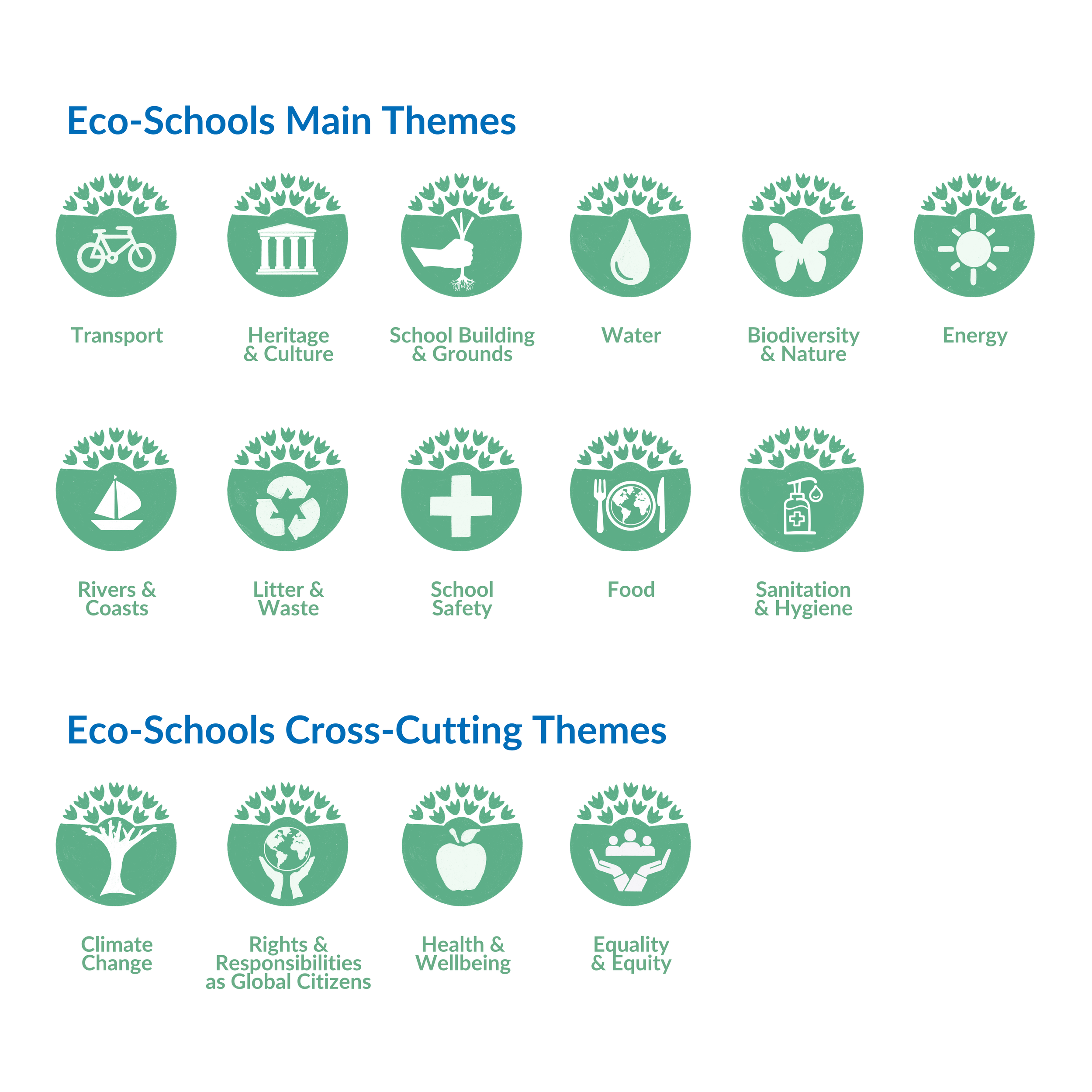
The Eco-Schools themes help schools to understand the big picture of sustainability, explore different issues in their schools and communities, discover their strengths and prioritise the most important areas for learning and action.
Divided into 15 concepts, the Eco-School themes are flexible and interconnected, reflecting the complexity of sustainability.
Most Eco-School projects will span several domains and themes.
Overall, there are four cross-cutting themes which we recommend integrating into all projects:
Climate Change
Rights & Responsibilities as Global Citizens
Health & Wellbeing
and Equality & Equity
Eco-Schools Main Themes
Transport
The Eco-Schools transport theme will help you focus on energy-efficient, affordable, and eco-friendly travel options like walking, cycling, public transport, and electric vehicles. Road safety is essential, ensuring students can use eco-friendly transportation safely. Parents also play a key role by supporting and modelling sustainable travel choices. By promoting low-carbon travel Eco-Schools can help improve health, reduce pollution, and create more connected, enjoyable communities.

Heritage & Culture
The Eco-Schools Heritage & Culture theme aims to help your school preserve traditions and natural heritage, learning from the past and shaping a sustainable future. Heritage connects us to our environments, understand our past and helps shape our identities. Tangible heritage encompasses landmarks and artifacts, while intangible heritage reflects customs and stories, linking us to both cultural and natural roots. All cultures represented are respected and valued.
School Building & Grounds
The Eco-Schools ‘School Buildings & Grounds’ theme will help you turn you school into a “living laboratory,” where you can experience sustainability first-hand through energy-saving systems, natural light, and eco-friendly materials. You also get a say in how your school building and outdoor spaces are used, making you an active part of the change.

Biodiversity & Nature
The Eco-Schools Biodiversity theme will help your school to explore keystone species, native plants, and threats to biodiversity locally and globally, and take action to protect and restore ecosystems in your own schools and communities.

Energy
The Eco-Schools Energy theme will help your school identify and understand its main sources of energy and energy usage. Reviewing energy-saving opportunities and alternative options for renewable energy, and putting in place ongoing monitoring and reporting helps the whole-school get involved in improving the energy efficiency of your school.

Rivers & Coasts
The Eco-Schools ‘Rivers and Coasts’ theme will help your school to focus on the vital ecosystems that support countless species and sustain life on Earth. It will also help you to identify and learn about any local threats, engaging local stakeholders to deepen your understanding and take action.
Litter & Waste
The Eco-Schools Litter & Waste theme will help your school to understand its main waste priorities and address them by embracing the 5Rs -Refuse, Reduce, Reuse, Recycle, and Repair/Rot - key principles of a circular economy. By refusing unnecessary items, reducing consumption, reusing and repairing products, and recycling or composting, your whole school can start to minimise waste and conserve resources.
School Safety
The Eco-Schools School Safety theme empowers learners to understand and address a wide range of risks, from everyday concerns to the challenges posed by climate change and natural hazards. Eco-Schools play a vital role in promoting safety by fostering a culture of resilience through education on emergency planning, risk assessment, and preparedness. Through this theme, you will explore proactive safety measures, supporting healthier and more secure schools and communities.

Food
The Eco-Schools Food theme helps your school to incorporate foods that are produced with care for people and the planet. By learning about and prioritising local and sustainable methods of food production such as permaculture, organic farming, and agroforestry and choosing more plant-based proteins, your whole school can support food security and reduce climate impacts.
Sanitation & Hygiene
The Eco-Schools Sanitation and Hygiene theme is closely connected to the themes of Water, Health and Wellbeing and School Safety. It helps your school to address important issues including access to safe drinking water, adequate sanitation facilities, and proper hygiene practices. This theme not only safeguards the health of students and staff but also helps to positively impact students' well-being and learning experiences.
Cross-Cutting Themes

Climate Change
The Eco-Schools Climate Change theme is a cross-cutting theme and can be explored on its own or as part of any other Eco-Schools theme. This theme will help your school to understand weather patterns and climate impacts, how they are affecting your own community and other communities around the world, and the mitigation and adaptation measures that can help.

Rights & Responsibilities as Global Citizens
The Eco-Schools theme ‘Rights and Responsibilities as Global Global Citizens’ is another cross-cutting theme that can be explored on its own or as part of any other Eco-Schools theme. It will help your schools to focus on addressing social, economic, and environmental inequities and foster a sense of responsibility for building a more fair and sustainable world,

Health & Wellbeing
The Eco-Schools Health and Wellbeing theme is also a cross-cutting theme that can be addressed on its own or as part of any other Eco-Schools project. It highlights the vital connection between human health and the natural world, and will help your school explore and integrate new ways to improve the health and wellbeing of learners, staff and local communities.
Equality & Equity
The Eco-Schools Equality and Equity theme is another cross-cutting theme that can be addressed on its own or as part of any other Eco-Schools theme. It will help you to focus on inclusive participation, equality and equity as essential elements of student wellbeing and long-term sustainability. Safe, informed, and respected students are better able to engage in learning, collective action, and environmental responsibility.