Food
Sustainable diets focus on healthy, affordable, and culturally appropriate foods produced with care for people and the planet. They emphasise fresh, nutrient-rich foods such as fruits, vegetables, whole grains, nuts, and legumes. Unlike industrial farming, which harms soil, biodiversity, and the climate, sustainable methods such as permaculture, organic farming, and agroforestry help restore ecosystems and build resilience. Choosing more plant-based proteins also supports food security and reduces climate impacts.

Use what you’ve learned from your lessons, your Eco-Schools activities, and your own observations, work together to turn your ideas into real change by creating an Action Plan for Food. Mobilise your Eco-Committee, teachers, school staff, parents, and the wider community to help you reach your goals.
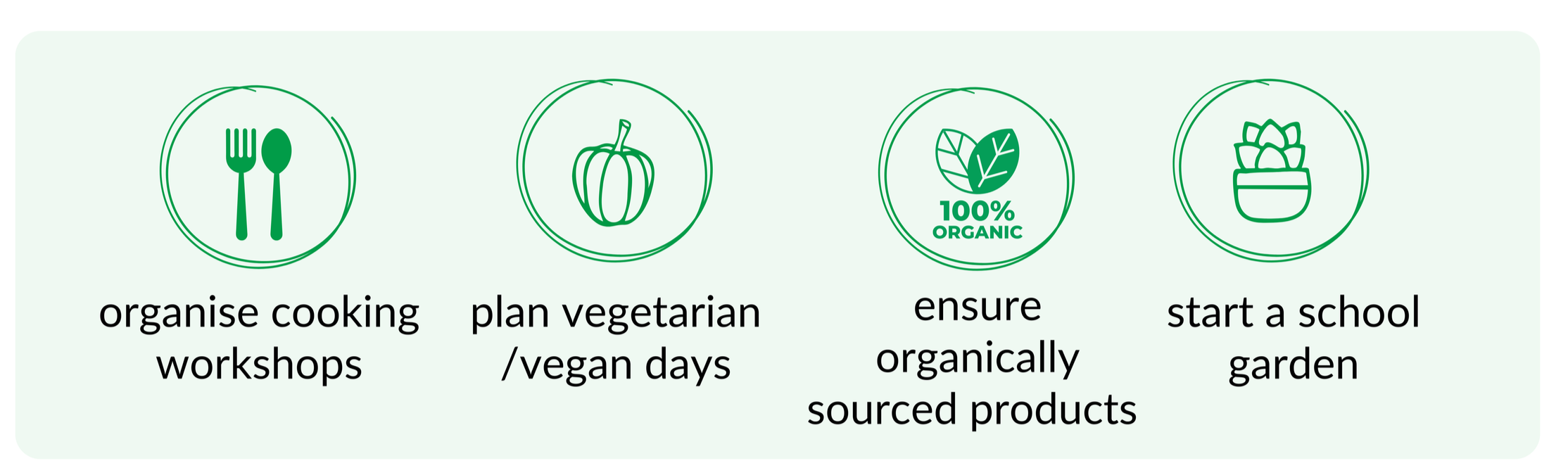
Actions you could do:
Whatever actions you choose, make sure they are realistic, measurable, and long-lasting, so your Eco-Committee’s work continues to grow year after year.