Children for Children
In November 2019, the Foundation for Environmental Education (FEE) launched the Children for Children campaign to support the recovery of Eco-Schools in The Bahamas after the destruction caused by Hurricane Dorian. It was estimated that 70,000 people (20% of the population in The Bahamas) were impacted by Dorian, amongst them more than 18,000 children. Twelve Eco-Schools were destroyed and some of the teachers lost their lives.
FEE, through its five programmes and global network, was in a position to not only mobilise support for the recovery of the Eco-Schools, but to educate, increase awareness, and shift the mindsets in children, youth and adults with regard to mitigating the effects of climate change and the increasing strength and frequency of natural disasters.
Watch the video made by YRE Alumni Kristin Rodrigo from Canada, based on materials delivered by BREEF (member of FEE) from The Bahamas, about the impact of hurricane Dorian
THE OVERALL AIM OF CHILDREN FOR CHILDREN CAMPAIGN
The recent hurricane Dorian has severely affected The Bahamas. There are reports of widespread destruction and casualties. It is estimated 70,000 people (20% of the population in The Bahamas) have been impacted, amongst them more than 18,000 children. Twelve Eco-Schools were destroyed and some of the teachers lost their lives. As the vulnerability of communities increases across the world, we need more efforts to reduce vulnerability, manage the impact along with mitigating risks.
This has convinced us to launch Children for Children campaign that will not only support the recovery and rehabilitation of the schools in The Bahamas, but will also educate for disaster risk reduction amongst vulnerable communities
FEE President Lesley Jones
Through its programmes, FEE has been supporting global efforts to educate children, youth and adults to increase awareness, shift mindsets and behaviour to mitigate climate change and the ever-growing strength and frequency of natural disasters. As a global network, FEE is in a position to mobilise support for rehabilitation particularly within the educational infrastructure.
The overall goal is to raise awareness on impacts of Climate Change and the increasing vulnerabilities to disasters and resources in cash for rebuilding the damaged Eco-Schools infrastructure in The Bahamas
CEO of FEE Daniel Schaffer
Campaign Objectives
Raise awareness on Climate Change
Provide education for disaster resilience
Create empathy and a sense of global citizenship
Mobilise the power of the network
Organise support in cash and kind for the recovery efforts of the twelve Eco-Schools in The Bahamas
How the Campaign Worked
Schools from around the world were invited to take part in this global campaign, which aimed to educate students about Climate Change Risk Reduction and Resilience Education. Each participating school was encouraged to include a fundraising element in its activities to support the recovery efforts of children from Eco-Schools affected by Hurricane Dorian in The Bahamas.
Actions Undertaken by Schools
Participating schools:
Planned awareness campaigns on the impacts of climate change and the importance of empathy, using the educational resources provided. These campaigns also included fundraising activities in support of schools in The Bahamas.
Implemented student-led campaigns within their school communities.
Organised a Global Action Day 2020 focused on Climate Change Risk Reduction and Resilience Education.
Shared stories and case studies, accompanied by photos, highlighting different stages of their activities, from planning and implementation to the campaign's outcomes.
Encouraged Young Reporters for the Environment (YRE) students to lead media campaigns raising awareness of climate change impacts and report on activities supporting schools in The Bahamas.
In some cases, participating schools also had the opportunity to establish direct collaborations with students and schools in The Bahamas.
Fundraising Activities
Schools organised a wide range of fundraising initiatives to support schools in The Bahamas. These included:
Litter clean-up activities.
Student-led auctions or sales during holiday events that welcomed students of different faiths.
Sponsored sports races.
Charity events such as exhibitions or expert talks on climate change.
Global Action Day activities with a fundraising component.
Recycling initiatives where proceeds were donated to the campaign.
Schools conducting public fundraising were expected to comply with the relevant laws and regulations in their respective countries.
Educational Materials
Children for Children Campaign
Schools are invited to participate in the global campaign that will educate students on climate change, disaster risk reduction and resilience. Through the Children for Children campaign students will develop:
Empathy.
Disaster risk reduction strategies adapted to local contexts.
An understanding of the relationship between negative environmental actions and consequences.
An understanding of actions that protect the environment.
Confidence and knowledge to plan and initiate positive actions within their schools and communities to mitigate the impacts of climate change.
Resources
UNESCO Compendium: Stay Safe and Be Prepared 3-guide series for Teachers, Students & Parents
Stay Safe and Be Prepared: A Teacher’s Guide to Disaster Risk Reduction
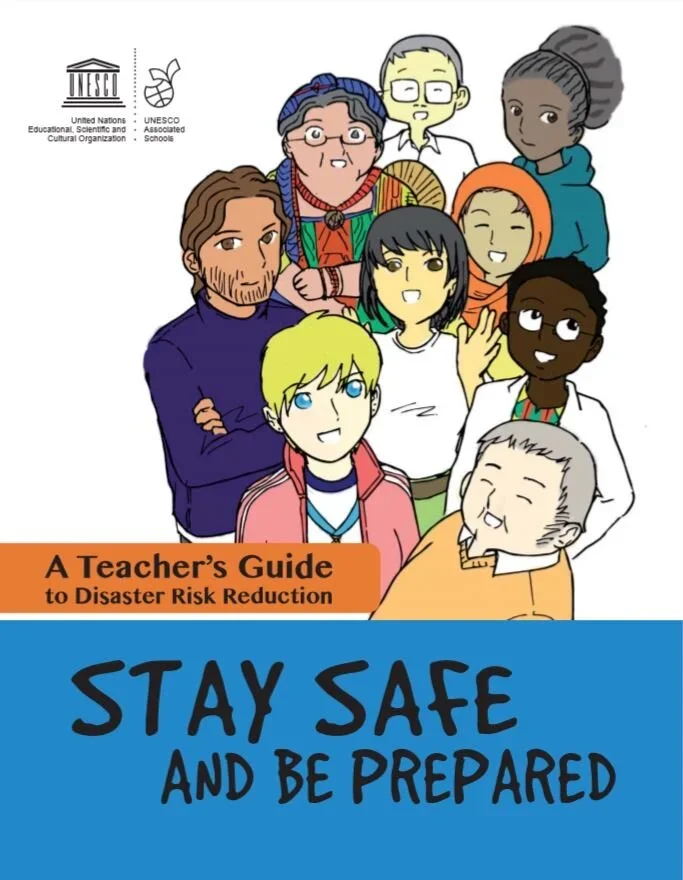
This Teacher’s Guide is one part of a three-book compendium aimed at introducing concepts, exercises and good practices on disaster preparedness and response to teachers, students and parents. The basic idea is that comprehensive disaster preparedness and resilience-building can only take place when the whole (school) community, starting with students, parents and teachers, is involved and that it can be very successful if students are encouraged to actively take the lead on some of the activities.
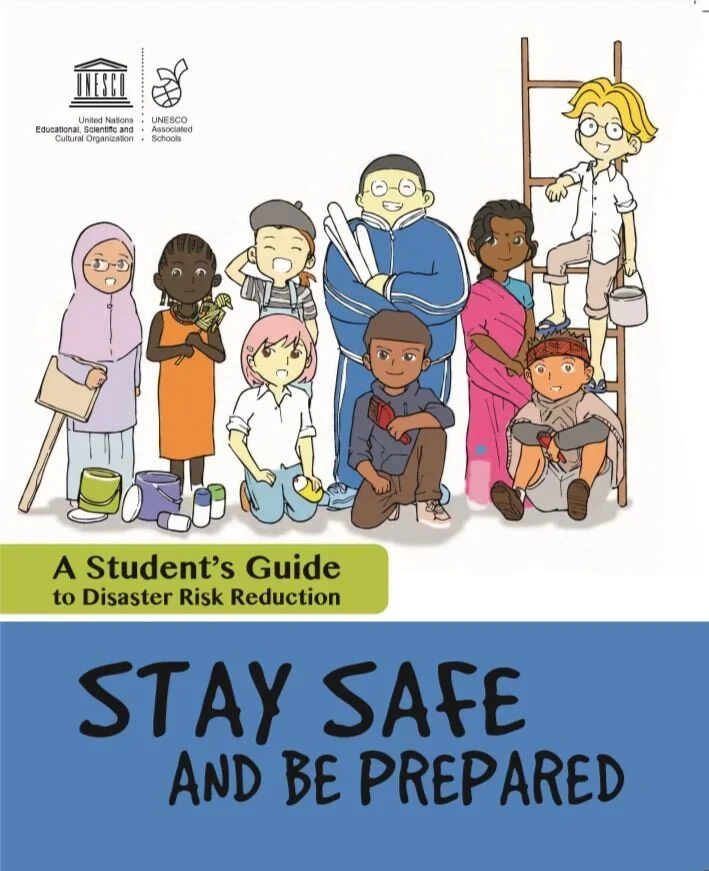
Stay Safe and Be Prepared: A Students’ Guide to Disaster Risk Reduction
The Students’ Guide (for students aged 11–18) is partly designed as a comic and tells the story of ‘Resilience Girl’ (RG). RG was affected by a tsunami, which caused her to lose one of her legs. Her experiences encouraged her to learn as much as possible about disaster risk, preparedness and resilience. Eager to share what she has learned with peers in her new school, RG delivers a presentation — ‘Be risk-smart, be prepared, be resilient.’
Stay Safe and Be Prepared: A Parents’ Guide to Disaster Risk Reduction
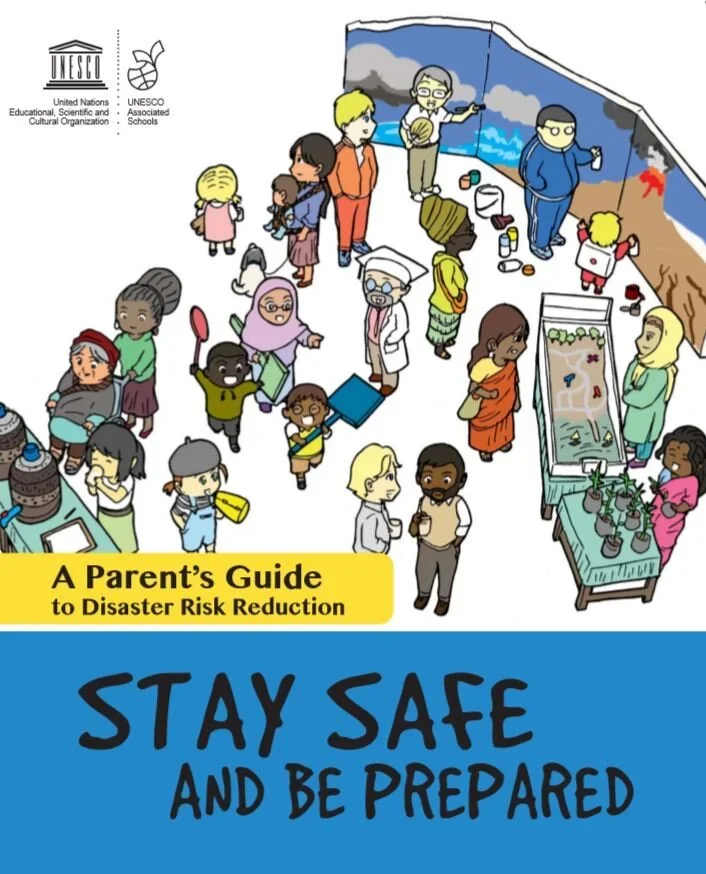
The Parents’ Guide offers ideas on family preparedness measures and on how parents can get engaged with their child’s school and their community to improve disaster preparedness and response. It also addresses the psychosocial well-being of children and outlines several exercises that parents can do to assist their child’s psychosocial recovery after a disaster. Both this Teachers’ Guide and the Parents’ Guide are designed to support the activities introduced in the Students’ Guide.
Eco-Schools Material on Disaster Risk Reduction
Eco-Schools Indian Ocean Disaster Risk Reduction Toolkit
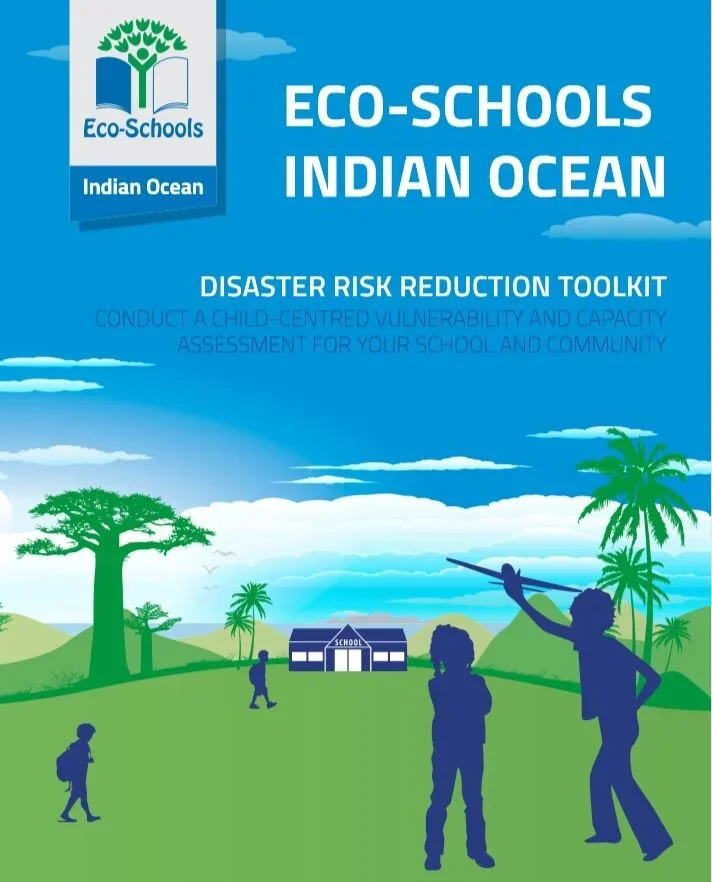
This toolkit provides a practical guide on how to conduct a Vulnerability and Capacity Assessment (VCA) with and for children alongside broader Disaster Risk Reduction (DRR) initiatives in schools. Combined with the Eco-Schools VCA training module, this toolkit will help teachers, school officials and community members who are active in the school through the Eco-Schools programme and who wish to further support children’s participation in school disaster preparedness and management.
UNEP – Online educational tool on sustainable Consumption
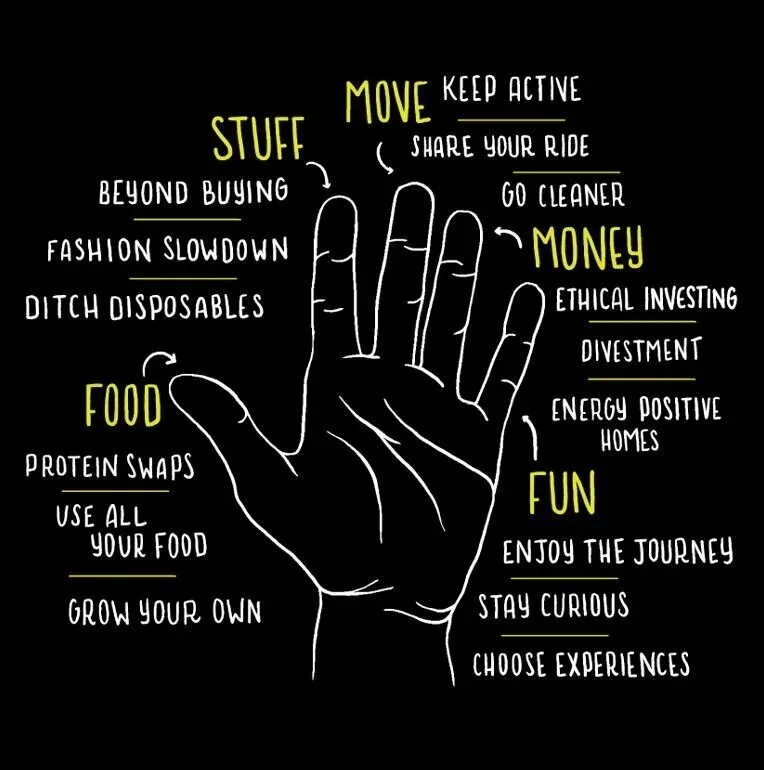
Anatomy of Action is a handy educational tool which can be used by anyone, anywhere, whether in schools, communities, or at home. It can concretely help people to live more sustainably, thereby having a positive impact on our planet.
Consumption in a world where an ever-increasing population is using ever scarcer resources means that people’s choices have serious negative impacts on the planet. The Anatomy of Action can help mitigate these. It's a UNEP and UnSchool developed social media toolkit to activate people to live more sustainably. The Anatomy of Action separates people’s lives into food, stuff, move, money, and fun. It’s a simple and science-based way to encourage people to reduce their carbon footprint and live more sustainably.
By using clean energy when heating a home or commuting to work, or reducing meat consumption, individuals can cumulatively have a direct impact on the collective good, and help reduce the chance of natural disasters, too. And people can push businesses and governments do their part as well.
Other UNESCO material on Climate Change, Education for Sustainable development, and the SDGs
Getting Climate-Ready: A guide for schools on climate action
This book is a guide for schools on climate action. The guidelines and examples are based on a survey looking at climate action projects at 55 schools in 12 countries. All schools in the survey are part of UNESCO’s Associated Schools Project Network (ASPnet). In addition, this guide draws on examples and research published in peer-reviewed journals, books, national and international guidelines and frameworks and programme websites.
Education for Sustainable Development: Learning Objectives
This publication is designed as a guide for education professionals on the use of ESD in learning for the SDGs, and consequently to contribute to achieving the SDGs. The guide identifies indicative learning objectives and suggests topics and learning activities for each SDG. It also presents implementation methods at different levels, from course design to national strategies.
YouthXchange Climate Change and Lifestyles Guidebook
This publication focuses on the challenges, opportunities and good practices of climate change. It explores the interrelationship between climate change and lifestyles through a scientific, political, economic, social, ethical and cultural angle and identifies actions young people might take towards more sustainable lifestyles. It provides information, case studies and useful tips around topics relevant to young people and their everyday lives, such as food and drink, travel and transport, leisure and entertainment. The guide was produced for young people and people working with them such as educators, teachers, trainers and youth leaders around the world.
Partners

