
Launching the Second Edition of the FEE Teacher Award!
On Thursday 5th October, we will be opening the FEE Teacher Award application window to educators from across the globe who deliver on our Eco-Schools, EcoCampus, YRE or LEAF programmes.
The FEE Teacher Award is the perfect opportunity for educators to showcase and celebrate on a global platform, the work they are doing to support young people become environmental advocates of the future. We are very keen to see in applications, evidence for how educators are ensuring a lasting impact from the work they deliver on any of our FEE Education Programmes. This could include but not be limited to: positive changes to their school’s sustainable footprint, improved attendance or academic performance of Eco-Committee members or Young Reporters, young people feeling more confident to take part in climate action or even students progressing on to further studies or careers in the sustainability sector.
For details on how you as an educator can submit your FEE Global Teacher Award application, eligibility requirements to apply and the award evaluation process please visit (and share with your network) this link:

Greening STEM and Climate Action through Alcoa Warming-Waste-Water-Watts-Wildlife (Alcoa W5) Project
On August 12th, the world celebrated International Youth Day, with this year’s theme being green skills for youth. A green transition towards a more environmentally sustainable and climate-friendly world is critical, and depends on fostering green skills for everyone, and especially youth. Initiatives like the Alcoa Warming-Waste-Water-Watts-Wildlife (Alcoa W5) project do just that. Wrapping up the fifth phase of the Alcoa W5 project offers an opportunity to reflect on the outcomes and experiences of participating students and teachers.

Students at Liknes Primary School in Norway regularly visited a nearby stream and learned about water quality and pH levels as well as local biodiversity.
Implemented by our local member organisations, the National Wildlife Federation (NWF) and FEE Norway, this phase of the Alcoa W5 project involved a total of 20 schools across the U.S. (New York, Pennsylvania, and Indiana) and Norway. Participating schools focused on the themes of warming (climate change), waste, water, watts (energy), and wildlife (biodiversity). The aim of the Alcoa W5 project has been to support teachers in greening Science, Technology, Engineering and Math (STEM) education by engaging students in nature-based learning. The Seven Steps methodology of our Eco-Schools programme provides the ideal framework to support this type of learning through its student-centred, project-based pedagogy.
This phase of the Alcoa W5 project saw students of all ages involved in green STEM projects across all five W’s. High school students in Indiana tackled waste by developing a recycling strategy for their school that kept 30 bags of plastic bottles out of landfills, while preschoolers in Norway built birdboxes especially for the smaller, native bird species around their school. Students in New York organised an Energy Patrol contest to reduce their school’s energy consumption through heating and lighting. In Norway, students visited their local stream and learned not only about testing water quality and pH levels, but also about the flourishing biodiversity in their own backyard. A common outcome throughout all the Alcoa W5 projects was not just that students learned more about environmental issues, but that their attitudes and behaviours towards these issues changed as well.

Students from the Environmental Charter School in Pittsburgh, PA planted native pollinator species in their school garden.
“Over the past year, the Alcoa W5 project has served to support both teachers and students in exploring issues of sustainability and making connections to the U.N. Sustainable Development Goals (SDG”s). This collaboration with the Alcoa Foundation, FEE and NWF has provided schools on a global level to engage in environment-based education that has led to student-led, solution-based actions at their schools and in their communities. This year in the U.S., schools in Massena, NY, Pittsburgh, PA and Newburg, IN addressed issues such as stormwater runoff, gardening for climate action and developing habitat to support biodiversity. It is always wonderful to see how this type of learning can create engaged and inspired learners,” stated Elizabeth Soper, NWF Senior Director of K-12 Education.
The impact of the Alcoa W5 projects goes beyond students, supporting teachers by providing critical resources and funding to facilitate their students’ learning both in and outside of the classroom.
Daniel Schaffer, CEO of the Foundation for Environmental Education’s CEO shared that, “The Alcoa W5 project has been a fantastic initiative that has supported hundreds of students and teachers in engaging with STEM education through an environmental lens within the holistic, project-based framework of the Eco-Schools programme. It’s incredibly rewarding to hear from teachers about how enthusiastic students are about learning and their environment when they get the chance to develop and lead their own projects.”

Students participating in an experiment at Jefferson Elementary School.

Teachers participating in a ESD workshop in Norway.
Key to the Eco-Schools programme and an important element of Education for Sustainable Development is also the engagement of the wider community to ensure long-term sustainable action. This year’s Alcoa W5 projects illustrate just that, showcasing how the environmental efforts of students and teachers are able to achieve an even greate impact with the support of community members; families, businesses, nonprofits, and volunteers.
As Marit Kjellesvik of FEE Norway said, “We see enormous value in participation of another cycle of the Alcoa W5 project. FEE Norway has been a partner in the project since 2016, and with support from Alcoa Foundation thousands of students and teachers have been supported and facilitated in interdisciplinary work with education of environmental sustainability. It has been fantastic to follow students of all ages in Farsund and Mosjøen with forward-looking approaches to highly current and very important sustainability themes. Skilled teachers have given students inspiration and room for exploration and investigation. With a high degree of student activity and collaboration with local partners, the project has contributed to creating innovation at the school and far beyond its borders. The project has made visible for the whole community the importance of education for environmental sustainability and that everyone can contribute to make a difference.”
The W5 project would not have been possible without the support of Alcoa Foundation.
“Alcoa Foundation has proudly supported the Alcoa W5 project since its inception in 2016. In addition to preparing kids globally for new STEM jobs, it has been rewarding to see how the program has contributed to an improved understanding of the world around them and inspired students and educators to be stewards in their own communities. We thank our partners from carrying out this impactful initiative.” Kayla Branch, Program Development & Communications Manager, Alcoa Foundation.

Students at Vanse Primary School in Norway sharing their work with Farsund's mayor.

Turtle Creek Elementary STEAM Academy participated in the Unwrap the Waves candy wrapper recycling program in partnership with the Loggerhead Marine Science Center.
About Alcoa Foundation: Alcoa Foundation invests where Alcoa has a presence, partnering with communities to address local needs in a sustainable manner. With our nonprofit partners, we contribute to programs that protect and preserve the environment and promote equitable access to education and skills-building opportunities. https://www.alcoa.com/foundation/en
About the Foundation for Environmental Education and the Eco-Schools Programme: Established in 1981, the Foundation for Environmental Education (FEE) is one of the world's largest environmental education organisations, with over 100 member organisations in 81 countries. The internationally recognized Eco-Schools programme developed by the Foundation for Environmental Education (FEE) engages young people in quality environmental education and meaningful action. Through a simple, seven-step framework, pupils are empowered and motivated to drive change and improve environmental awareness in their school, local community and beyond. www.fee.global | www.ecoschools.global
Green Flag for Terra Moyo International School, Kenya
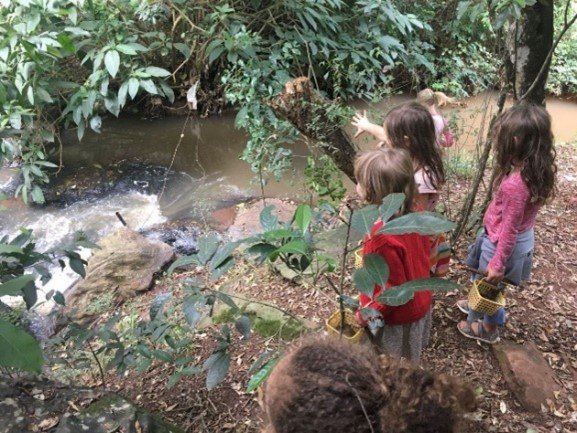
We are honored to share that Terra Moyo International School has become the newest school in Kenya to be awarded the prestigious Green Flag! Sustainability initiatives form part of the school’s soul, with the name ‘Terra’ derived from Latin to mean ‘earth’ and ‘Moyo’ is a Swahili word meaning ‘heart’.
The school’s main focus is on biodiversity protection and reducing pollution. Situated next to the famous Karura forest (one of the main legacies of Africa’s first female Nobel Prize winner Wangari Maathai), the school radiates hope and a vision of hope that sees students walking in the footsteps of one of the greatest environmentalists of our time.
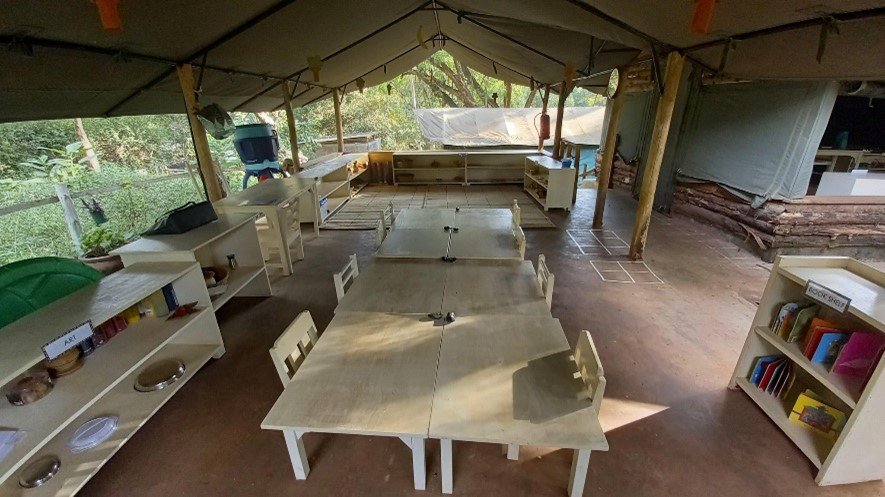
The school buildings themselves are not permanently constructed and outdoor walking pathways have not been paved, all ensuring minimum disturbance to the soil and living organisms. Classrooms have large open windows to maximize the use of natural light and allow students to experience biodiversity and the nearby forests from inside their classrooms.
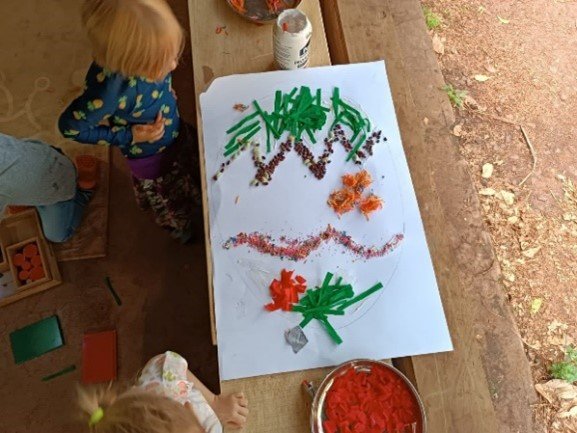
Terra Moyo International School embraces both creativity and community in their environmental initiatives, contributing to acquisition of their Green Flag. One such initiative is their unique alternative to regular paint! To keep the students’ creativity flowing and the school’s waste to a minimum, local restaurants supply the school with flowers, from which the students and teachers squeeze out color to use for painting. Making the most of the nearby Karura Forest, the school also has a partnership with the Kenya Forest Service, giving each class the opportunity to spend one lesson in the forest, allowing the students to find meaning in the beauty of forest ecosystems and in the need for their conservation.
Congratulations to Terra Moyo International School on receiving the Green Flag!
Green Flag for Olginskyj Lyceum (Ukraine)
There is hope even in the darkest time
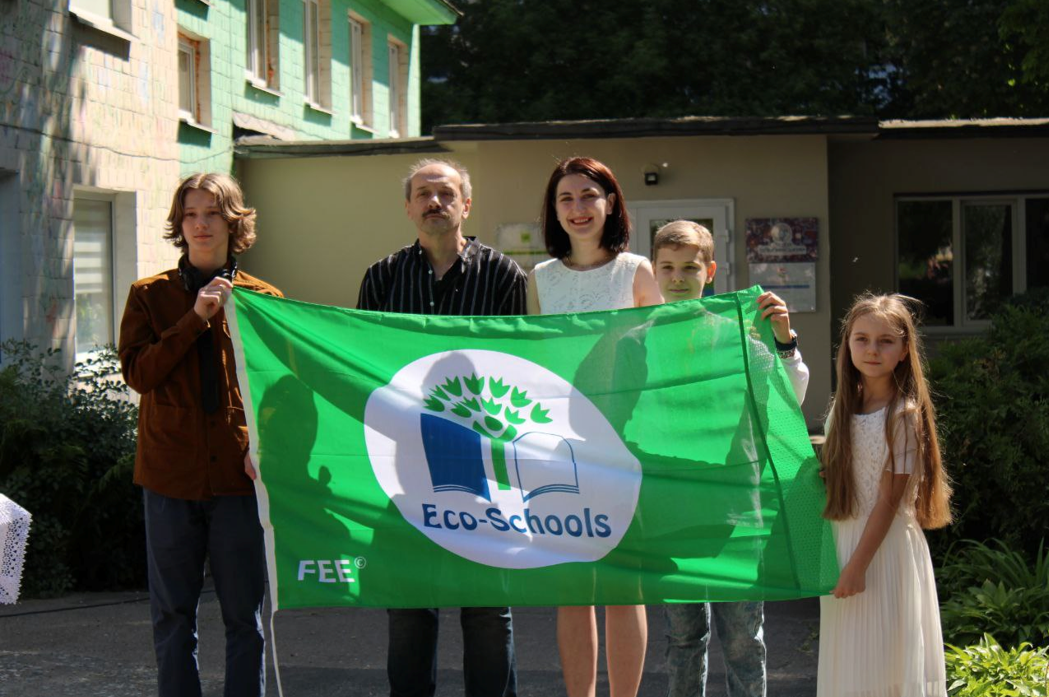
It has been a challenging school year for Ukrainian schools. Air-ride sirens, missile strikes, drones, and electricity cuts have interrupted everyday life and study processes in the country. It has now become almost normal for students and their teachers to have lessons taking place in shelters, or to run to a shelter during the day. However, it was essential to show the light at the end of the tunnel, which is why Olginskyj Lyceum and Kindergarten “Rozumka” worked hard to implement projects related to a better future. The implementation of the Eco-Schools programme became one of such positive outlook projects. Well-deservedly, on the 2nd of June, 2023, Olginskyj Lyceum received a Green Flag from the Ukrainian Eco-Schools Programme National Operator, Modest Aleyev, as a recognition of their inspiring achievements.
During the year, the members of the Eco-Committee did their best to involve their whole school in biodiversity protection activities, recycling waste, and other important activities related to the Eco-Schools programme. Teachers of Olginskyj Lyceum’s Gymnasium A+ and Primary School A+ were among the first teachers to re-establish the study process in severe conditions a year ago and re-started the Eco-Schools programme this school year. Additionally, Kindergarten “Rozumka” is successfully developing biodiversity, health, and well-being themes at their school. Gymnasium A+, Primary school A+, and Kindergarten “Rozumka” are in the final stages of their Green Flag award application.
Celebrating Environmental Educators with the FEE Teacher Award!
Monday, 5th June: On the occasion of World Environmental Day, we are proud to highlight the amazing work of teachers from our global educational network and promote their excellent contribution to sustainable education.

The first-ever call for the FEE Teachers’ Award was opened in 2022, so we are incredibly excited to be announcing the winners today!
The FEE Teachers’ Award highlights teachers who have been engaged in the Eco-Schools, Learning about Forests (LEAF) or Young Reporters for the Environment (YRE) programmes for five or more years and whose institution has been awarded a Green Flag Award, a LEAF Award or has produced a finalist/winner for a national YRE competition.
The selected teachers exemplify excellence in environmental education and commitment to our young people and planet. We are sincerely grateful for the energy they continuously dedicate to empowering the next generation to tackle the world’s environmental challenges and hope they serve to inspire others in doing the same.
We are proud to announce the following winners of the 2022 FEE Teachers’ Award:
Andrea Tláskalová - Š J. V. Sládka Zbiroh (CZECHIA)
Bindu Chona - Nand Vidya Niketan Jamnagar (INDIA)
Draženka Kolonić - 1 st Primary School Varaždin (I.Osnovna Škola Varaždin) (CROATIA)
Inés Nancy Acolt Ariano - Colegio Contadero (MÉXICO)
Kate Doyle - Everton Nursery School (ENGLAND)
Liliana Zepeda - Colegio Contandero (MÉXICO)
Ľubica Noščáková - Narnia Church Elementary and Middle School (SLOVAKIA)
Maria Manuela Moura dos Santos Costa - Escola Cidade de Castelo Branco /Agrupamento Nuno Álvares (PORTUGAL)
Marianthi Giannakopoulou - Athens College Elementary School (GREECE)
María Olivia Pérez Esquivel - Colegio Contadero (MÉXICO)
Monica Murphy - Presentation Secondary School, Castleisland (IRELAND)
Nuray Eran Türedi - Captain Altay Altuğ Kızılay Kindergarten (TÜRKIYE)
Özge Karaevli - Şehit Öğretmen Nuriye Ak Kindergarten (TÜRKIYE)
Poonam Tiwari - Nand Vidya Niketan - Jamnagar (INDIA)
Saziye Bekdogdu - Narlıdere Kilicaslan Secondary School (TÜRKIYE)
Sibel Ünlü - Private Akdeniz Birey Secondary School (2017-2022) Private Akev Secondary School (present) (TÜRKIYE)
Victor Moreira Martins - Agrupamento de Escolas Andre Soares (PORTUGAL)
Congratulations to all the incredible teachers making a difference every day!
Video from awarded teacher Ľubica Noščáková - Narnia Church Elementary and Middle School (SLOVAKIA)
Eco-Schools highlighted as essential to achieving goal of the UN Greening Education Partnership
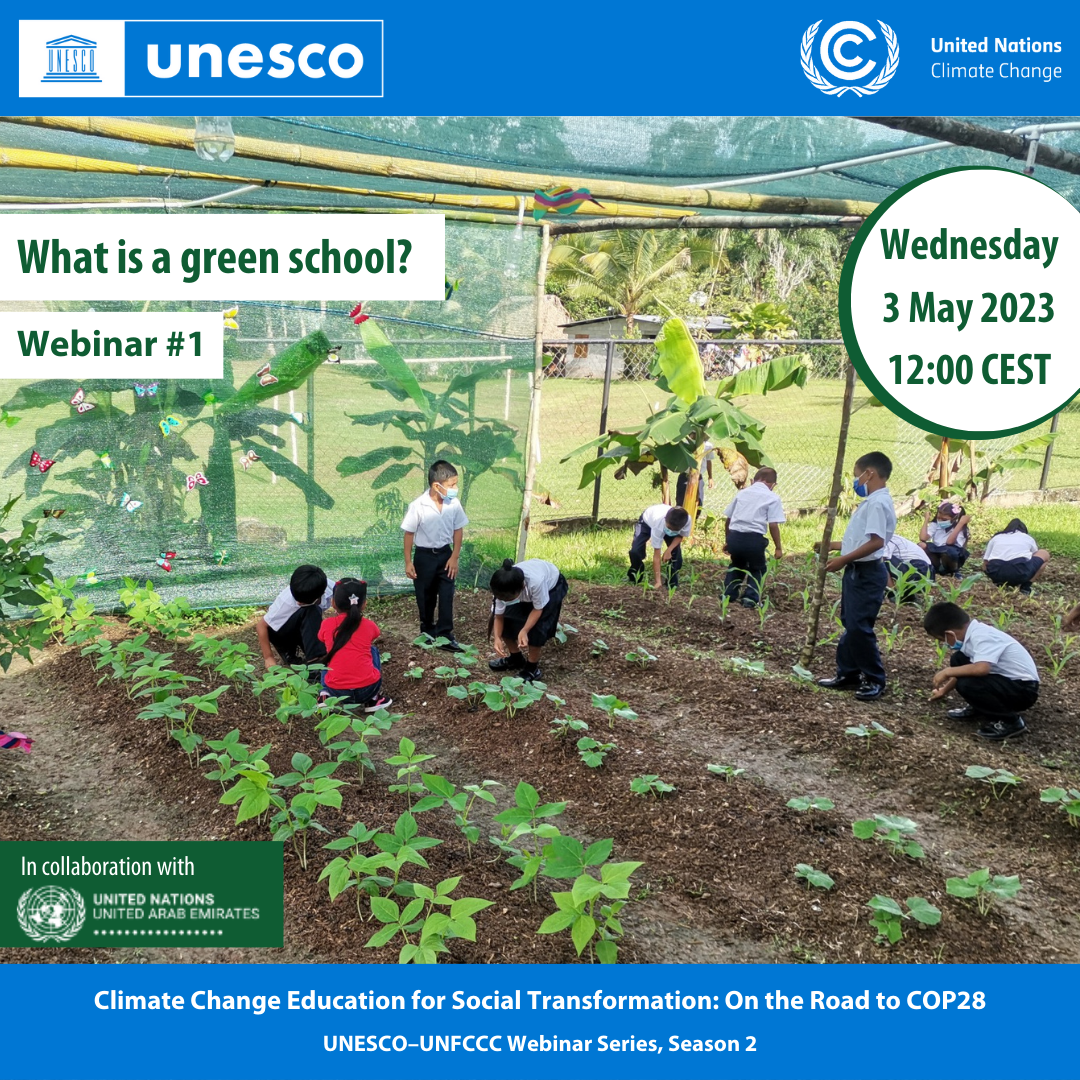
Yesterday, May 3rd 2023, the first webinar of the UNESCO-UNFCCC series, Climate change education for social transformation: Whole-institution approach to greening every school, took place to discuss the question “What is a Green School?”
The webinar highlighted the United Arab Emirates strong commitment to reaching the ambitious goal of Pillar 1 of the Greening Education Partnership, calling to have at least 50% of all schools, colleges, and universities registered with a green accreditation scheme by 2030.
With its long-standing expertise within Education for Sustainable Development (ESD) and its extensive network of schools across more than 90 countries, Eco-Schools has been recognised as one of the key ESD programmes to reach this goal. Out of the 50 member states already committed to the partnership, the UAE is one of early movers, spearheading the Green School movement leading up to COP28 in Dubai and beyond.
“Going forward, we hope to continue to register and certify schools to become Eco-Schools under the model of FEE”.
- H.E. Dr. Amna AlDahak Alshamsi, UAE Ministry of Education
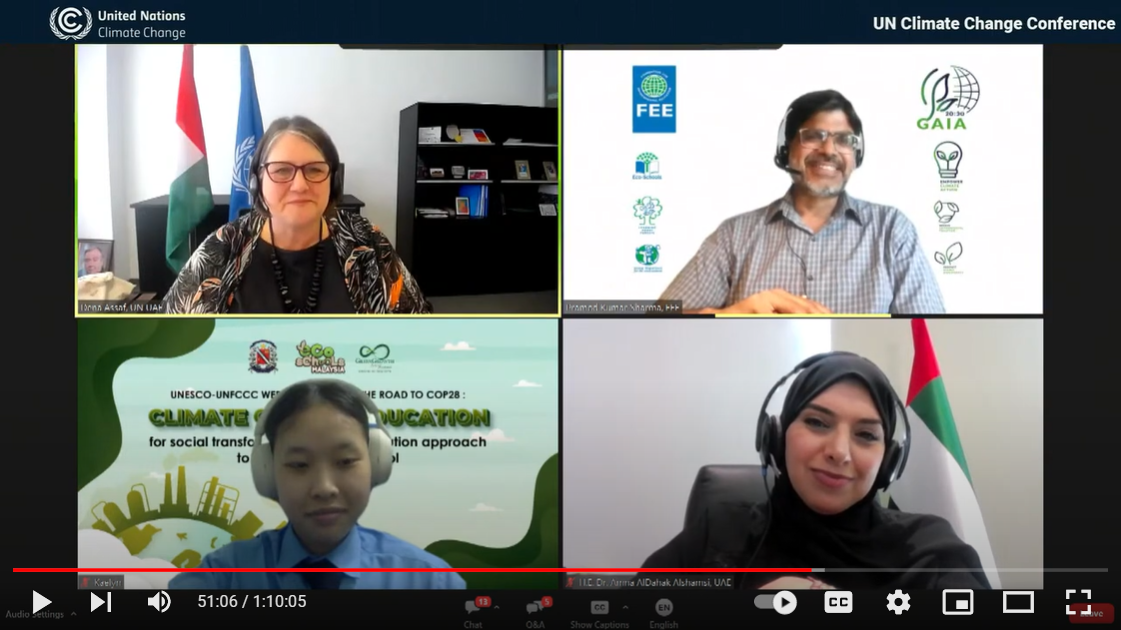
The Greening Education Partnership aims to “prepare every learner to acquire the knowledge, skills, values, and attitudes to tackle climate change and to promote sustainable development.” The contribution of Ms Kaelyn, an Eco-Schools student from Malaysia, highlighted the positive impact that the programme has had on her:
“Being part of the Green Squad has helped me improve my communication, leadership and academic skills”
- Ms Kaelyn, Student, Convent Butterworth High School
Over the next year, UNESCO will work on a Green School Quality Standard in consultation with Green Schools Working Group members. The standard aims to provide a progressive, context-relevant minimum quality standard for green schools. As a supporting member of the Greening Education Partnership and the co-lead of GEP Pillar 1 on Greening Schools, Foundation for Environmental Education (FEE) is looking forward to supporting this work.
Webinar Panelists:
H.E. Dr. Amna AlDahak Alshamsi, Assistant Undersecretary, Care and Capacity Building Sector, Ministry of Education, UAE
Dr Pramod Kumar Sharma, Senior Director of Education, The Foundation for Environmental Education, co-coordinator of Pillar 1 on Greening Schools of the Greening Education Partnership
Ms Kaelyn, Student from Convent Butterworth High School, Eco-Schools, Malaysia
The recording of the webinar is available n English, French and Spanish
About Eco-Schools
Launched in 1994, Eco-Schools is a globally recognized programme within the field of Education for Sustainable Development (ESD) implemented in over 90 countries worldwide. Using a Seven Step project-based learning framework and a whole-school approach, students engage in hands-on, active learning to drive positive environmental change in their school and local community.
As an accreditation scheme, the Eco-Schools programme recognizes the progressive changes made by educational institutions through the Seven Steps. The prestigious Green Flag is awarded when significant environmental and educational improvements have been achieved. The Green Flag is renewed periodically to ensure continuous positive development.
On a tertiary level, the programme is called FEE EcoCampus.
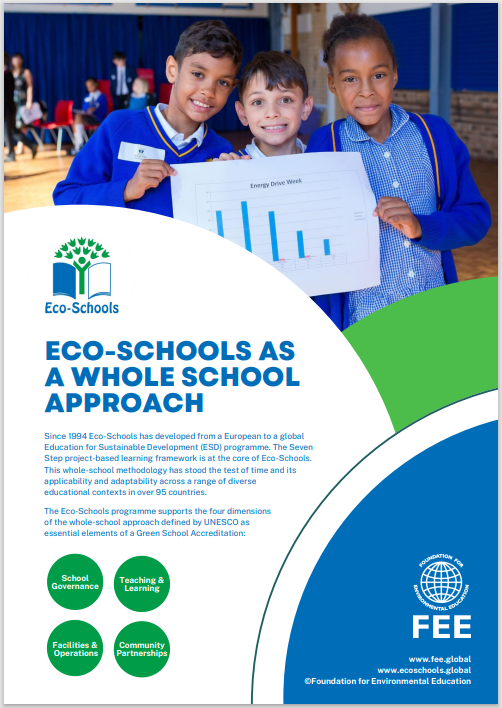
Click on the image to download the leaflet
About Foundation for Environmental Education
Established in 1981, the Foundation for Environmental Education (FEE) is one of the world's largest environmental education organisations, with over 100 member organisations in 81 countries. Eco-Schools is one out of five programmes coordinated internationally by FEE.
FEE is a supporting member of the Greening Education Partnership and the co-lead of GEP Pillar 1 on Greening Schools.
Greening with Protective Forest Belts in Uzbekistan
The lack of green spaces and an increase of air pollution are creating major environmental issues for those living in Uzbekistan. According to the United Nations, deforestation, and wind- and water erosion, resulting in biodiversity loss, are some of the most serious environmental problems threatening Uzbekistan’s natural environment. Forests play a crucial role in protecting surrounding land, combatting desertification, and preventing erosion. Deforestation in Uzbekistan therefore not only impacts the biodiversity in forest, but also that of numerous fragile ecosystems, such as river basins. Furthermore, Uzbekistan is facing extremely high levels of air pollution, especially in the Tashkent region, which also contribute to ecosystem degradation through the acidification of water and soil.
Tackling these growing environmental problems is the Zamin Foundation, which implements several projects focused on restoring ecosystems and ecology in Uzbekistan. One such project is the Yashil Zamin project (which translates to Green Land). Yashil Zamin aims at greening cities and creating forest belts, which have numerous benefits for their surrounding ecosystems. Forest belts help protect ecosystems, and therefore biodiversity, from wind and dust, as well as helping neighboring agricultural land combat drought, and wind and water-erosion, which contributes to more stable and high crop yields. Forest belts also help protect against atmospheric and noise pollution.

Green Barrier planted by the Zamin Foundation (source: Zamin Foundation)
The Yashil Zamin project combines numerous different activities, with a common aim of greening urban spaces. In the Syrdarya region, one of the project activities consisted of planting forest belts to create a green border. The efforts of the volunteers have resulted in the planting of 175km of forest belts in the region. North of the Syrdarya region, in the capital city of Uzbekistan, Tashkent, 11,500 local varieties of trees and shrubs have been planted. The project has covered an area of over 19 hectares, and there are plans to plant more trees, covering an even greater land extension.
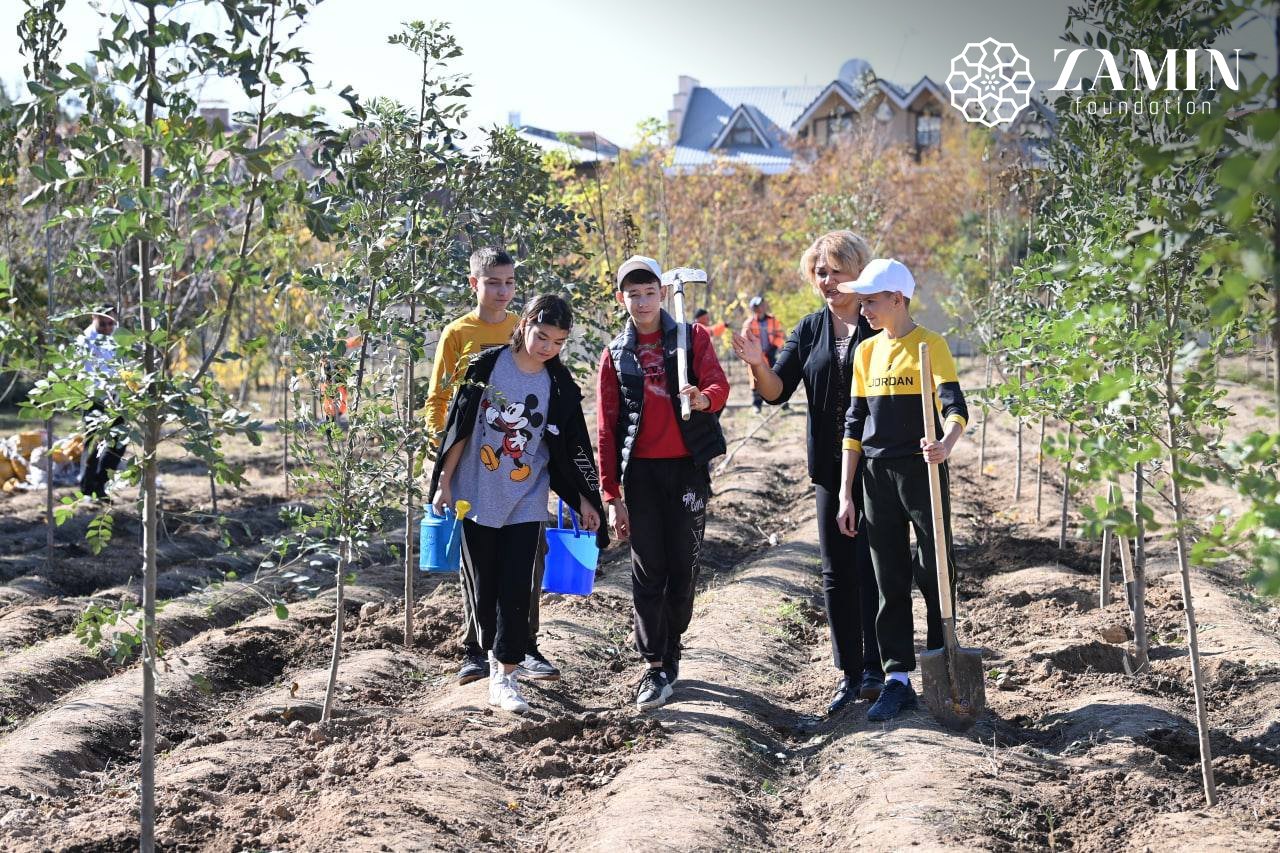
Children participating in tree planting activities (source: Zamin Foundation)
The Yashil Zamin project is, however, not only a planting project but also aims to support the future of greening in Uzbekistan. The Zamin Foundation contributes to this goal by digitally monitoring the planted trees, logging the type, age, trunk, and height of each tree. Education also plays a key role. The project also works to educate those in the field of gardening and landscaping, in the hopes of raising awareness about the value of urban green spaces, trees and forests.
The Zamin Foundation is also educating an environmentally responsible generation through the implementation of the Eco-Schools programme. Students in the 41 Eco-Schools of Uzbekistan participate in several of the Zamin Foundation’s projects, gaining practical skills by taking care of their schools’ greenhouses, where they learn about tree planting, biodiversity, and ecosystems. They then offer seminars to other schools about tree planting, sharing their knowledge on greening with others.
Lastly, through the implementation of Yashil Zamin, the Zamin Foundation further hopes to draw the attention of the public and authorities to the pollution environmental problems and the value of ecosystem restoration in Uzbekistan.
The greening of urban spaces is incredibly important to local biodiversity and ecosystems. Projects such as Yashil Zamin promote the introduction and restoration of ecosystems in areas where human activities have caused severe habitat fragmentation and a significant decline in local biodiversity, altering many ecosystem services. These projects show how humans can nurture surrounding ecosystems and how vital these ecosystems are in combatting air pollution, wind- and water erosion, and mitigating climate change. By working intensely on restoring local ecosystems, projects such as Yashil Zamin align with the objectives of the UN Decade on Ecosystem Restoration.
If you would like to learn more about the UN Decade on Ecosystem Restoration and how you can get involved, please visit the following link.
This article is part of our UN Decade on Ecosystem Restoration series which highlights the projects and activities of FEE members that contribute to the UN Decade.

Building Playgrounds with a Future in Flanders, Belgium

The ‘Playground with a Future’ Poster
Green school playgrounds offer endless advantages; from climate education opportunities to becoming local biodiversity steppingstones, as well as local air temperature and air quality regulation. In many urban areas, however, playgrounds are often made of grey concrete, turning their back on local biodiversity while also being uninspiring places for children to play. Tasked with solving the problem of lifeless areas, a partnership between the government of Flanders, five Flemish provinces, and the VGC in Brussels (Dutch-speaking schools) was formed, leading to the start of "Playgrounds with a Future" (Een Speelplaats met Toekomst in Dutch).
MOS Vlaanderen, a Belgian member organization of the Foundation for Environmental Education (FEE), got involved in the project back in 2018 when they joined the "Movement for Friendly and Shared School Playgrounds" focus group along with GoodPlanet and the Flemish Government. They worked together to develop a shared vision for the design of greener, more environmentally friendly, and inspiring playgrounds and school environments. The efforts of the focus group later evolved into the current "Playgrounds with a Future" network and the subsequent design of the “Playground with a Future” poster which integrates the common vision of the network stakeholders. On the ground, using the vision set out by Playgrounds with a Future as a guide, MOS continues to actively support school greening initiatives by providing guidance on how to improve playgrounds so they become areas where students can learn from, about, and in nature. This is done through offering grants, coaching about education for sustainable development (ESD), and providing support to schools willing to undertake the schoolyard greening process. The partnership still exists and comes together to discuss the steps required to provide schools with as much support as possible.
The "Playgrounds with a Future" vision also advocates for green spaces to be handled in an environmentally friendly manner, avoiding the use of pesticides and herbicides. These environmentally friendly practices make the school playgrounds inviting spaces for local biodiversity and help combat habitat loss and fragmentation in urbanised areas. “Playgrounds with a Future” are therefore outdoor spaces with living nature, giving children a chance to spend time outdoors, discover and learn about their local biodiversity, and develop a connection with the natural world. All these are vital skills which allow the students to acquire nature preservation and conservation values.
With 366 greening projects currently underway around Flanders and Brussels, the “Playground with a Future” project has thus far been a success, but the work doesn't stop here. Every year in May, an Open School Garden Day is held to further encourage schools to take on this schoolyard greening process. The Open School Garden Day gives schools an opportunity to exchange ideas and recommendations about their own greening experiences, including how to adequately maintain the outdoor green spaces, the observed advantages, which the greener playgrounds bring to students and local biodiversity, and how the playgrounds can help promote outdoor education. To provide further support and encouragement, MOS has released also a set of good practices in order to offer additional direction and inspiration to schools, as well as offering vital training sessions to schools that already have taken part in school garden maintenance.
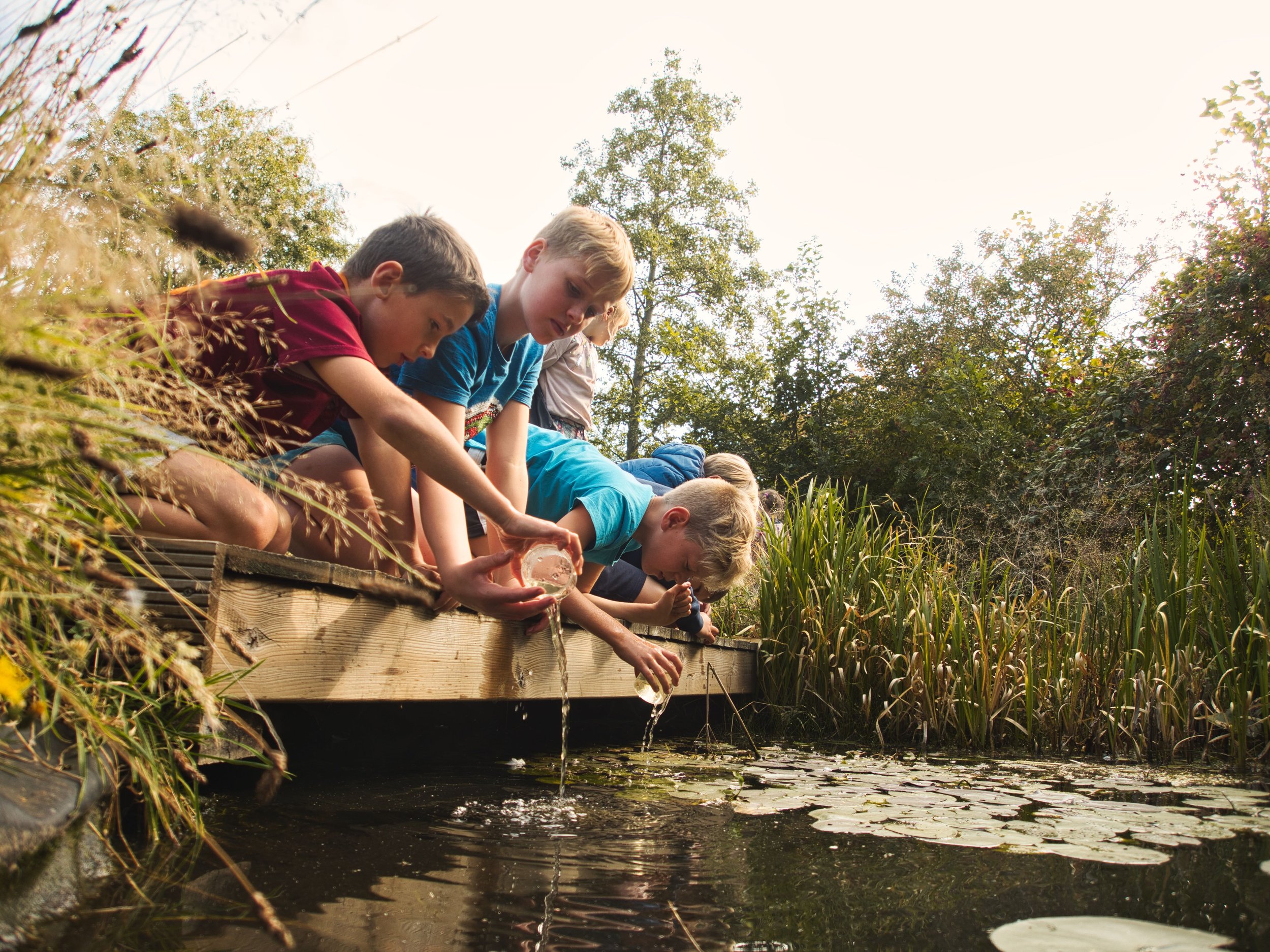
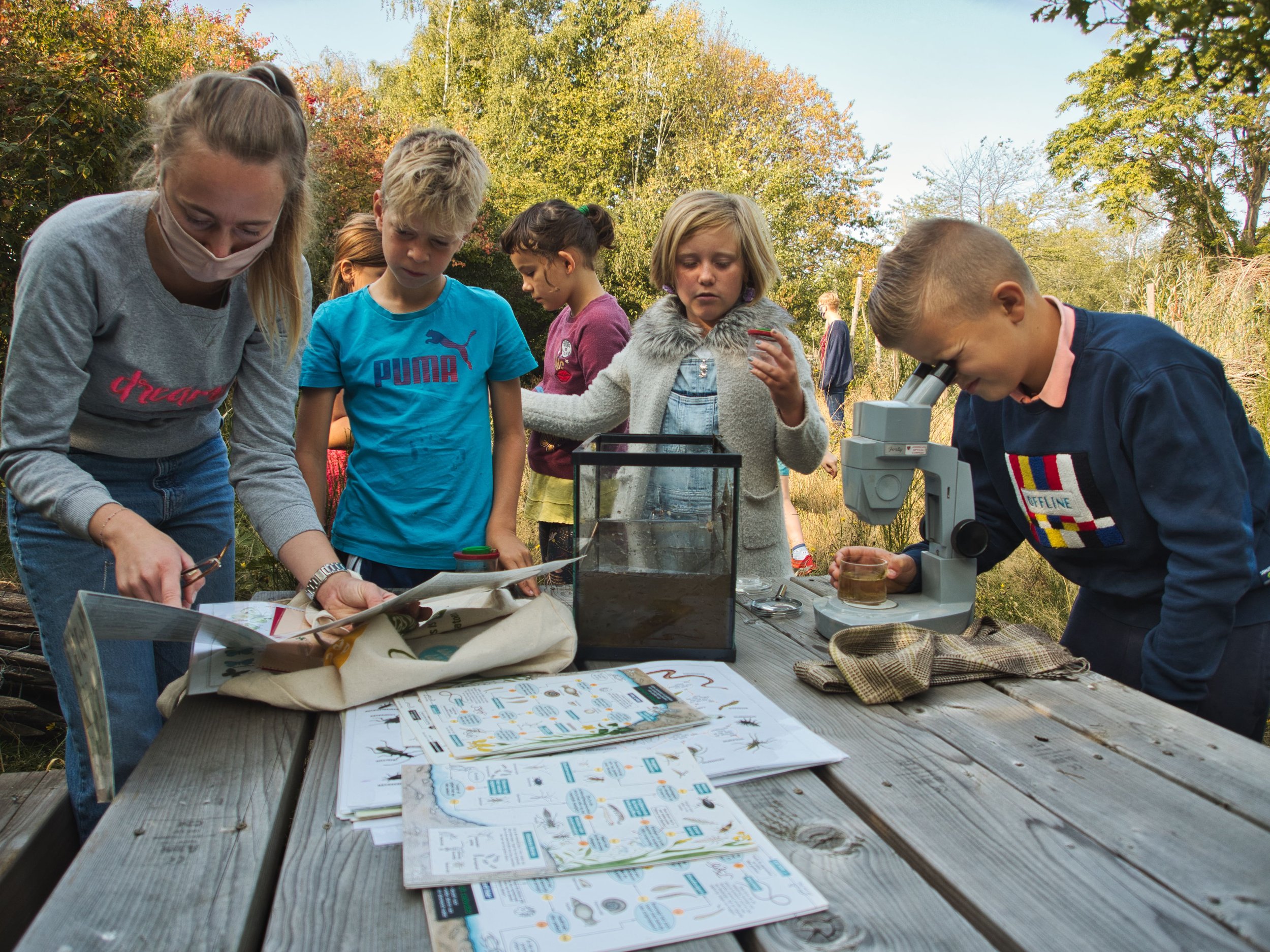
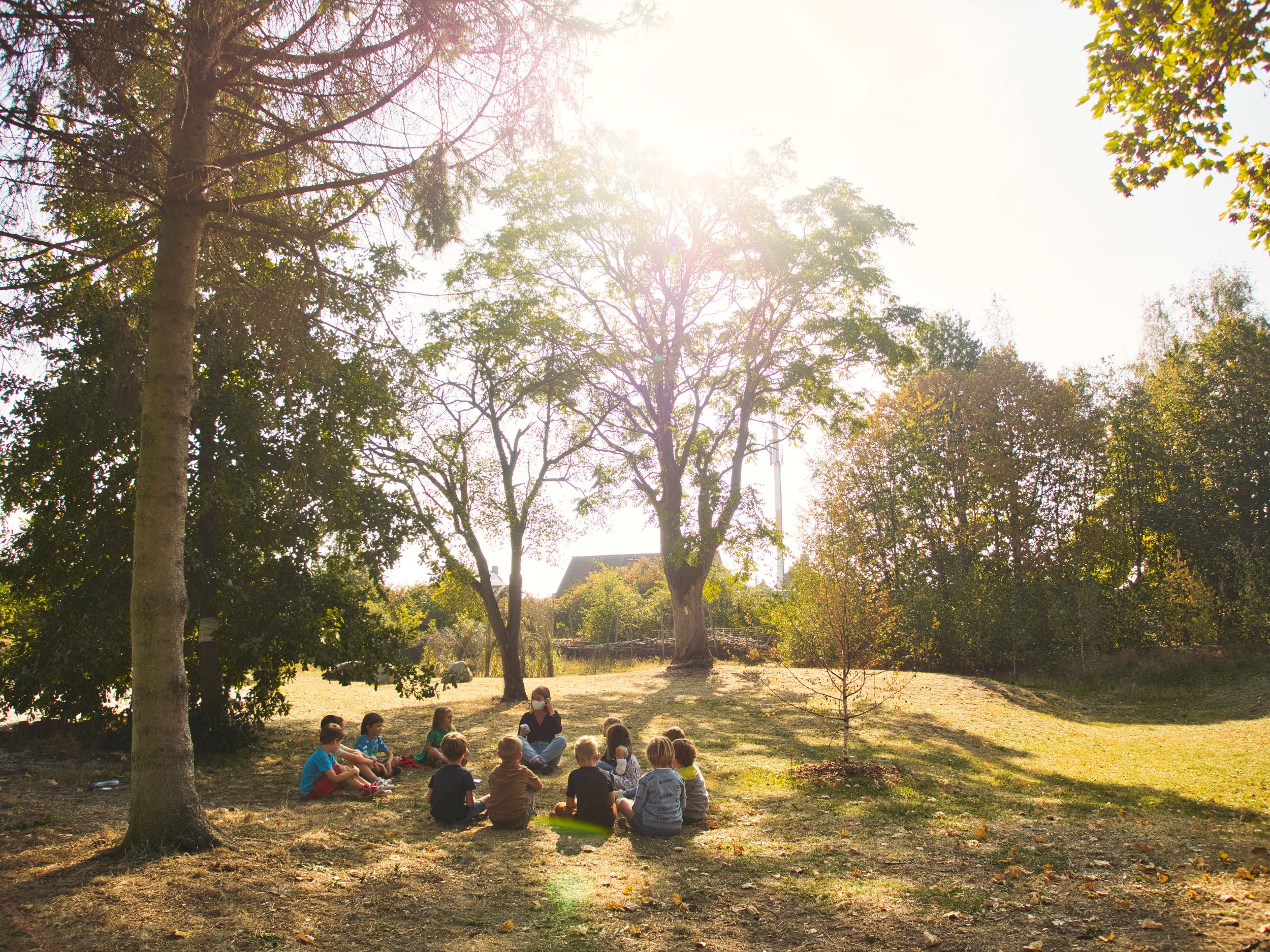
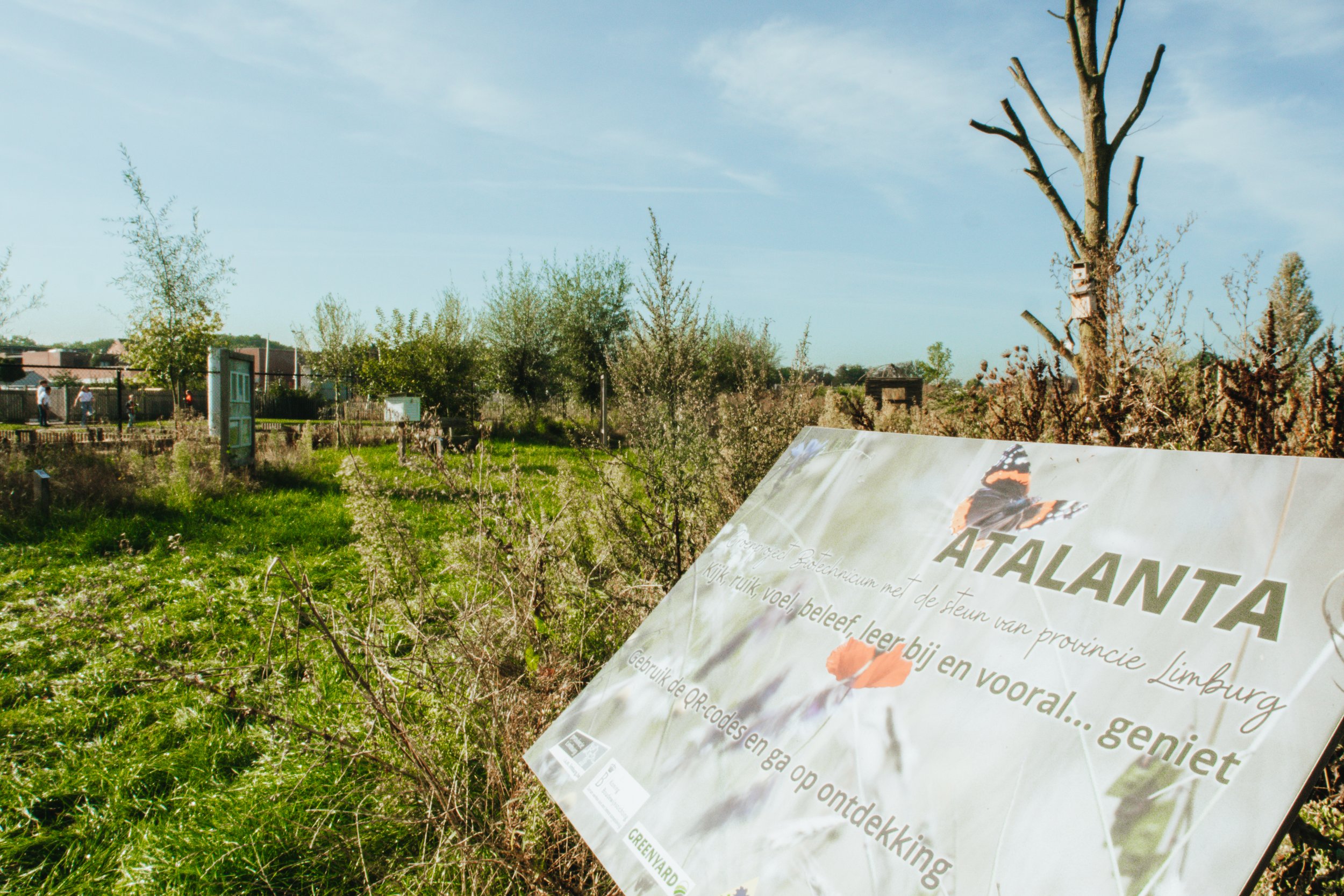
In addition to the local benefits for wildlife, air quality and air temperature improvements green "Playgrounds of the Future" also give future generations a chance to connect with the natural environment. Exposing students to nature provides opportunities to increase awareness and knowledge of climate and biodiversity education. Thus, projects like "Playgrounds with a Future" play a crucial role in educating future generations who have a lot to say about the future of our planet. The purposes of initiatives like "Playgrounds with a Future" aid in promoting and restoring local ecosystems in urban areas, which aligns with the objectives of the ongoing UN Decade on Ecosystem Restoration.
If you would like to learn more about the UN Decade on Ecosystem Restoration and how you can get involved, please visit the following link.
This article is part of our UN Decade on Ecosystem Restoration series which highlights the projects and activities of FEE members that contribute to the UN Decade.
