"Every child deserves a school where learning is supported by a healthy, safe, and sustainable environment. Sometimes, that journey begins with something as fundamental as access to safe drinking water."
Access to safe drinking water is one of the most basic human needs, yet millions of children around the world still attend schools where clean drinking water is either unavailable or unreliable. According to the WHO/UNICEF Joint Monitoring Programme (JMP), hundreds of millions of schoolchildren globally lack access to basic drinking water services at school, placing their health, well-being, attendance, and learning outcomes at risk (WHO & UNICEF, 2021). Safe drinking water is not only essential for preventing waterborne diseases but also plays a critical role in creating healthy learning environments that enable children to reach their full potential (WHO, 2022).
Recognising this challenge, the Eco-Schools Programme in Bangladesh transformed a local environmental issue into an opportunity for sustainable school development. Through the Safe Water for Greener Schools Initiative, three schools serving disadvantaged communities in the Rayerbazar area of Dhaka have become inspiring examples of how environmental education, community participation, and evidence-based decision-making can create lasting change.
Sustainable education begins with a healthy learning environment
Sustainable education extends far beyond academic achievement. It equips learners with the knowledge, skills, values, and behaviours needed to improve their own lives while protecting the environment, promoting social equity, and supporting sustainable economic development. Equally important, it ensures that schools themselves become resilient, inclusive, healthy, and environmentally responsible institutions capable of delivering quality education for generations to come (UNESCO, 2023).
These principles are reflected in the Greening Education Partnership, a global initiative led by UNESCO that encourages countries to transform education systems through greener schools, greener learning, greener communities, and greener capacities.
The Eco-Schools programme aligns closely with this vision. Using its internationally recognised Seven Steps methodology, schools undertake continuous learning and improvement across thirteen thematic areas, including water, biodiversity, waste, climate change, energy, healthy living, and sustainable consumption. Rather than implementing isolated environmental projects, Eco-Schools empowers students to become active participants in identifying challenges, developing solutions, and leading environmental action within their schools and communities.
Identifying a critical challenge
As the National Operator of the Eco-Schools Programme in Bangladesh, Probha Aurora works with a diverse range of educational institutions, including government and non-government schools, Bangla and English medium schools, orphanages, schools serving Indigenous communities, and schools located in urban informal settlements.
During the Eco-Schools project-based learning processes, a significant challenge emerged in several schools located in the Rayerbazar area of Dhaka. Despite serving more than 1,000 students from low-income communities, these schools had no reliable access to safe drinking water.
Many students spent the entire school day without drinking water because they did not trust the available water sources. Others attempted to bring water from home, but this was often impractical due to long travel distances, financial hardship, or limited access to safe water within their own households.
The challenge extended beyond infrastructure. Unsafe drinking water increases the risk of waterborne diseases, reduces students' concentration and well-being, and undermines the creation of healthy learning environments (WHO, 2022). Addressing this issue therefore became an important step towards achieving greener, healthier, and more inclusive schools.
From evidence to action
Rather than applying a standard solution, Probha Aurora adopted a scientific and evidence-based educational approach.
Comprehensive baseline surveys were conducted to understand the existing conditions of each school. The assessments included infrastructure inspections, stakeholder consultations, school-level surveys, observations of drinking water practices, and laboratory analysis of water quality.
The project evaluated key water quality parameters including pH, Total Dissolved Solids (TDS), turbidity, iron concentration, residual chlorine, and total hardness in accordance with the Bangladesh Environmental Conservation Rules (ECR), 2023. These assessments enabled the project team to understand the specific needs of each school before selecting an appropriate treatment technology.
Recognising that no single solution is suitable for every context, different technologies were selected according to local conditions.
Reverse Osmosis (RO) systems with Ultraviolet (UV) disinfection were installed where advanced treatment was required, while a Multi-stage Biosand Filtration System was introduced where a gravity-driven, low-maintenance, and environmentally sustainable solution was more appropriate.
This context-specific approach ensured that each school received the most technically appropriate, operationally feasible, and financially sustainable solution.
Building ownership through the Eco-Schools process
A defining strength of the Eco-Schools programme is that sustainability is achieved not simply by installing infrastructure but by empowering people.
To ensure long-term operation and maintenance, Eco-Committees were established in each participating school. These committees include representatives from school management, head teachers, teachers, students, parents, and local stakeholders.
Their responsibilities extend beyond monitoring the filtration systems. They promote responsible water use, oversee routine maintenance, coordinate awareness activities, and ensure that safe drinking water remains an integral part of each school's environmental management system.
This participatory governance model transforms students from beneficiaries into environmental leaders and strengthens institutional ownership of the intervention.
Learning beyond the classroom
The initiative demonstrates that environmental infrastructure becomes far more effective when combined with environmental education.
Over several months, separate awareness sessions were organised for students and teachers focusing on:
Safe drinking water
Hygiene and sanitation
Responsible water use
Environmental health
Plastic pollution
Sustainable lifestyles
These sessions encouraged students to understand the relationship between water, health, and environmental sustainability while inspiring practical behavioural changes that extend beyond the classroom into families and local communities.
In doing so, the initiative contributes directly to Sustainable Development Goal 6 (Clean Water and Sanitation), SDG 3 (Good Health and Well-being), SDG 4 (Quality Education), and SDG 13 (Climate Action).
Reducing plastic pollution
Reusable containers for water
The project also recognised that improving access to drinking water should contribute to reducing environmental impacts.
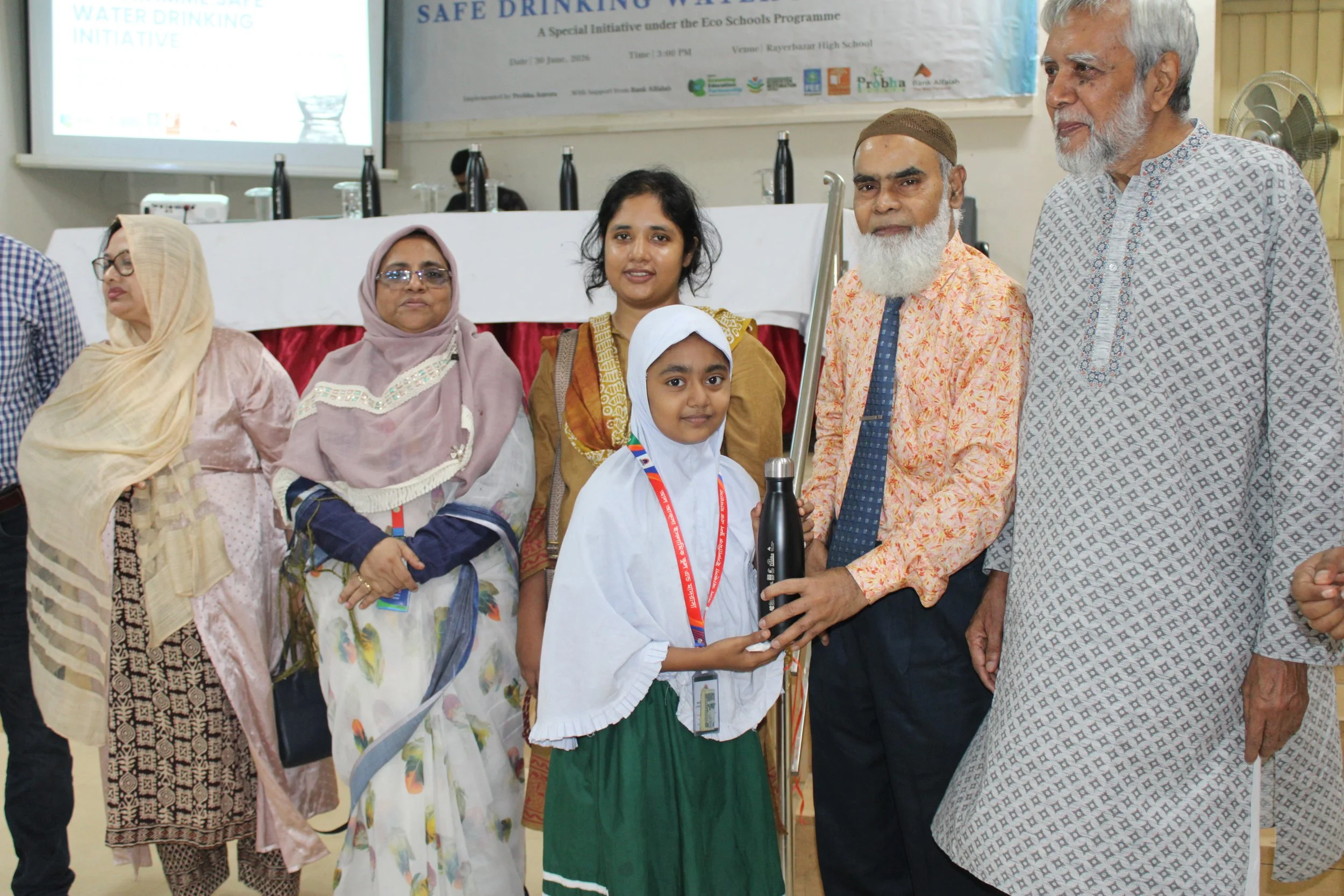
Each participating student received a reusable stainless steel water bottle to discourage the use of single-use plastic bottles and promote sustainable consumption practices.
This simple intervention creates multiple long-term benefits. Students now have a safe, reusable container for drinking water while simultaneously reducing plastic waste and helping to prevent microplastic pollution.
The initiative reinforces the message that sustainability is achieved not only through technology but also through everyday choices.
Celebrating success and sharing knowledge
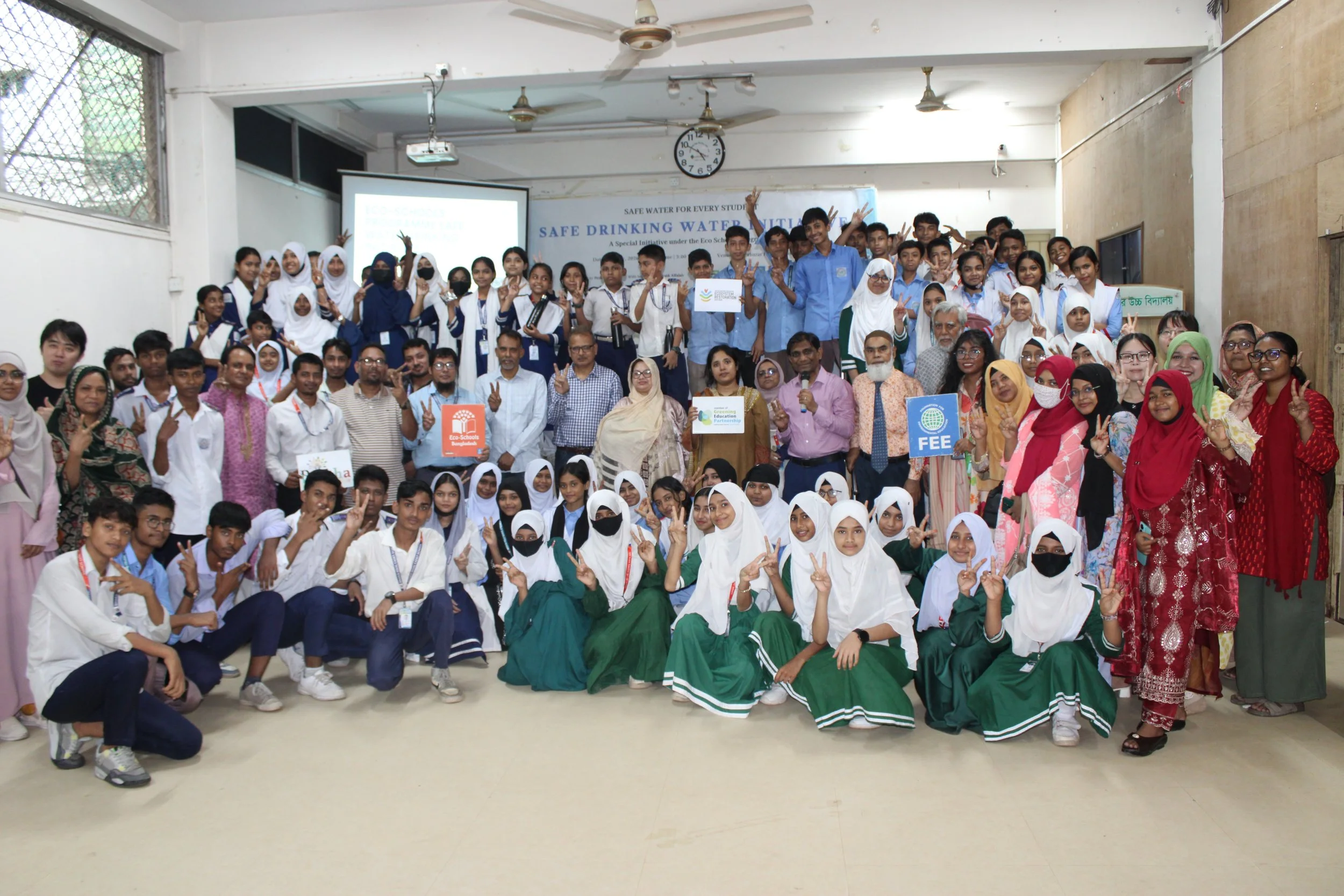
On 30 June 2026, students, teachers, technical experts, environmental specialists, public health professionals, Water, Sanitation, and Hygiene (WASH) practitioners, and representatives from the Institute of Epidemiology, Disease Control and Research (IEDCR) gathered at Rayerbazar High School for a National Dissemination and Knowledge-sharing Event.
The event celebrated the successful implementation of the initiative while providing a platform to exchange experiences, discuss lessons learned, and explore opportunities for scaling similar interventions across Bangladesh.
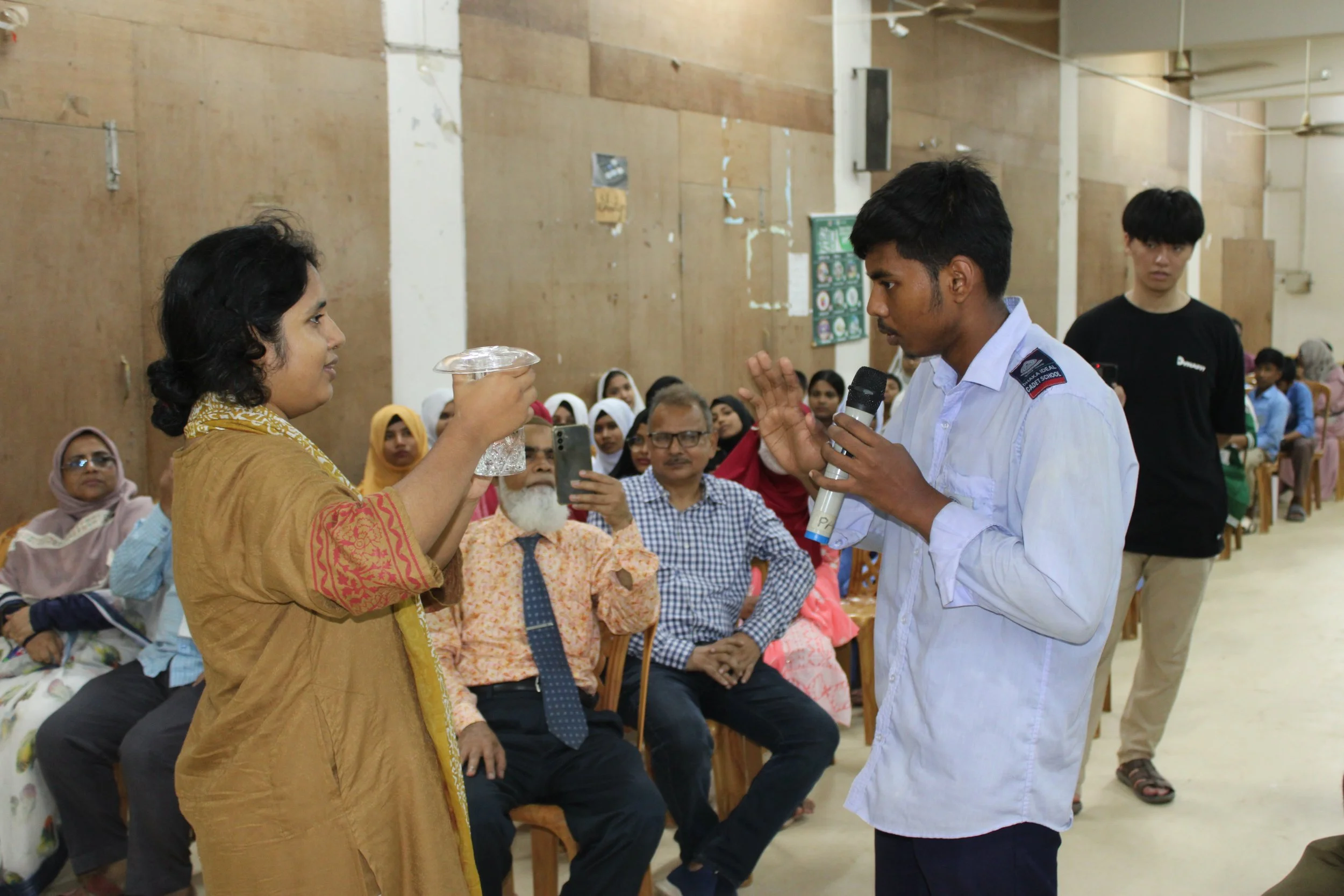
Students from participating schools proudly shared their experiences, demonstrating how access to safe drinking water had improved daily school life while increasing awareness of environmental responsibility.
The event also highlighted the importance of collaboration among schools, technical institutions, government agencies, development partners, and the private sector in achieving sustainable school development.
Building a future with a safe water
Today, more than 1,000 students across three schools have reliable access to safe drinking water.
Yet the initiative's greatest achievement extends beyond the installation of filtration systems. It has strengthened school governance, empowered students through environmental education, promoted sustainable behaviours, reduced plastic pollution, and demonstrated how the Eco-Schools methodology can address local environmental challenges while contributing to global sustainability goals.
For the participating schools, the initiative represents another important milestone on their journey towards achieving the internationally recognised Eco-Schools Green Flag, reflecting meaningful progress in implementation of Education for Sustainable Development (ESD).
With the leadership of Probha Aurora, the National Operator of the Eco-Schools Programme in Bangladesh, and the generous support of a reputed bank, the Safe Water for Greener Schools Initiative demonstrates that strong partnerships can transform schools into healthier, greener, and more resilient places to learn.
Because every child deserves not only an education, but an environment in which they can truly flourish.
References
Government of Bangladesh. (2023). Bangladesh Environmental Conservation Rules (ECR), 2023.
UNESCO. (2023). Greening Education Partnership: Getting Every Learner Climate-Ready.
United Nations. (2015). Transforming Our World: The 2030 Agenda for Sustainable Development.
World Health Organization. (2022). Guidelines for Drinking-water Quality (4th Edition, incorporating the first and second addenda).
WHO & UNICEF. (2021). Progress on Drinking Water, Sanitation and Hygiene in Schools: Special Focus on COVID-19.
Written by
Mucksitu Kabir Fihi
Fellow from Phobha Aurora