An action integrated between Giving Week and Global Action Days mobilized more than 600 people and benefited institutions that support children, elderly people, and individuals in situations of social vulnerability
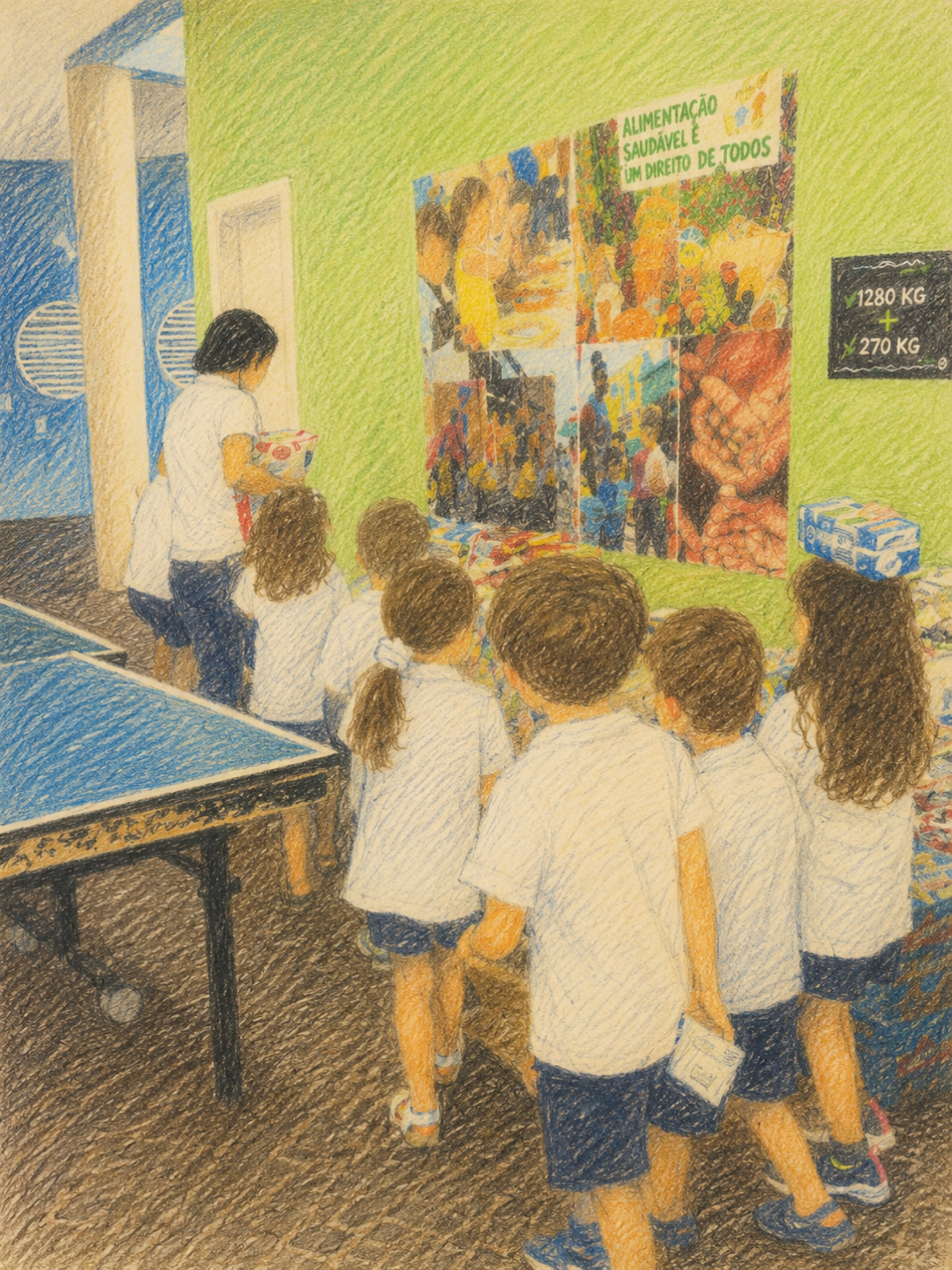
Image from Escola da Criança - Espaço de Adolescer
An initiative born from students’ Eco-Committee reflections on food security and solidarity resulted in a mobilization that exceeded all expectations. Escola da Criança – Espaço Adolescer, in Uberlândia (MG), collected more than 3,700 kilograms of food during a campaign carried out in partnership with Giving Week and Global Action Days (GAD), promoted internationally by the Foundation for Environmental Education (FEE).
From reflection to action
The initiative emerged after students read the Global Action Days activity guide, part of the Eco-Schools Programme in which the school participates. While discussing topics related to food, food origins, and social inequality, students began questioning the reality of people who do not have daily access to adequate meals. From these reflections, the idea of launching a large-scale food donation was born.
According to teacher Giovanna Pavanelli, who led the initiative at the school, the project was built and led by the students.
“The students were already deeply engaged in discussions about food and food security. From there, they began reflecting on the fact that many people do not have access to a balanced diet as they do. The campaign emerged from these questions and from a genuine desire to think about others. Global Action Days is precisely a moment to reflect on our actions and how they impact those around us,” she explains.
A whole-school effort that exceeded expectations
From the beginning, the proposal was designed as a collective, collaborative mobilization rather than a competition between classes. The school set progressive donation targets and created a panel depicting situations of social vulnerability. As goals were achieved, the images were replaced, symbolizing the transformation that each donation helped to build.
The campaign’s final target was to collect 1,280 kilograms of food. However, the school community’s mobilization exceeded all expectations, reaching more than 3,700 kilograms, almost three times the original goal.
“Whole-school cooperation was the most remarkable aspect. We understood that it should not be a competition, but a collective effort toward a single goal. The involvement of families, teachers, grandparents, uncles, aunts, and the entire school community was impressive. Many people expanded the campaign beyond the school walls, mobilizing friends and other community groups,” Giovanna highlights.
Family engagement was one of the campaign’s key strengths. For Li Vieira Ataia, a member of the Parents’ Volunteer Group, the initiative demonstrated the power of collective mobilization.
“Giving Week showed me that small movements can generate big impacts. It was a joy to follow closely and see the entire school community committed to a single purpose: doing good. The school played a fundamental role as an educator and motivator, teaching children to care about the needs of others. In the end, everyone benefits, showing that donating is an act of love that benefits both those who give and those who receive.”
In total, it is estimated that more than 600 people directly participated in the action. Teacher Odete, volunteer coordinator and leader of the school’s Eco-Schools Eco-Committee, emphasizes that the campaign strengthened key values that are part of students’ education, including themes such as Global Citizenship, Food, and Equality and Equity within the Eco-Schools Programme.
“More than collecting food, this mobilization allowed our students to experience solidarity in practice. When we encourage children and young people to look at the needs of others, we are forming more conscious, empathetic citizens committed to building a better society. It was moving to see the involvement of families and how everyone embraced the cause.”
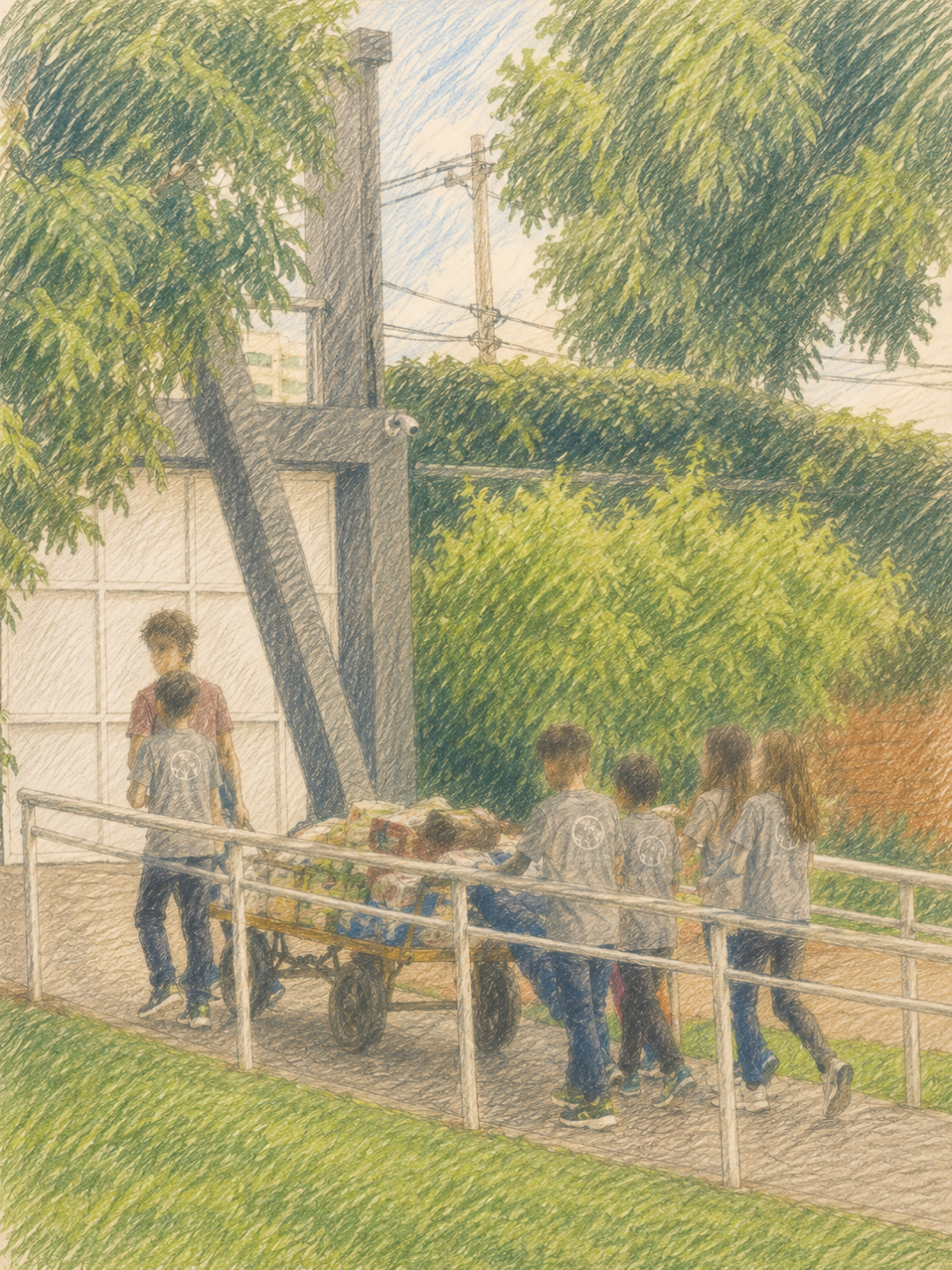
Image from Escola da Criança - Espaço de Adolescer
Students experience solidarity in practice
Among students, the campaign also brought important lessons about empathy, social responsibility, and citizenship. Seventh-grade student Lara Engel Machado, a member of the Volunteer Group, highlighted that the experience helped her better understand a reality far from her daily life.
“This year, during Giving Week, we created a proposal combining Volunteering with the FEE and IAR initiative, focusing on food security. It is a reality very distant from mine, but it exists, and we had the opportunity to try to make a difference. We worked hard, carried boxes, promoted the campaign at school, and developed activities to engage younger children. In total, we collected more than three tons of food. It may seem small compared to the scale of world hunger, but it was what our school could contribute. In the end, it was rewarding to see how everyone was involved.”
Fernanda de Freitas Lucas, also a seventh-grade student at Escola da Criança – Espaço de Adolescer and participant in the initiative, recalled the emotion of watching donations grow day by day.
“It was a project I really enjoyed and worked hard to make happen. All that dedication was worth it. At first, we thought we might not reach the goal, but every day when I arrived at school, the pile of donations was bigger. The most important thing was being able to help the institutions and show children the value and importance of helping others.”
Donations reach people across Uberlândia
The collected food was delivered to partner institutions that support different groups in situations of social vulnerability in Uberlândia (MG). These include Circo da Vida, which works with vulnerable adolescents; Casa Santa Gemma, which assists homeless people and families in settlements; and Lar André Luiz, which provides care for institutionalized elderly people.
The testimonies from beneficiary institutions highlight the concrete impact of the campaign. At Circo da Vida, donations arrived at a moment when food for afternoon snacks for young people was running out. At Casa Santa Gemma, the food supplied essential items such as rice and oil for dinner preparation on the day of delivery. Lar André Luiz received coconut water, a rarely offered item due to its high cost.
At Casa Santa Gemma, the donations arrived at a particularly challenging moment for the institution:
“We received food donations from the campaign carried out by students, parents, teachers, and staff of Escola da Criança. This act of solidarity was very important for our institution, as we are currently facing major challenges, with our house overcrowded, hosting more than 50 people. In addition to homeless individuals, we support hundreds of socially vulnerable families in settlements in the Eastern Region of Uberlândia, Minas Gerais. We depend on campaigns like this to maintain our services and ensure food reaches those who need it most. We hope to continue this partnership in the fight against hunger. Thank you very much,” they said.
Beyond the numbers
Beyond the numbers, the campaign left emotional marks across the entire school community. One of the most symbolic moments was the joy of younger children when they saw images representing hunger and vulnerability on the panel being replaced as goals were achieved. Among volunteers, there was also surprise at the volume of donations, which far exceeded initial expectations.
For Aline Tiagor, national coordinator of the Eco-Schools Programme, the initiative demonstrates the transformative power of education when it connects knowledge, reflection, and action.
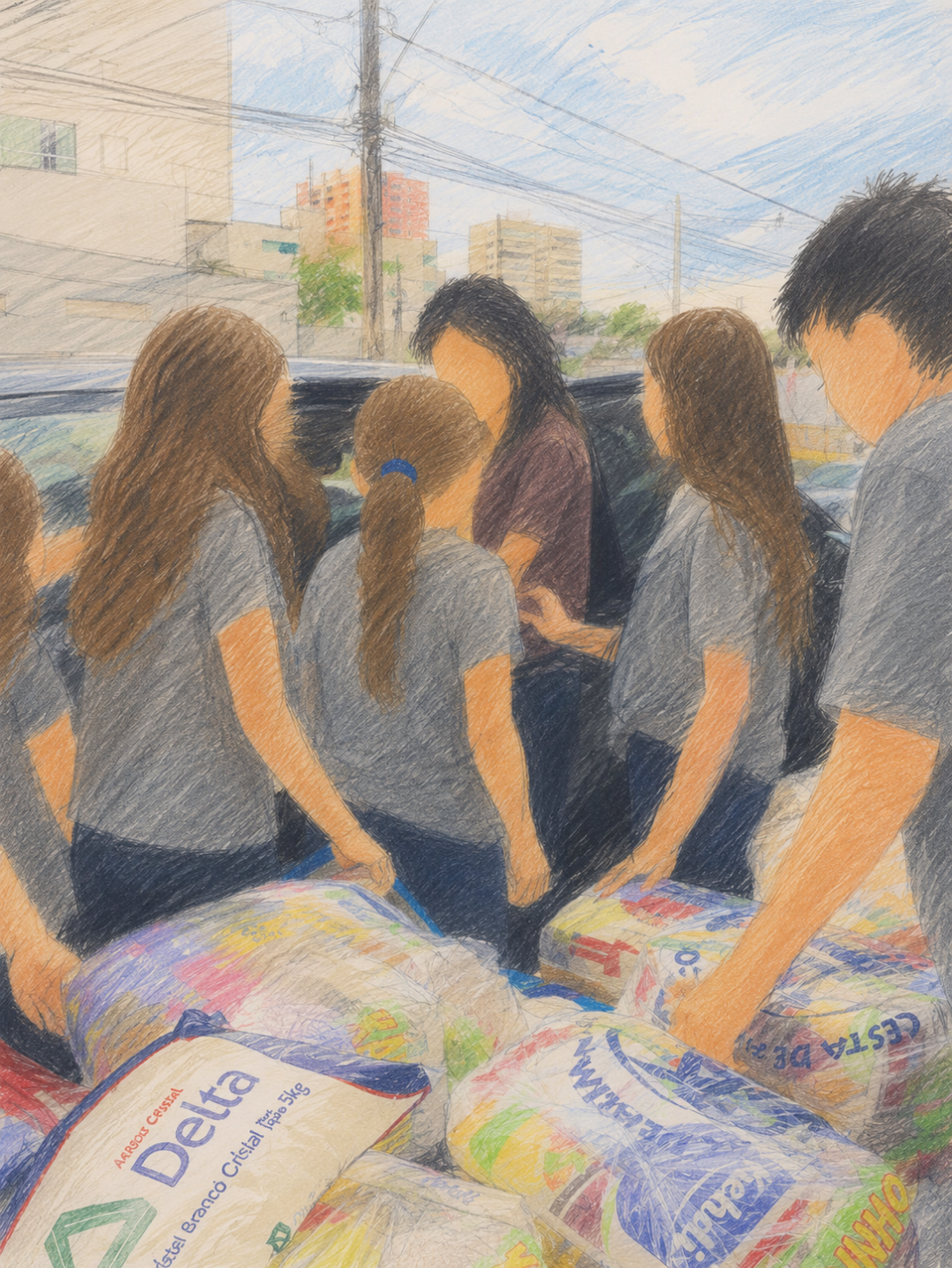
Image from Escola da Criança - Espaço de Adolescer
“Projects like this show that education for sustainability goes far beyond the classroom and that our young people are eager to take action and become the change we want to see in the world. By reflecting on the needs of their surrounding community, beyond their own realities, they mobilized hundreds of people to face this challenge. The students developed fundamental values such as solidarity, cooperation, and social responsibility and exceeded the set goals. The result is inspiring and highlights the strength of student protagonism in building fairer, more humane, and more sustainable communities.”
Turning Global Action Days into local impact
The experience reinforces one of the main objectives of Global Action Days: to encourage concrete actions that contribute to building more resilient communities committed to collective well-being. By transforming the discussion on food insecurity into real impact, Escola da Criança – Espaço Adolescer demonstrated that education has the power to mobilize people, drive change, and inspire new generations to exercise citizenship in an active, supportive, and transformative way.