
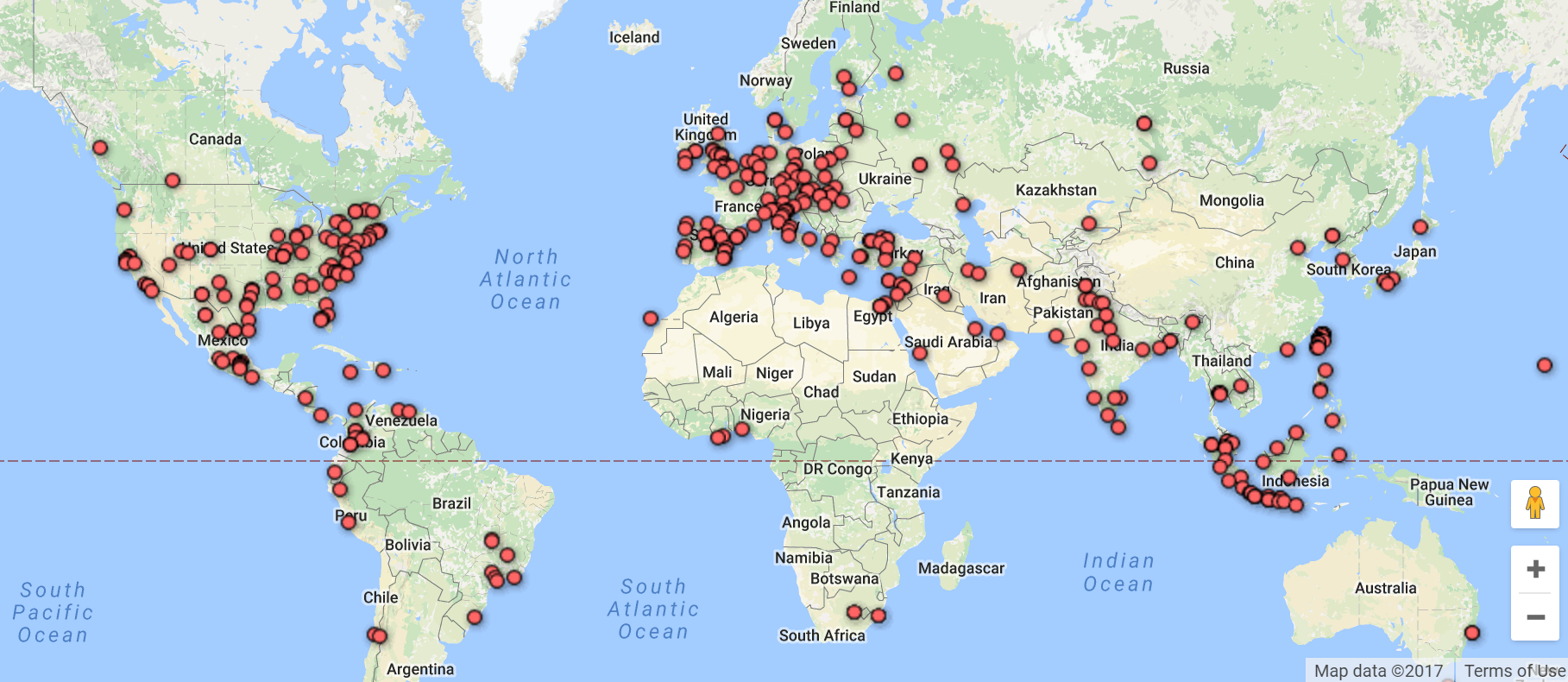
GreenMetric World University Rankings 2016 - FEE EcoCampuses at the top!
The UI GreenMetric World University Ranking is an initiative of Universitas Indonesia which was launched in 2010.
The aim of this ranking is to provide results on the current condition and policies related to Green Campus and Sustainability in universities all over the world. It is expected that by drawing the attention of university leaders and stakeholders, more attention will be given to combating global climate change, energy and water conservation, waste recycling, and green transportation.
In 2016, FEE EcoCampus Universities ranked close to the top of the list! Congratulations to University College Cork, Dublin City University and University of Limerick, Maynooth University, University College Dublin, Dublin Institute of Technology in Ireland, Universidade da Coruña, Vigo University in Spain, University of Maribor in Slovenia, Vidzeme University of Applied Sciences in Latvia, and all the other universities for their efforts towards sustainable campuses!
See the overall ranking here.
A World in Common - Teaching Resource by the Danish Outdoor Council
Take our hand and come with us to Uganda, a country almost in the middle of Africa. Here we will experience how Climate Change affects the country and the people, who live there.
In August 2016, the Danish Outdoor Council launched the teaching resource “En verden til fælles” (in English: A World in Common). The resource focuses on children’s lives especially with regard to Climate Change, sustainability and democracy in Uganda and Denmark.
The resource raises questions that will make the pupils reflect on their own lives as well: What does a child in Uganda do during a normal day? What is it like to go to school in Uganda? How do you get water in Uganda? How is your own life different from the life of a child in Uganda?
Besides supplying this resource, the Danish Outdoor Council also runs an information campaign for schools in which the pupils get a chance to produce campaign materials, which will be used in a national information campaign in Denmark. The Civil Society in Development, an independent association of 280+ small and medium-sized Danish Civil Society Organisations, finances the teaching resource and the information campaign.
The Danish Outdoor Council works with Eco-Schools in Uganda and Tanzania in cooperation with local environmental organisations which ensure that the local communities surrounding the schools develop sustainably.
The resource is mainly available in Danish, but here you can find the example available for the English class.

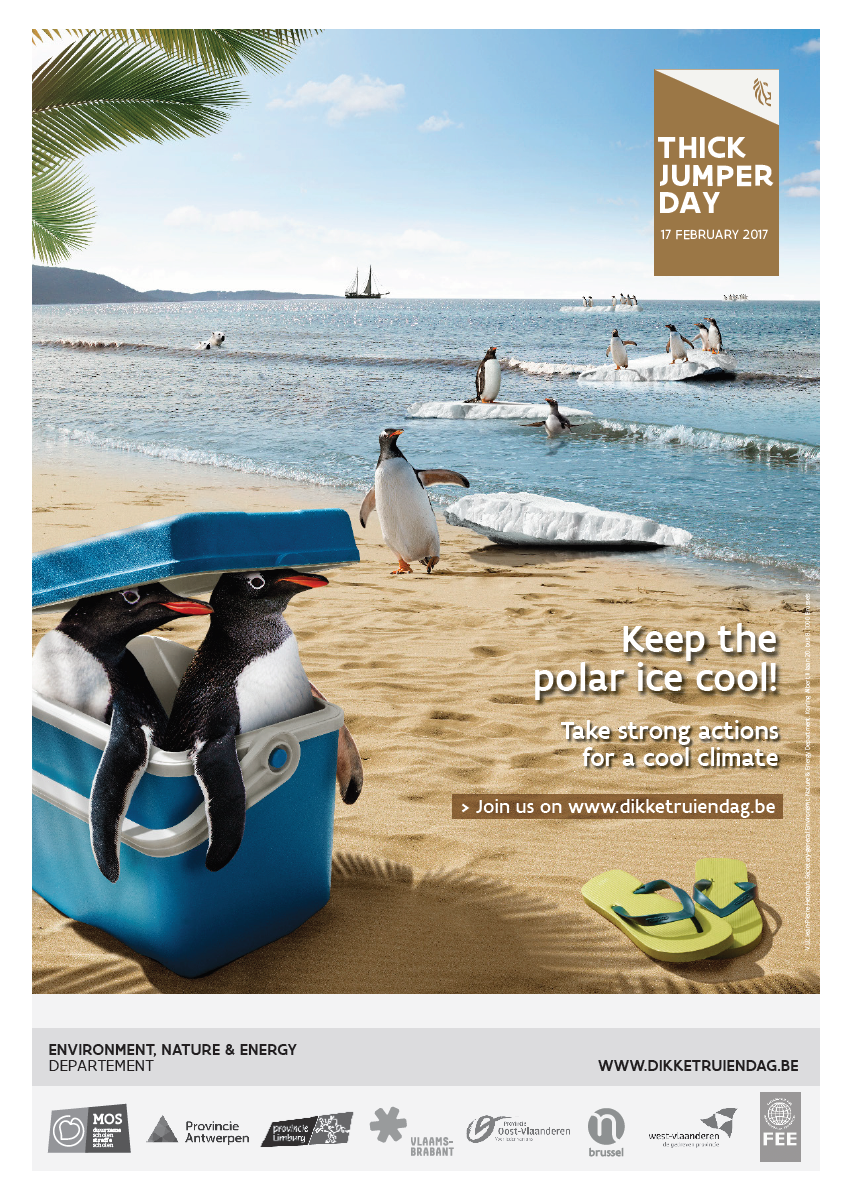
Thick Jumper Day 17 February 2017: Participate and Keep the Polar Ice Cool!
In 2005, Milieuzorg Op School (MOS, Environmental Care at School) of the Department of Environment, Nature and Energy organised the first Warm Sweater Day in response to the Kyoto Protocol.
The protocol’s objective was to reduce greenhouse gas emissions that cause climate change. Since 2005, Warm Sweater Day has reminded us of the agreements made under this crucial treaty with a few simple activities: wear a warm sweater and turn down the heat, take your bike more often, eat locally grown food, reduce standby power and so on. On Warm Sweater Day, Flanders massively reduced CO2 emissions as well as raising the awareness of school-going children, businesses and the authorities.
Participate in the 2017 edition of the Thick Jumper Day:

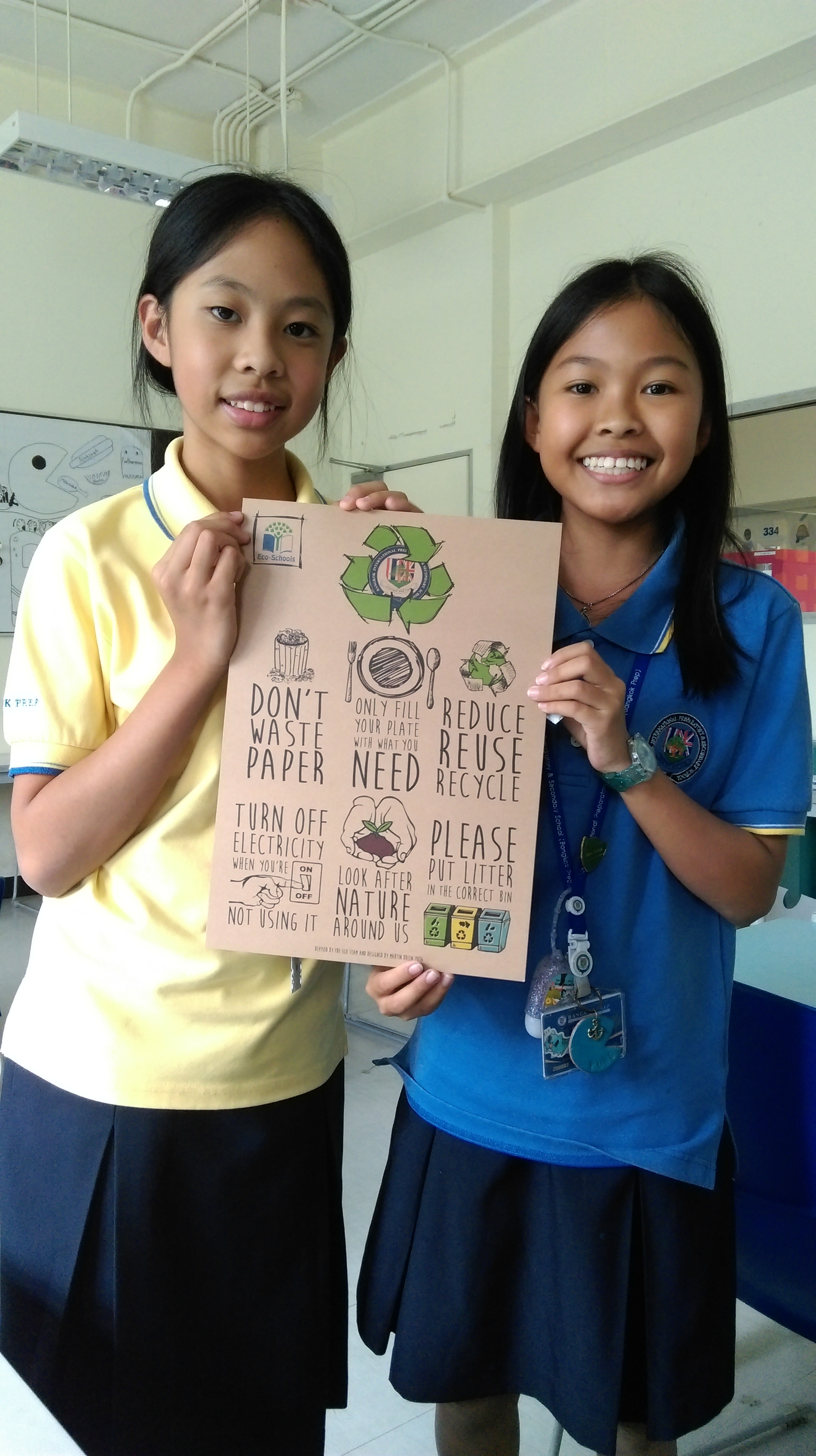
Bangkok International Preparatory & Secondary School (Bangkok Prep) is awarded the Eco-Schools Green Flag!
This week Bangkok International Preparatory & Secondary School was awarded the Green Flag! The International School in Thailand has been implementing the 7-Step Eco-Schools methodology since January 2015. Congratulations!
Following the assessment of the application and supporting documentation by the Foundation for Environmental Education Head Office, as well as an external on-site assessment by certified Assessor, Emi Imai, the school has officially been notified about their award. The Eco-Schools Green Flag willsoon be hoisted on the school grounds. Keep up the good work!
The Assessor's comments
The vision of the school to be the flagship Green School is clear to all and there is evidence that everyone is working towards the same goal. The eco-practice is embedded in the school life through the curriculum, ongoing projects and initiatives.
The school improvement plan has sustainability as priority and for 5 years, and the plans of the new school grounds show the commitment by the leadership and the governing body as well. They involve great investments in solar panels for sustainable energyandcarefully selecting plants for biodiversity.
The success of this school lies with the students’ drive and enthusiasm. However, this does not magically happen and it is a credit to the Teachers who enabled them to flourish by investing time, spreading the passion and giving them platforms to execute these initiatives. It was shown by Mr Leverton that every small step leads to success by resilience and continuity.
I would like to thank all staff and students who took time to show me around your wonderful Eco-School. You have shown me how great teamwork and leadership can make a successful Eco-School. Thank you.
Education for Sustainable Development from schools to communities
The Eco-Schools programme is an initiative which encourages young people to take actions to protect their environment and to be the change for sustainability. It starts in the classroom, expands to the school and fosters change in the community.
Within the Indian Ocean region, more than 72 schools, representing over 25,000 pupils are now involved in the programme. Eco-Schools Indian Ocean - part of the international programme of the Foundation for Environmental Education (FEE) - was introduced in the region by the Indian Ocean Commission ISLANDS project, funded by the European Union and run by a wide range of partners from the Government, NGOs and private sector. It was recognised by the United Nations as “one of the most effective sustainability projects over the past 10 years.”
“We have activities concerning the environment at school, such as gardening or composting. That same compost is used in our vegetable garden. We also do waste sorting by separating paper and other wastes.” says Matthieu, 7, from RCA St Pierre School, one of the schools piloting the programme in the region.
Eco-Schools provides framework and standards to help educators integrate sustainability principles throughout their schools. It offers the methodological tools for schools and communities to evaluate their own challenges, assess risks and develop the solutions. The schools are guided to re-orientate existing curricula around sustainable development themes, and work collaboratively with their local communities to develop practical projects.
“Our school has always been environment-friendly. We have always taught our pupils different ways of protecting the environment. With the eco-school programme, these teachings can be put into practice. Now the children are able to participate in activities that help to protect the environment, such as sorting of waste, composting or the creation of an endemic garden. As they take part in these daily activities, the children understand better how to actively protect the environment” states Pascale Napaul Lafrance, teacher at RCA School.
Eco-Schools Indian Ocean programme aims to provide a regional framework to integrate themes of sustainable development, climate change and disaster risk reduction into national education systems, and strengthen cooperation to address the unique vulnerabilities of the region.
“For most of the schools, the Eco-Schools Indian Ocean programme is acting as a powerful force of change. Examples of school activities include projects for rainwater harvesting, soil stabilisation, food production, sanitation, and waste management amongst many others. The most successful schools are those that have built strong partnerships between governmental institutions, NGOs and the private sector,” said Sameer Kaudeer, Education Officer at Reef Conservation, one of the NGOs implementing the programme in the region.
Children in schools across the south western Indian Ocean region are facing the damaging day-to-day effects of climate change such as sea-level rise, soil erosion, flooding, water shortages, and high frequency of natural disasters. These endanger their safety, health and wellbeing and affect the livelihoods and economies of their families and communities.
“The eco-schools programme is an opportunity for children of the entire region, sharing common Ocean and many similar challenges to take collective action in their schools and communities” says Hon. Riziki P. Juma, Minister of Education and Vocational Training in Zanzibar, Republic of Tanzania.
Eco-Schools Indian Ocean is a voluntary programme open to any school in the participating Indian Ocean countries. Schools follow a simple seven step process and work on ten possible themes that respond to common sustainability challenges faced by the participating countries in the Indian Ocean region.
“At home, I put into practice what I have learnt at school. My parents don’t know much about environment issues. Therefore, I teach them the importance of preserving the environment. I have introduced them to various notions among which the sorting of wastes,” Matthew concluded.
Through the Eco-Schools Indian Ocean programme, island States from the Indian Ocean are joining 64 other countries and more than 49,000 schools already implementing the programme worldwide.
--END--
Eco-Schools is the largest sustainable schools programme in the world and run by the Foundation for Environmental Education (FEE). Eco-Schools and FEE are lead partners in UNESCOs Global Action Plan for Education for Sustainable Development which follows the Decade of Education for Sustainable Development (DESD).
Implementing partners of the programme in the region:
- Comoros: Maeecha
- Mauritius: Reef Conservation
- Madagascar: Madagascar National Park
- Zanzibar: Zayedesa
Seychelles have their own Eco-School programme developed by the Seychelles Ministry of Education running in schools for more than 20 years. The Seychelles Eco-School programme is an important partner of Eco-Schools Indian Ocean and has helped with the development of this programme. Eco-Schools for La Reunion and Mayotte is operated by Eco-école France.
- Eco-Schools Indian Ocean National Coordinator: Olivia Copsey, ISLANDS (info@eco.schools.io)
- Eco-Schools in the Union of Comoros: Nasser Assoumani, Maeecha, n.assoum@maeecha.org
- Eco-Schools in Madagascar: Olga Randriamanantena, Madagascar National Park, cee@madagascar.national.parks.mg
- Eco-Schools in Mauritius: Kathy Young, Reef Conservation, admin.reef@intnet.mu
- Eco-Schools in Seychelles: Shane Emilie, Eco-Schools Seychelles, shaneemilie@hotmail.com
- Eco-Schools in Zanzibar: Omar Mattar, ZAYEDESA, omattar01@gmail.com

The Great Plant Hunt Teacher training in Croatia
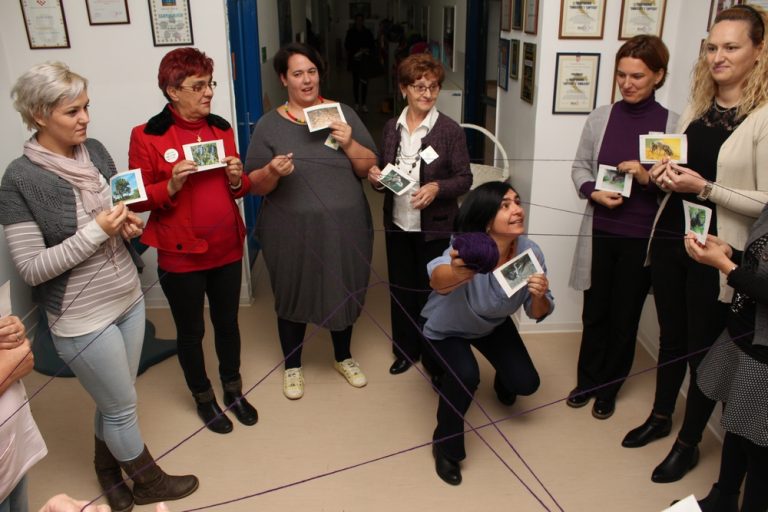
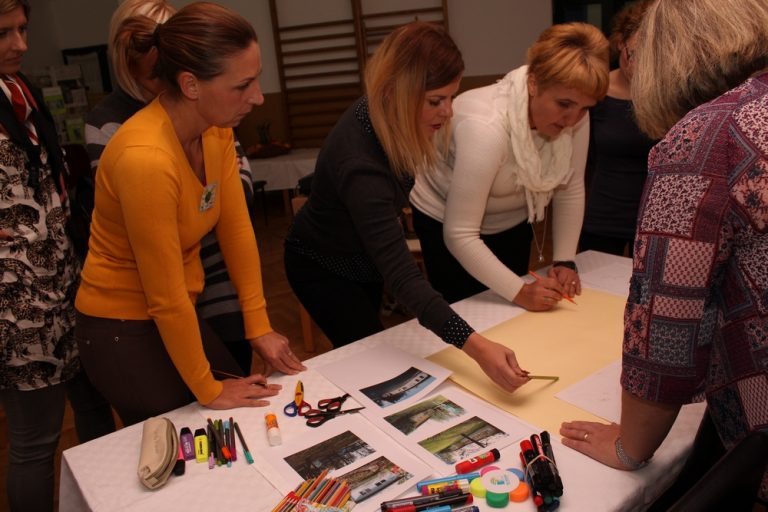
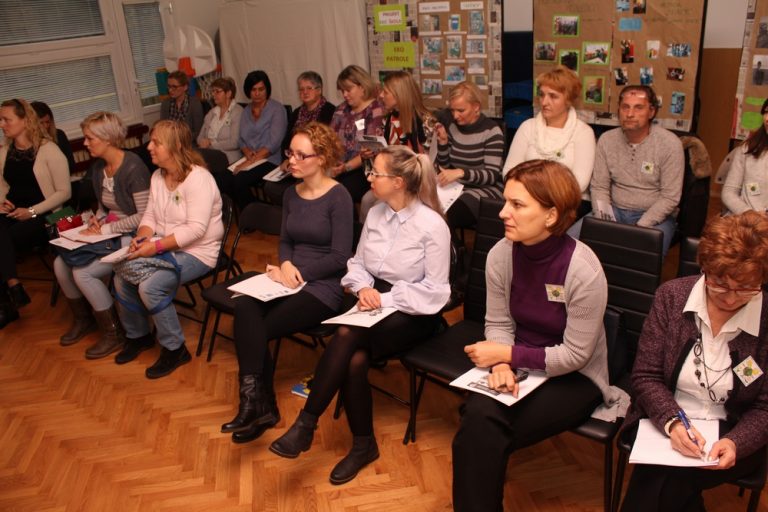
On 8 November, the Association "Lijepa Nasa" held a Great Plant Hunt teacher training session at the kindergarten Dječji vrtić Sisak Novi. The session was led by Anita Šetić and Teute Skorin.
The teacher training brought together Eco-Schools coordinators from kindergartens and primary schools from several counties in Croatia.
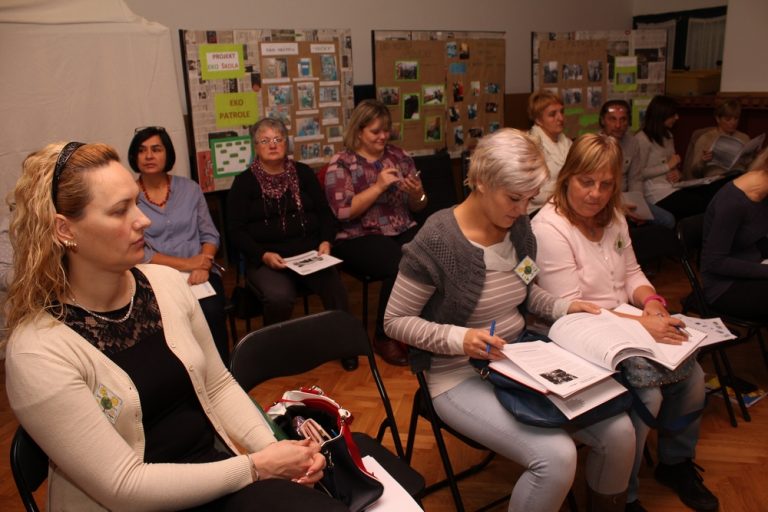
The welcome and introductory speeches were given by Ljubica Ivšić and Ivana Pandurić respectively, where the successes achieved through the Eco-Schools programme were highlighted. The educators then presented the progress in the project implementation through the 7 steps, highlighted the specifics of each step, and the importance of monitoring and adherence to deadlines.
The teacher training seminar concluded with two practical workshops and exchange of experiences and ideas.
Oepsie the Ostrich is off to Spain!
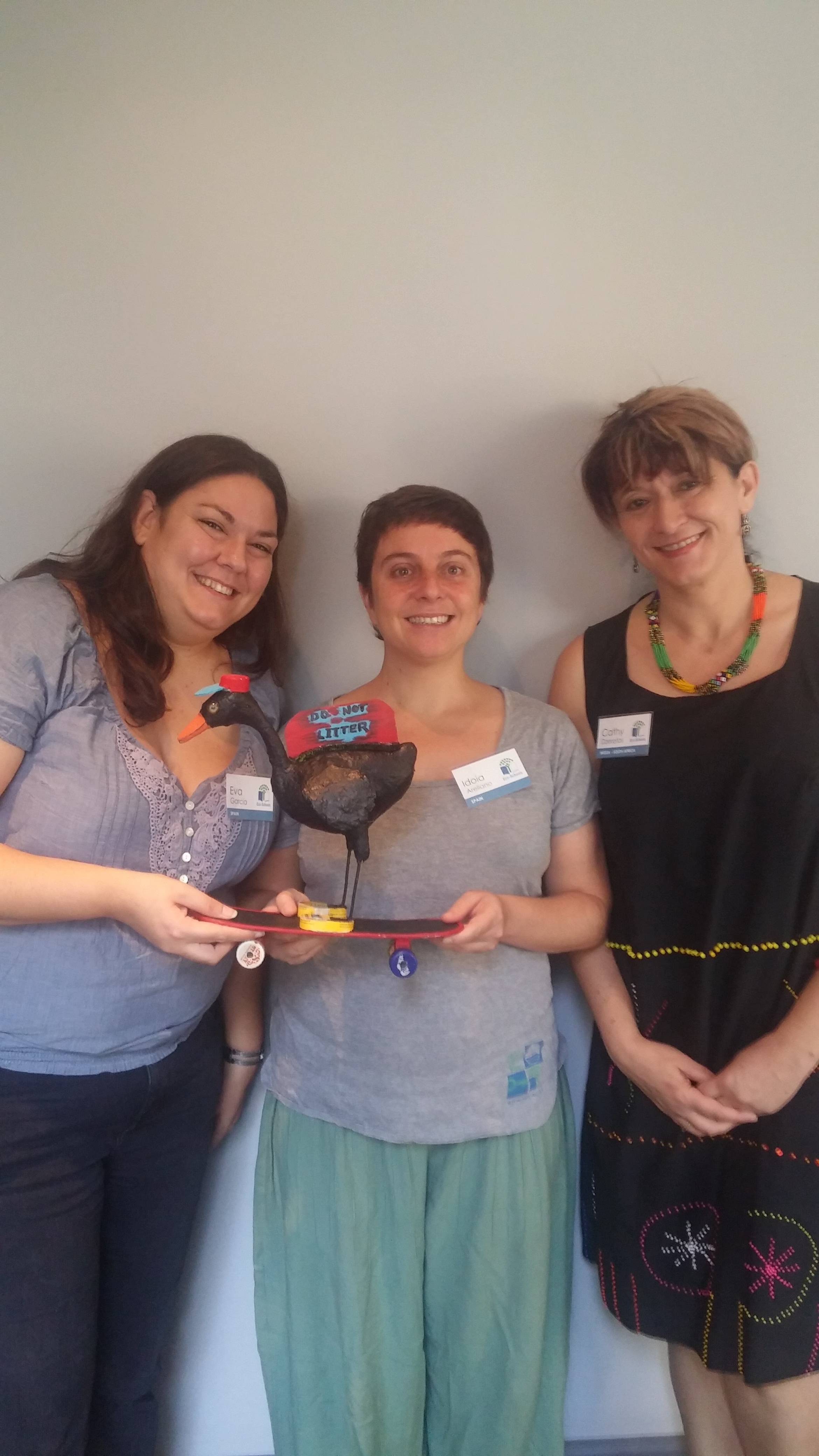
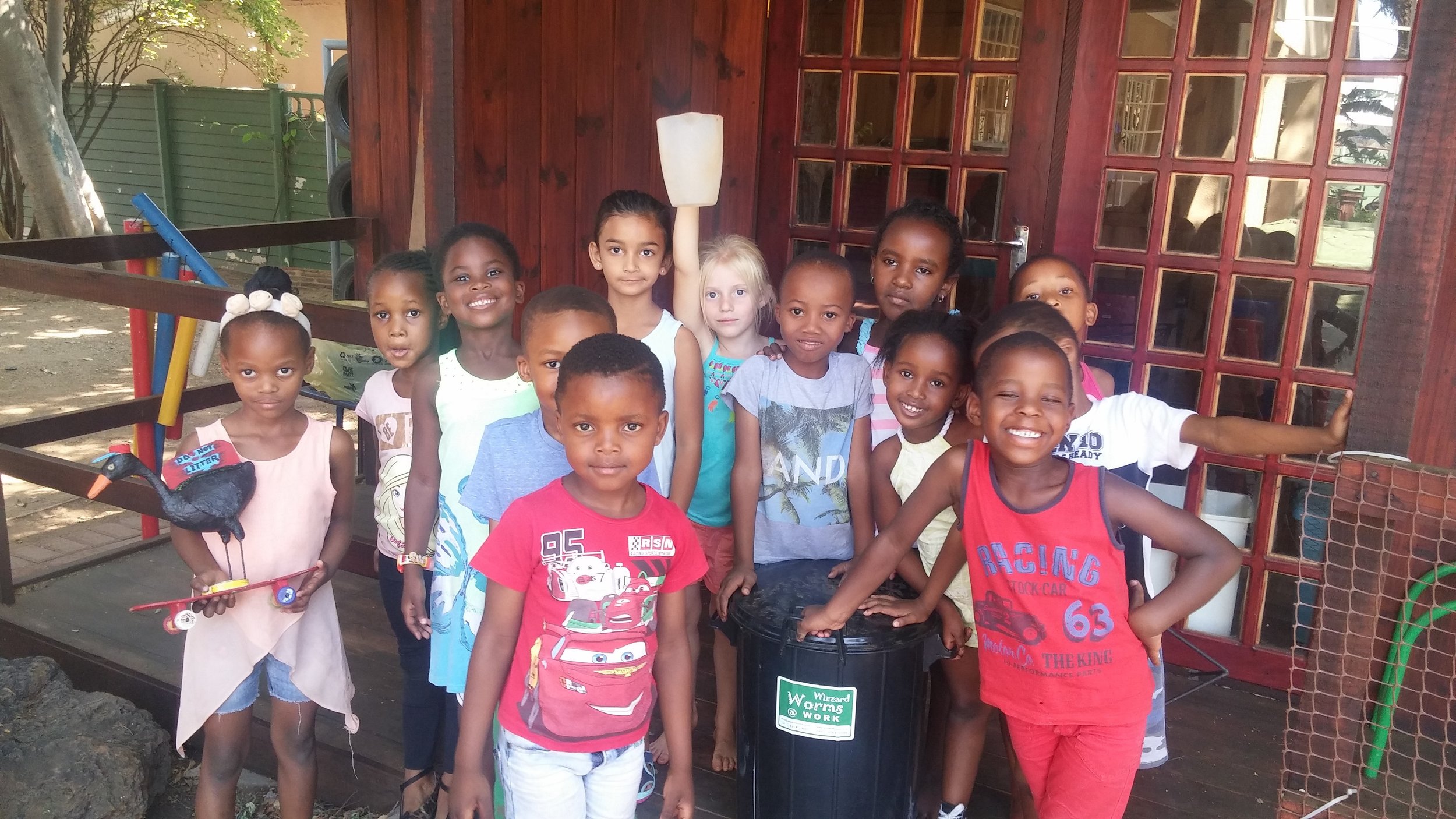
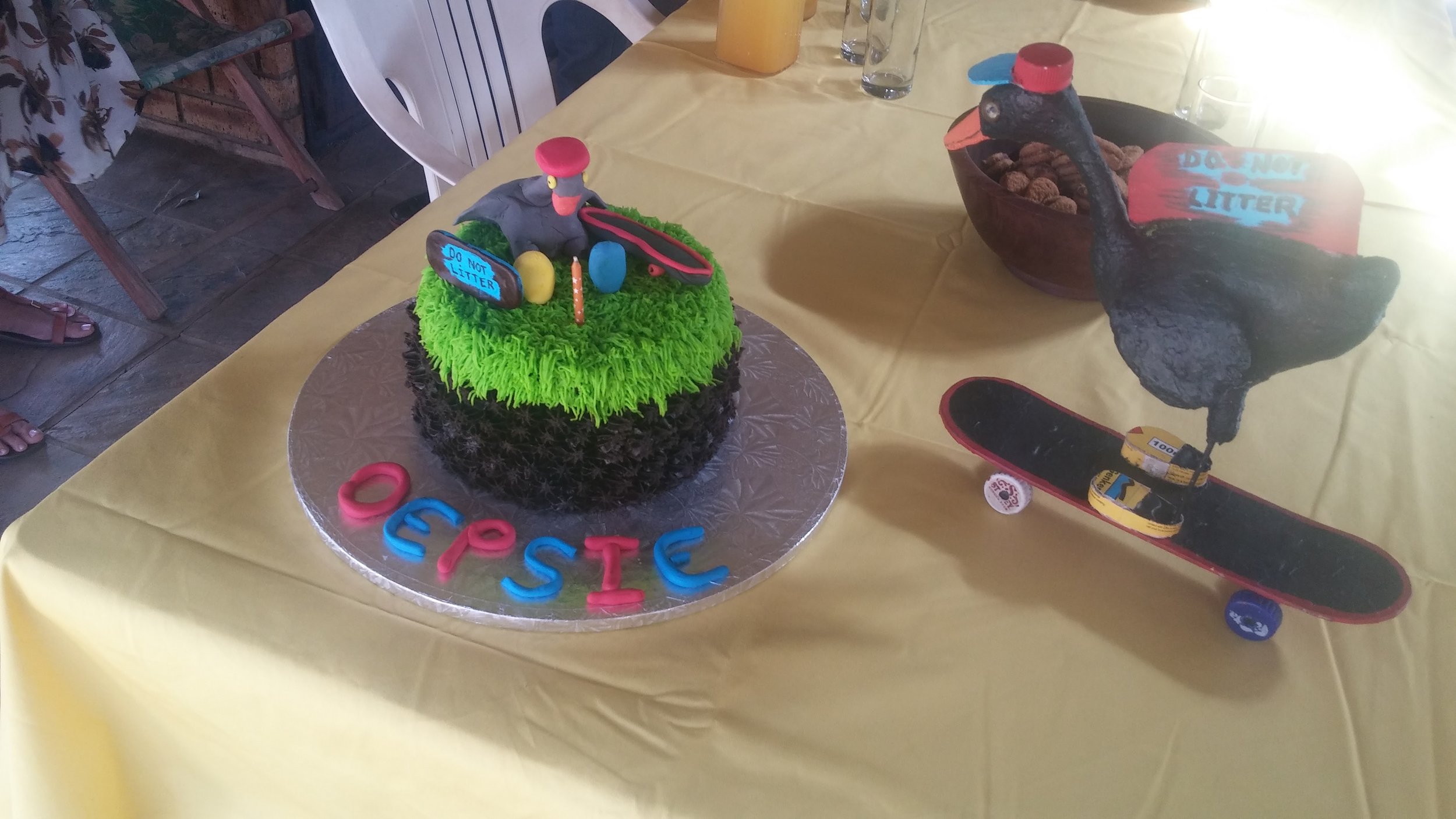
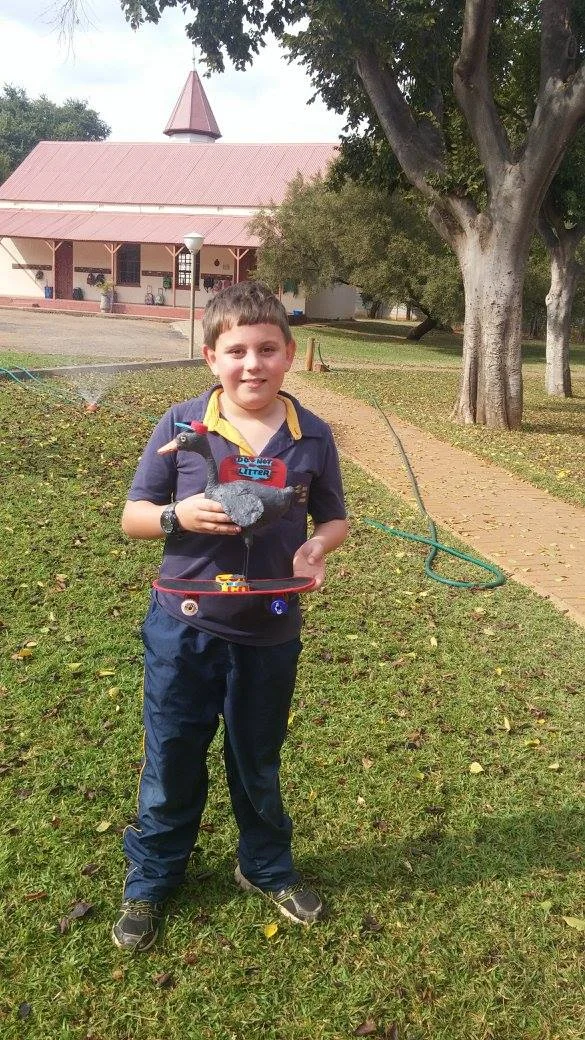
Oepsie the Ostrich, made by a 10-year-old Rustenburg boy, Dohann Schoonbee from Deutsche Schule Kroondal, has been on the road for over a year. He has assisted the Wildlife and Environment Society of South Africa (WESSA) and the Wrigley Litter Less Campaign in South Africa to promote a cleaner, greener and healthier environment.
At the Eco-Schools National Operators' Meeting (NOM), with over 60 country representatives participating in the Eco-Schools programme, Oepsie was offered and accepted the opportunity to spread his message to Spain. Oepsie has raised our awareness that burning plastic and tyres causes asthma and cancer and has shown that we can do creative and fun things with waste to beautify our surroundings or possibly to sell. For example, Temogo Special School obtains old linen from tourist establishments and makes these into bags or cushion covers and then paints floral motifs.
Oepsie has encouraged three schools to start herb gardens and these have been used to make a type of Zambuc and to bake rolls and biscuits. Broken mirror and tiles that were found in the bush have been re used. Scarecrows, pallet swings, bottle top wall murals, educational toys for pre-schoolers, birdfeeders and T-shirts from shopping bags are other items that have been made from waste. Tyres are being used as borders, planters, tables and chairs, an earthworm farm and to make see-saws for pre-schoolers.
Currently three schools have earthworm farms and 15 schools have food gardens. Oepsie also started a recycling swop shop which has been a success with the two participating schools choosing the option to receive washable sanitary pads rather than stationary. To date 56 girls have earned themselves packs and we hope that this will assist them in feeling confident to attend school during their monthly cycle.
Eco-Schools National Operators' Meeting held in Johannesburg, South Africa
via WESSA.
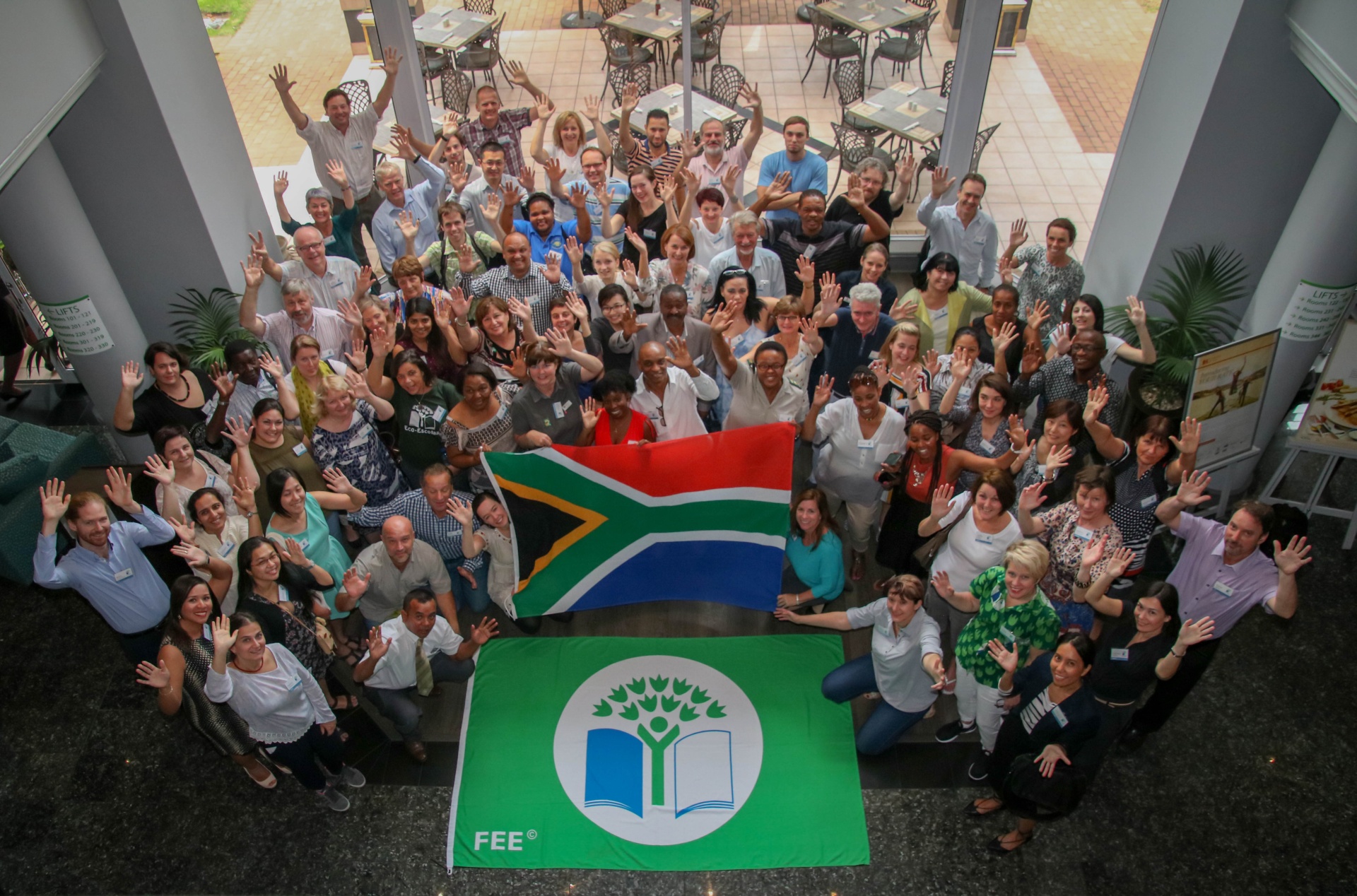
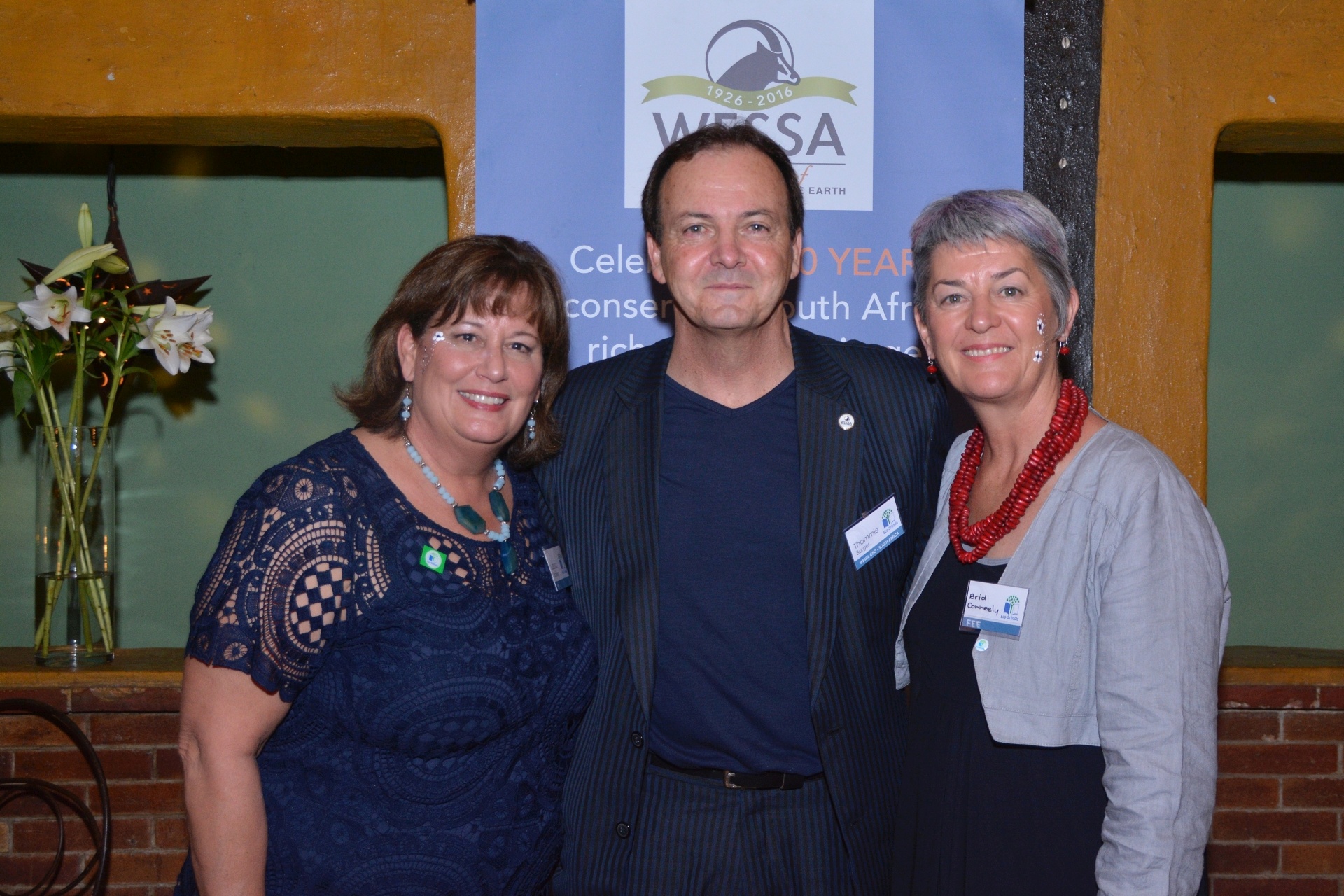
Last week WESSA (the Wildlife and Environment Society of South Africa) played host to the 2016 international FEE Eco-Schools conference – also known as the National Operators’ Meeting (NOM) – in Johannesburg. The three day event saw 85 delegates from over 50 countries around the world come together for an exchange of knowledge and best practices around environmental education at school level.
The focus of this year’s conference was the United Nations’ 17 Sustainable Development Goals and the critical role that the Eco-Schools programme plays throughout the world in supporting these goals by providing education for sustainable development. The Eco-Schools programme aims to create awareness and action around environmental sustainability in schools and their surrounding communities, as well as to support Education for Sustainable Development in national curriculum.
Eco-Schools is a programme of FEE (Foundation for Environmental Education) – a non-profit organisation based in Denmark – and is active at 49,000 schools in 64 countries around the world. One organisation is selected as the local Eco-Schools programme representative in each country and WESSA has been the South African implementation partner since the programme was launched in the country in 2003. Through the Eco-Schools programme WESSA has reached over 400,000 learners and 16,000 teachers in the country, providing dedicated support to schools through the Eco-Schools principles of environmental education, teacher training, transformative learning, empowerment and behavioural change.
This is the first time that the annual international Eco-Schools conference has been hosted in Africa and the Johannesburg event has been hailed the most well attended Eco-Schools conference to date.
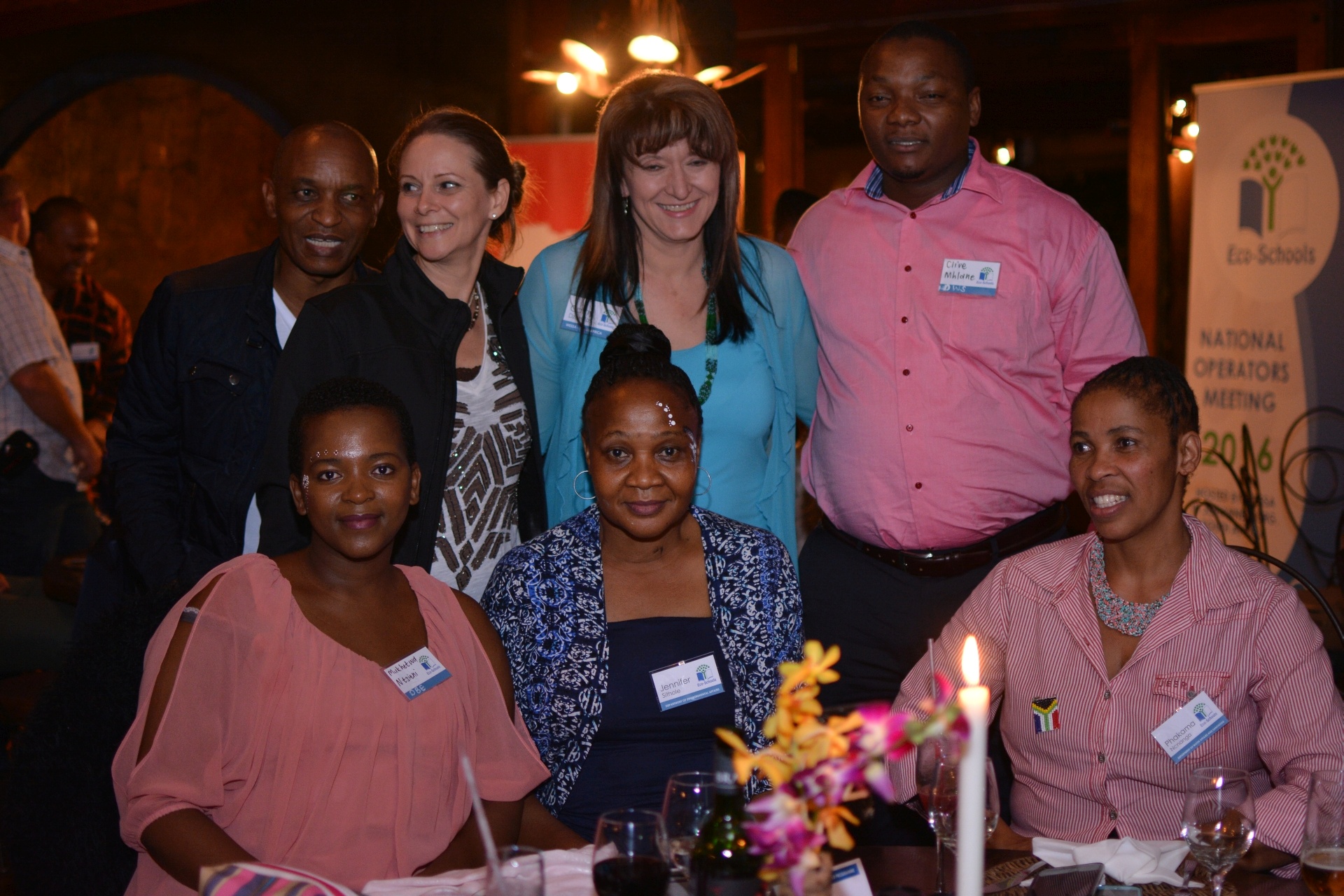
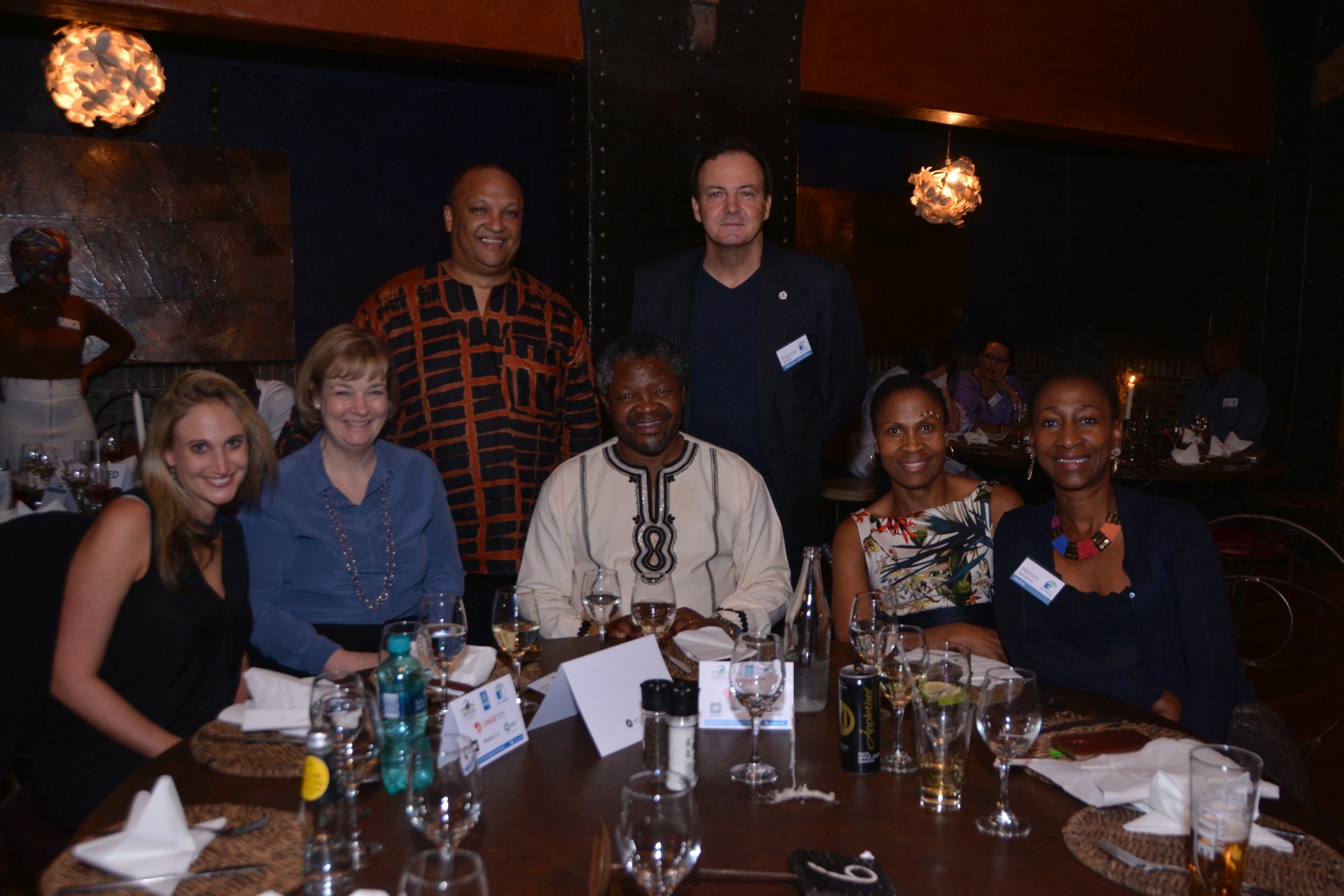
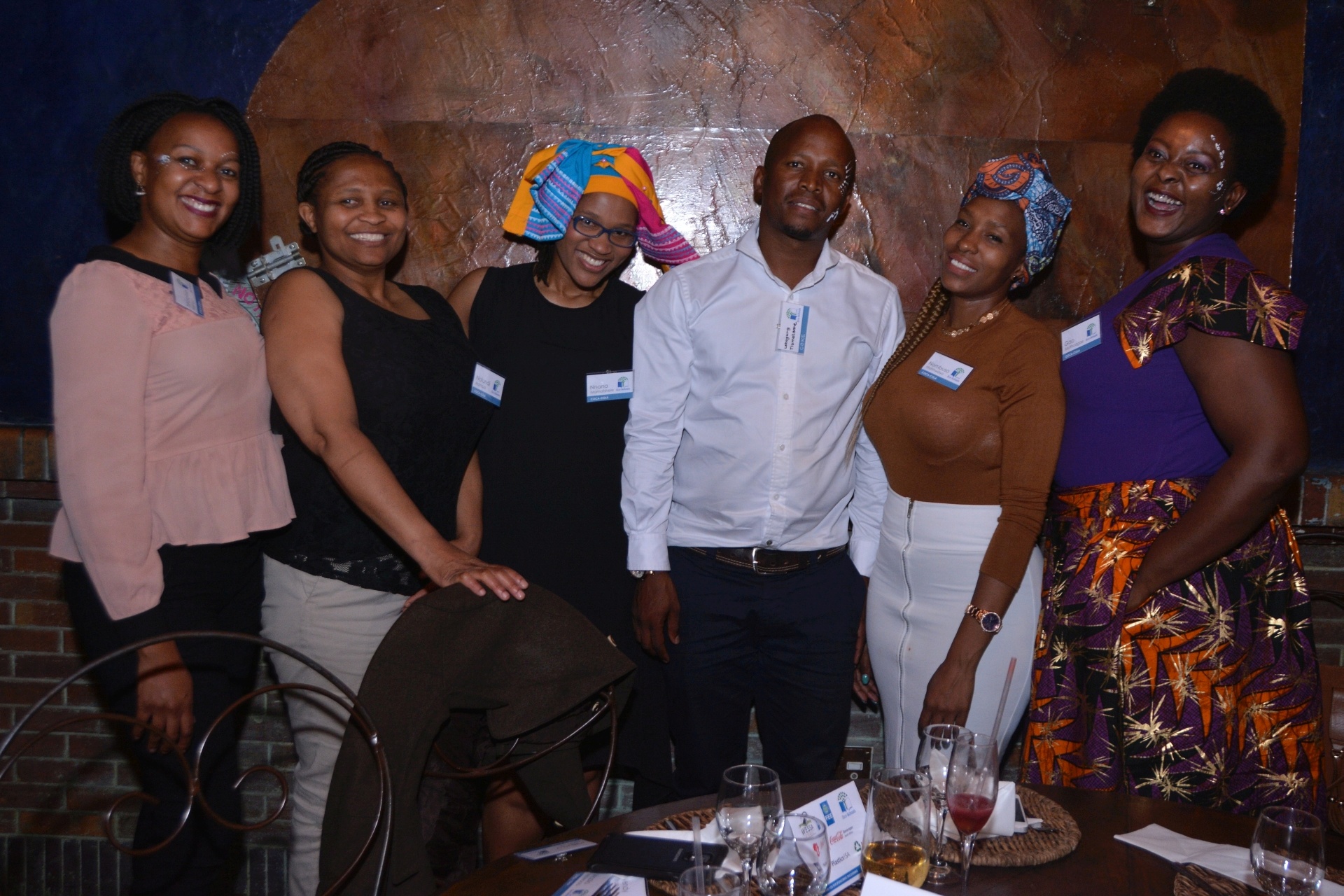
The gala dinner – sponsored by Coca-Cola African Beverages, Woolworths, PlasticsSA and the National Recycling Forum – was a celebration of the world-wide Eco-Schools programme. It also gave WESSA the opportunity to recognise and thank the many local partners, funders and teachers who have contributed to the success of the programme locally and who understand the important role that Eco-Schools plays in addressing the education challenges in the country.
Key local corporate partners present at the event included Nampak who have been loyal supporters and funders of the programme for over 10 years. Also present were some of WESSA’s government partners in the Eco-Schools programme, who include the Department of Basic Education; the Department of Environmental Affairs; the Northern Cape Department of Environmental and Nature Conservation; the Free State Department of Economic, Small Business Development, Tourism and Environmental Affairs; and the Department of Water Affairs and Sanitation, who together with WESSA Eco-Schools fund the joint Water Action project that has won multiple awards over the past five years.
The keynote address at the gala dinner was delivered by 50|50 television producer, presenter and writer Ntokozo Mbuli, who inspired the audience by sharing the story of her own journey to becoming a passionate advocate for environmental education. She has been a vocal activist for environmental causes in South Africa through her the coverage of environmental issues in numerous television documentaries, and has engaged with schools and corporate organisations in her role as a public figure. In 2015, WESSA honoured Ntokozo with their National Award for Individuals for her contribution to conservation and environmental education and for inspiring a community of people from very diverse backgrounds.
WESSA is proud to be part of the international environmental education community, and its hosting of the 2016 international Eco-Schools conference forms part of the organisation’s programme of special activities to mark its milestone 90th birthday this year.
Ends.
NOTES TO EDITORS
For more information about WESSA visit www.wessa.org.za
For more information about Eco-Schools visit www.ecoschools.global
For more information about FEE visit www.fee.global

Ghent School Ecological footprint
Flemish primary school in Ghent, Belgium. This school received the Green Flag this year!
Watch the video!

Learning Teacher Magazine
The Learning Teacher Magazine (ISSN 2000-2610) is an illustrated publication primarily targeting teachers and leaders at schools.
The Learning Teacher Magazine (ISSN 2000-2610) is an illustrated publication primarily targeting teachers and leaders at schools on all levels of education. The magazine is issued four times a year.
The editorial board welcomes articles to the Magazine from practioners at schools, trainers and researchers. The Magazine welcomes advertisement, wherefore prospective advertisers or sponsors are invited to contact us as well.
The Learning Teacher Network is a European educational network performing as an international platform for professional debate in the vanguard of educational progress.

Where is Oepsie?
The Oepsie Ostrich mascot competition was devised to assist the Wrigley Litter Less Campaign in South Africa.
The Oepsie Ostrich mascot competition was devised to assist the Wrigley Litter Less Campaign in South Africa. Five of the best Ostriches were sent on an unplanned adventure in South Africa with the goal of raising awareness on waste management.
Oepsie the charismatic ostrich on a skateboard, made by Dohan Schoonbee, has alerted us to the health risks such as cigarette butts left on the ground leaking cancer inducing chemicals into the soil and medicine dumped on the pavement. He has charmed lions and traffic cops, motivated children to take action, lost his cap and been at the WESSA Eco-Schools awards in the Eastern Cape.
via WESSA Eco-Schools, South Africa
Heading to our National Operators' Meeting in South Africa, 31 October - 2 November
The Oepsie Ostrich mascot competition was devised to assist the Wrigley Litter Less Campaign in South Africa.
Only two weeks to go until Eco-Schools next National Operators' Meeting (NOM) in Johannesburg, South Africa. This year's theme is - 17 Sustainable Development Goals (SDGs) links to FEE and Eco-Schools.

National Operators from 54 Foundation for Environmental Education (FEE) member organisations will be coming together to discuss the engagement of communities in the programme, monitoring and evaluation, the EcoCampus branch of Eco-Schools, and best practices. Project workshops, Litter Less Campaign for the Wrigley Company Foundation, Toyota's The Great Plant Hunt, and Green STEM by Alcoa, will be taking place for the countries involved before the commencement of the NOM.
We look forward to seeing the National Operators!
Follow the meeting using #EcoSchools2016 and #peoplecaringfortheearth
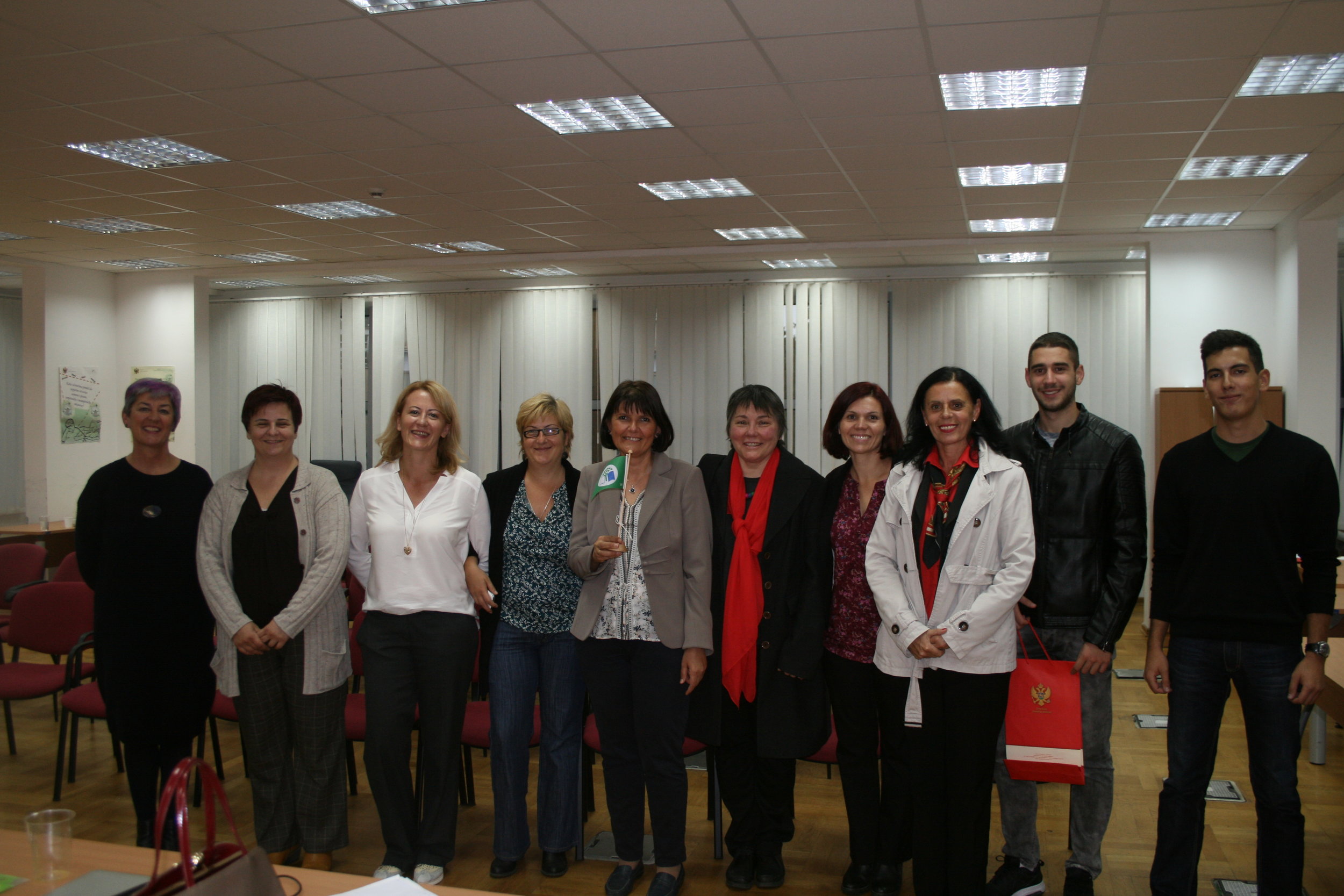
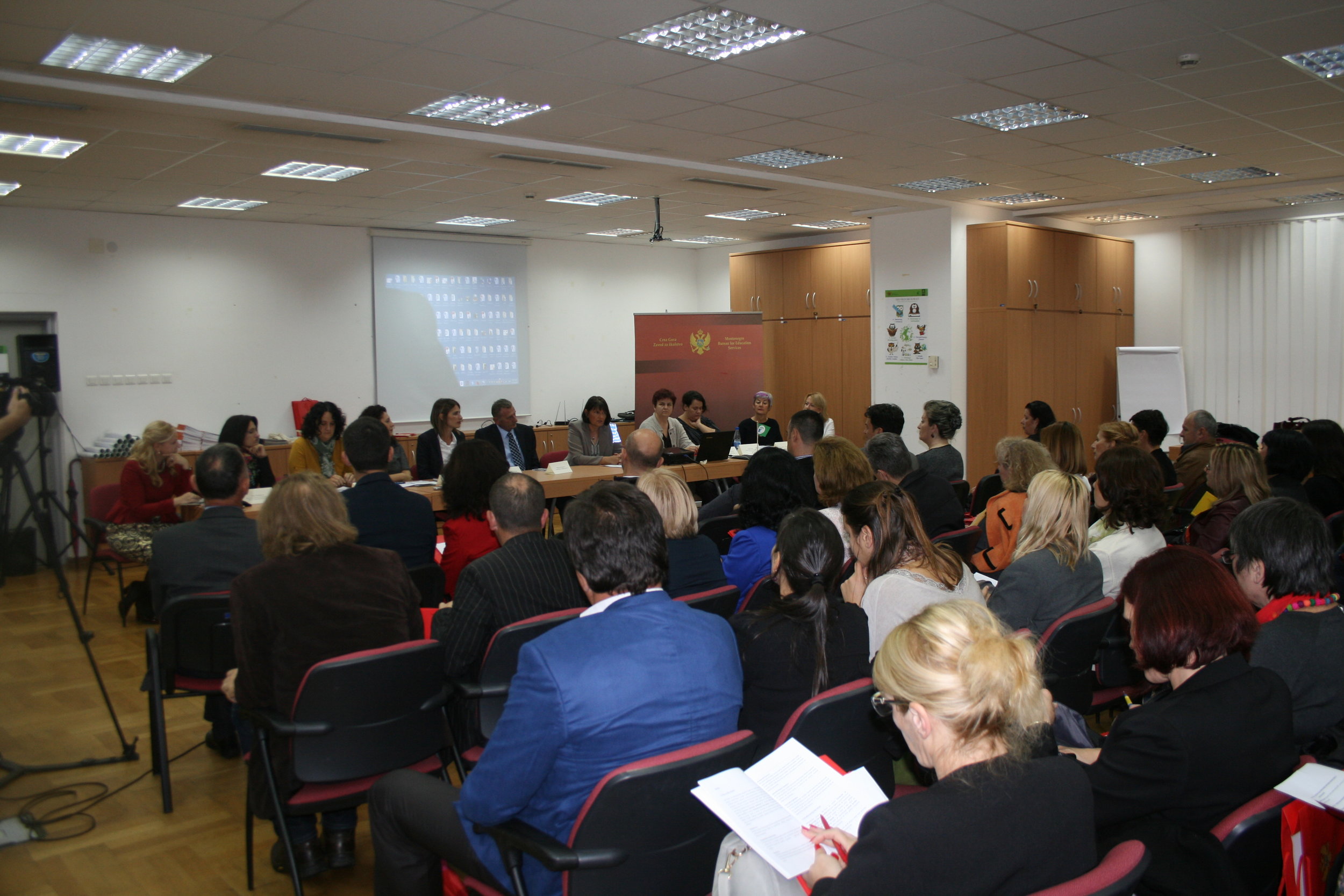
The Bureau for Education Services officially launches the Eco-Schools programme in Montenegro
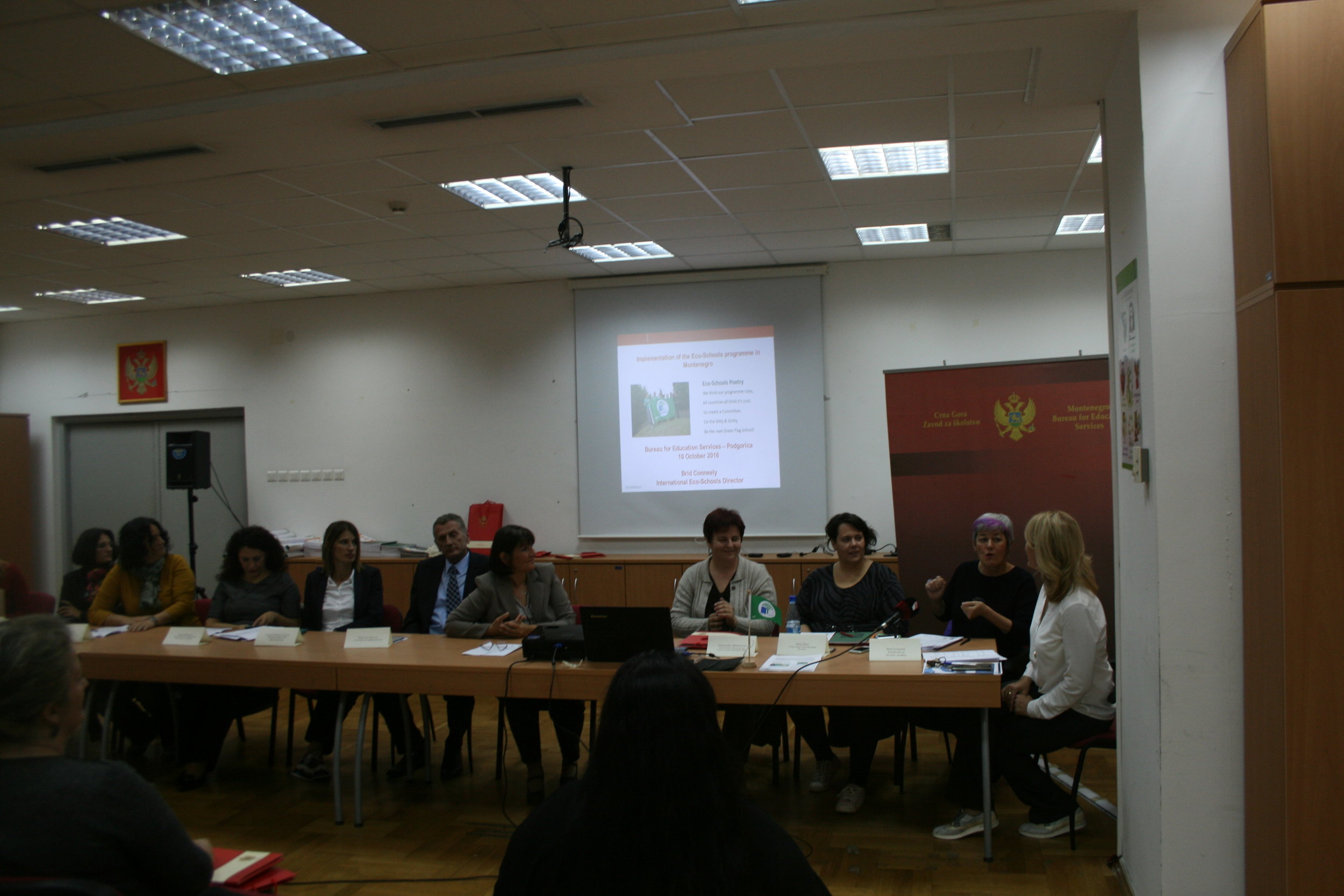
International Eco-Schools Director was delighted to speak at the launch of Eco-Schools in Montenegro along with Mr Radovan Popović, Director for the Bureau for Education Services (FEE’s new Affiliate Member), Ms Arijana Nikolić Vučinić, Deputy Minister for Primary and Preschool Education and Education of Persons with Special Education Needs. Members of the panel also included Ms Jelena Knežević, Head of the Department for Sustainable Development and Integrated Management of Sea and Coastal Zone in the Ministry of Sustainable Development and Tourism; Ms Srna Sudar, Director of Regional Environmental Centre – Country Office Montenegro; and Ms Jelena Vukasović, President of the Environmental Consultancy of Montenegro (FEE full member).
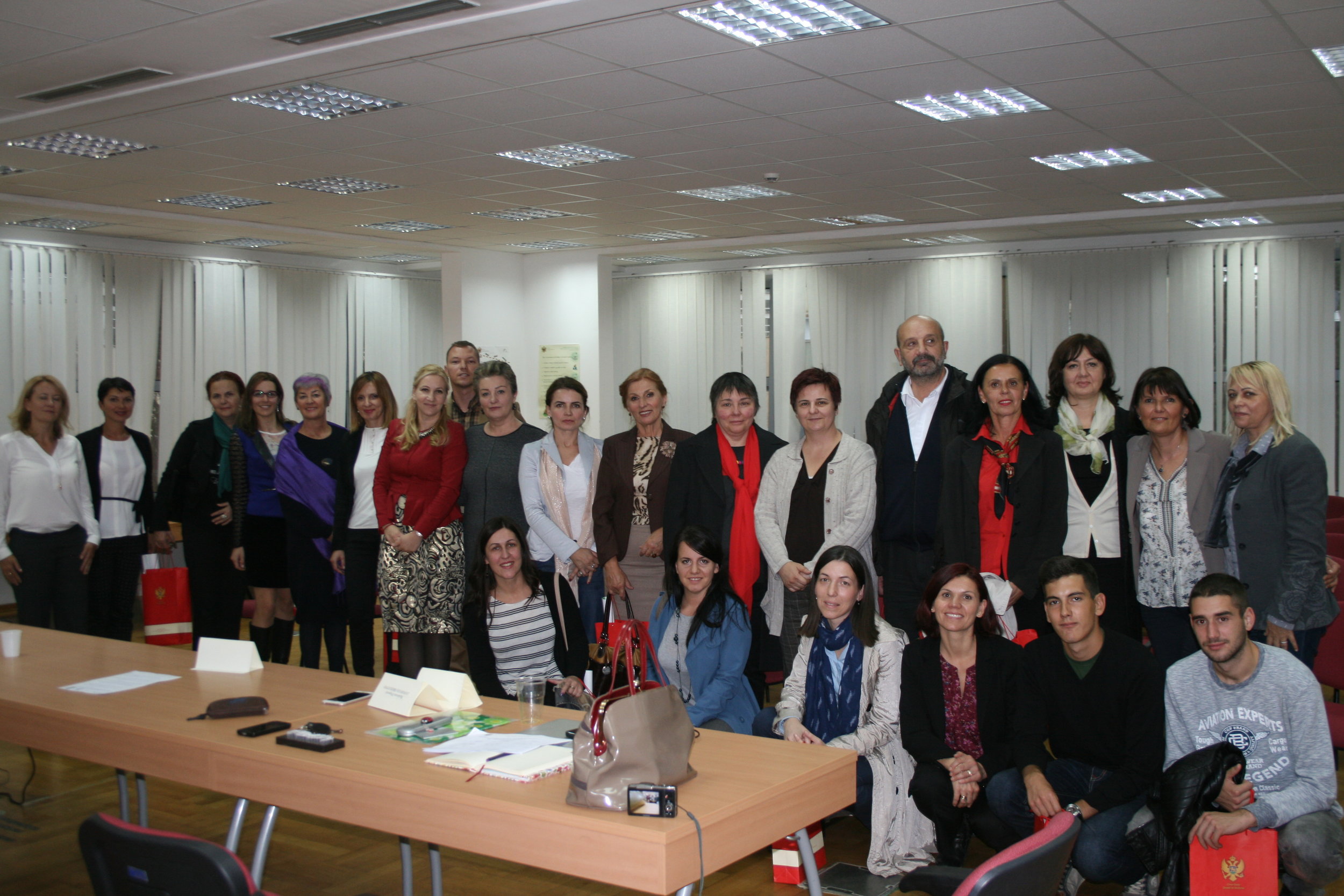
Present at the launch were circa 60 teachers and school principals, of which 34 have already signed up to be part of the programme. The launch was hosted at Bureau for Education Services offices in Podgorica. National Operators from Croatia and from Serbia attended, as did teachers and principals from both countries who gave interesting presentations about the work being done from kindergarten right up to university level.
FEE and Eco-Schools is thrilled to welcome Montenegro as the 63rd country to begin to run the Eco-Schools programme.
Expanding and sustaining the Eco-Schools network in the Western Indian Ocean region
Zanzibar, 29 September 2016 – The Indian Ocean Commission (IOC) ISLANDS project, funded by the European Union, held today in Zanzibar its third regional meeting.
Download the original press release.
Zanzibar, 29 September 2016 – The Indian Ocean Commission (IOC) ISLANDS project, funded by the European Union, held today in Zanzibar its third regional meeting in partnership with the Zanzibar National Eco-Schools Committee, aiming at strengthening and expanding the current regional network in the Western Indian Ocean region. This meeting regroups national Eco-Schools committees and NGOs from Mauritius, Seychelles, Madagascar, Comoros and Zanzibar with the objective to develop a regional strategy and action plan for mainstreaming the Eco-Schools programme in the national education systems and its sustainability in each country.
“This is the opportunity for children of the entire region, sharing common ocean and many similar challenges to take collective action in their schools and communities and gain regional and international partnerships, support and awards. The methodology of the Eco-Schools programme compliments the implementation of the Education for Sustainable Development programme which empowers learners to take informed decisions and responsible actions for environmental integrity, economic viability and a just society for the present and the future generation, while respecting cultural diversity. This is a part and parcel of quality education”, stated Hon. Riziki P. Juma, Minister of Education and Vocational Training in Zanzibar, at the opening ceremony.
Children in schools across the Western Indian Ocean region are facing the damaging day to day effects of climate change: sea-level rise, soil erosion, flooding, water shortages, high frequency of natural disasters. These endanger their safety, health and wellbeing and affect the livelihoods and economies of their families and communities.
“Many sustainability and environmental issues are extremely complicated. They are often multi-causal and difficult to define, and involve a range of stakeholders, all of which usually have different versions of what the problem is. We have learned that addressing sustainability challenges through education requires thinking that is capable of grasping the big picture, and understanding that there are interrelationships and underlying factors, which must also be addressed. It often requires broader, more collaborative and innovative approaches, and incorporation of local and indigenous knowledge and values”, declared Olivier Tyack, Indian Ocean Commission ISLANDS project team leader.
The aim of the Eco-Schools Indian Ocean programme is to provide a regional framework to integrate themes of sustainable development, climate change and disaster risk reduction into national education systems, and strengthen cooperation to address the unique vulnerabilities of the region. Eco-Schools provides the methodological tools for schools and communities to evaluate their own challenges, assess risks and develop the solutions within a structure of on-going improvement. The schools are guided to re-orientate existing curricula around sustainable development themes, and work collaboratively with their local communities to develop practical projects which draw upon and strengthen local knowledge and skills particularly suited to specific contexts.
Within the region, a total of 72 schools, representing over 25,000 pupils in the participating countries, are involved in the pilot phase of the programme. Since the beginning of the year, the number has increased significantly as more and more schools are seeing the tangible benefits of implementing the programme. Examples of school activities include projects for rainwater harvesting, soil stabilisation, food production, sanitation, and waste management amongst many others.
“These initiatives are crucial in accelerating a regional integration of our cause through encouraging our young people to engage in their environment by allowing them the opportunity to actively protect it. We have engaged our youths on matters of sustainability, equity and development because we believe that a real sustainability push towards the future that we want lies in the hearts, hopes and expectations of our youths”, continued Mrs. Shadya A. Karume, Chairperson of the non-profit organisation ZAYEDESA in Zanzibar.
International policy, including UNESCO's Global Action Programme on Education for Sustainable Development (ESD) and the post-2015 sustainable development agenda and 17 goals, devotes special emphasis to Small Island Developing States (SIDS) as priority areas. These agreements ask that effective ESD is employed on SIDS to address several major needs which include: instilling sustainability values, enhancing disaster preparedness, increasing the economic participation of graduates, developing greater synergies between school and community and re-aligning education with local contexts.
“As part of the global Eco-Schools movement of the Foundation of Environmental Education, Eco-Schools Indian Ocean will open up new partnerships between schools, organisations, funders and even national governments, providing increased access to international support, and enabling countries to share successes and good practices with other countries and regions around the world,” concluded Olivier Tyack.
For more information, please contact:
Dr. Aboud S. Jumbe; PhD; National Focal Point IOC-ISLANDS project, Head - Policy, Planning, Research Unit, Department of Environment, Ministry of Lands, Water, Energy and Environment, Zanzibar aboud.jumbe@gmail.com / Tel. (+255) 77 89 00 448
Mr. L. Fatratra Andriamasinoro, communication specialist for the IOC-ISLANDS project fatratra.andriamasinoro@coi-ioc.org / Tel. (+230) 402 61 00
Doha College is officially a green Eco-School
Doha College has become the first school in Qatar to be awarded an Eco-Schools Green Flag from the Foundation for Environmental Education.
Shared from Doha College. Dowload the PDF.
Doha College has become the first school in Qatar to be awarded an Eco-Schools Green Flag from the Foundation for Environmental Education. The school’s Eco Committee and staff officially hoisted the Green Flag to mark the occasion in a ceremony held at the school recently (Ed notes 30 August).
The Eco-Schools programme is delivered to 49,000 schools across 64 countries by NGOs in these countries, and coordinated from the Denmark based, Foundation for Environmental Education (FEE). Doha College is the first school to be awarded the coveted Eco-Schools status directly from FEE Head Office, under their new scheme for international schools. The award was granted following a vigorous inspection which looked into all the sustainable initiatives being run by the school.
“The Eco-Schools programme’s greatest achievement is arguably that it produces generation after generation of sustainably minded, environmentally conscious people by focusing on education throughout schools. These individual students will carry the behavioural patterns they learn under the auspices of Eco-Schools with them throughout life, in turn teaching the next generation environmental habits to make a difference.” explained Bríd Conneely, International Director of Eco-Schools at FEE Head Office.
To participate in the Eco-Schools programme, each school must implement a seven step change process and empower their students to lead processes and actions wherever they can. Schools are inspected every second year to ensure environmental practices are maintained.
The Doha College Eco Committee included 30 students from across all secondary year groups and was led by Senior Prefect, Kane Bastick. The themes chosen by the school included paper recycling, plastic recycling and litter reduction. A number of projects were implemented including recycling bins throughout the whole school, a plastic bottle greenhouse, litter picking programmes, participation in the Earth Cup Challenge and most importantly the incorporation of environmental issues into the curriculum for all students.
Mr Brian Kerr, Geography teacher and one of the lead teachers for this initiative explained, “We are very proud to have achieved this Green Flag after two years of hard work from the students and staff. In particular, The Eco-Schools Eco Committee led by Senior Prefect, Kane
Bastik displayed excellent leadership skills and were true role models for promoting environmental practices around the school.”
Each year a new student committee will lead the Doha College Eco-Schools programme, Geography teacher and fellow lead teacher for the Eco-Schools programme Naomi Capewell, explained. “This year’s committee will be led by 6th formers Ross O’Donnell and Emily White. I am looking forward to working with them to continue the good work which has now been embedded into the school and to bring in exciting new initiatives. We hope that other schools in Qatar will follow our lead and enrol in the Eco-Schools programme, so that young people throughout the country will be encouraged to act in a sustainable manner. “
Daniel Schaffer, CEO of FEE, said: “I’d like to congratulate Doha College and all its students and teachers on their great achievement, and wish them continued success with their work in sustainability. We are delighted to have our first official international school with a Green Flag awarded from our Head Office.”
Committee members who were involved in the inspection –
- Elena Straface
- Alexandra Nightingale
- Petra Darmawan
- Chelsea Mabulay
- Leena Mohamed
- Tatiana Fairley
- Tanisha Chopra
- Shadi Abboud
- Caitlyn Owen
- Alicia Field
- Kane Bastic
- Lenny Heidl


Press Release: New partnership for Eco-Schools
The Eco-Schools programme has launched a global K-12 environmental literacy initiative focused on Green STEM.
Alcoa Foundation, FEE Eco-Schools and National Wildlife Federation Partner Together on Global “Green STEM” Initiative
Contact: Bríd Conneely, Eco-Schools International, brid@fee.global +45 61248084
Copenhagen, Denmark (9 August 2016) – Thanks to the generous support of Alcoa Foundation, Foundation for Environmental Education’s (FEE) Eco-Schools programme has launched a global K-12 environmental literacy initiative focused on Green STEM. The project will educate children about environmental issues through science, technology, engineering and maths skills, in collaboration with National Wildlife Federation - FEE’s member organisation in the USA - and America’s largest wildlife conservation and education organisation. This initiative is entitled Alcoa W3 (which stands for Waste-Water-Watts) and will initially span four countries and three states.
Daniel Schaffer, CEO of FEE said: “The overarching goal of the Alcoa W3 project is to improve student/teacher environmental literacy; reduce the environmental impact and use of natural resources of the school; and improve student engagement in hands-on, experiential Green STEM disciplines through the project-based learning afforded by our Eco-Schools framework.” He added: “Green STEM is a sure way of increasing teacher knowledge on how to incorporate knowledge of the environment into their curricula and lesson plans, and I’m really looking forward to seeing how this project will provide opportunities for Alcoa employees to engage with schools in action-oriented events.”
“In the near future, the job market will include entirely new career paths focused on addressing climate change, increasing energy efficiency, reducing waste, and managing water,” said Collin O’Mara, President and CEO for the National Wildlife Federation. “The tremendous support we have received from Alcoa Foundation will ultimately help us reach kids globally and prepare them for these new Green STEM jobs—and help them better understand the world around them.”
Green STEM utilises project-based learning to provide students with authentic, real-life environmental and sustainability issues to tackle while emphasizing 21st century skills development like critical thinking, problem solving, cooperation, communication and teamwork. And it does this within the context of the students’ own communities, making the experience more relevant, inspiring, and engaging.
FEE’s internationally acclaimed Eco-Schools programme provides a framework to help educators integrate sustainability principles throughout their schools and curriculum and provides a model for environmentally sound practices, enhancing science and academic achievement.
Over the next 12 months, NWF and FEE Eco-Schools will work collaboratively in the U.S. Brazil, Australia, Italy and Norway to deliver the Alcoa W3 project across 40 schools — 30 internationally, 10 in the United States.
“Alcoa Foundation has been a longtime supporter of STEM education and environmental science and literacy initiatives,” said Esra Ozer, President, Alcoa Foundation. “The world needs leaders who are prepared for the challenges of an evolving economy, and working with NWF and FEE will help lend students and their teachers the added support and training they need to make an impact in communities across the globe.”
Through this project, twenty thousand students in Australia, Brazil, Norway and Italy, and in Texas, North Carolina and New York in the United States, will be given opportunities to assess, design, and build innovative solutions to environmental challenges.
Visit the FEE and Eco-Schools news.
----------
About The Foundation for Environmental Education and Eco-Schools
The Foundation for Environmental Education (FEE) was launched in 1981 and went on to create the Eco-Schools programme in 1994 with support from the European Commission. Eco-Schools was identified by the United Nations Environment Program (UNEP) as a model initiative for Education for Sustainable Development in 2003. Currently, there are over 62 countries around the world participating in the programme. Follow FEE on Facebook and @FEEInt on Twitter. Follow Eco-Schools on Facebook and @EcoSchoolsInt on Twitter.
About National Wildlife Federation
The National Wildlife Federation (NWF) is America's largest wildlife conservation and education organisation, uniting all Americans to ensure wildlife thrive in a rapidly changing world. In December 2008, NWF was granted host status for the K-12 Eco-Schools programme in the United States by The Foundation for Environmental Education (FEE). In America, the programme is known as “Eco-Schools USA.” Follow us on Facebook, Twitter, and Instagram.
About the Alcoa Foundation
Alcoa Foundation is one of the largest corporate foundations in the U.S., with assets of approximately $480 million. Founded 64 years ago, Alcoa Foundation has invested more than $635 million in communities worldwide. In 2015, Alcoa Foundation contributed more than $22 million to nonprofit organisations throughout the world, building innovative partnerships to improve the environment and educate tomorrow's leaders for careers in manufacturing and engineering. The work of Alcoa Foundation is further enhanced by Alcoa's thousands of employee volunteers who share their talents and time to make a difference in the communities where Alcoa operates. Through the Company's signature Month of Service program, in 2015, 47 percent of Alcoa employees took part in 1,000 events across 24 countries, benefiting more than 300,000 people and 400 nonprofit organisations. For more information, visit alcoafoundation.com and follow @AlcoaFoundation on Twitter.

For visual identity information: http://www.fee.global/presskit
Fruits of the Global Scrapbook Campaign
23 Scrapbooks left Finland in February to travel to Eco-Schools and kindergartens in 11 different countries.
Do you remember the Global Scrapbook Campaign?
23 Scrapbooks left Finland in February to travel to Eco-Schools and kindergartens in 11 different countries.
Here are the results of such a long journey! Click on the link and take a look at these amazing scrapbooks.
Scrapbook 1: Finland – Latvia – Turkey– Croatia

Scrapbook 2: Finland – Spain – Uganda - Belgium

Scrapbook 3: Finland – Spain – Turkey - Croatia

It has been a Diamond Decade for Flower Valley’s centre
Flower Valley’s Early Learning Centre has become the first school in the Overberg region of South Africa to receive the Eco-Schools Diamond Decade Award. The award celebrates 10 years of environmental education, as per the Eco-Schools curriculum, and is presented by the Wildlife and Environment Society of South Africa (Wessa).
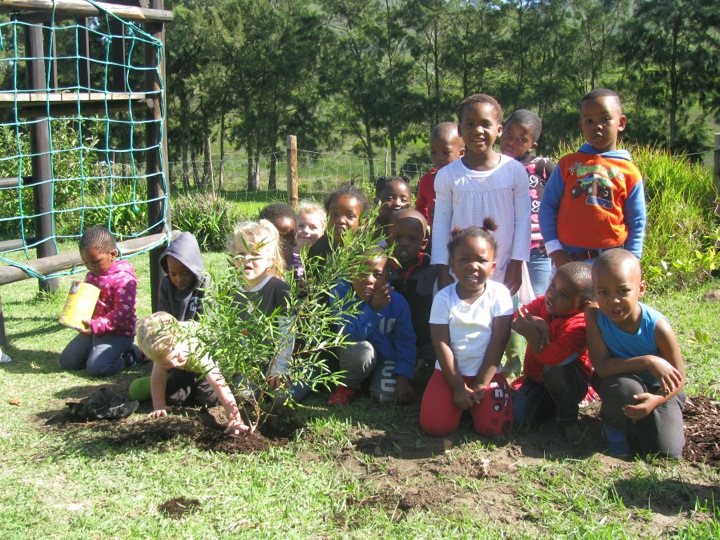
Flower Valley Conservation Trust is a non-profit organisation operating across the Cape Floristic Region of South Africa. The Trust works to protect fynbos landscapes, jobs dependent on fynbos, and to support a holistic education to pre-school centres in the region. Fynbos is a shrubby vegetation that is picked for bouquets sold around the world, although it faces many threats, with many species already extinct.
When the Trust launched in 1999, an Early Learning Centre was also started on Flower Valley Farm, the home of the Trust in the Western Cape. This pre-school provided a safe learning environment for the children of fynbos harvesters at the time. Today, the centre cares for 27 children aged two to six from across the region, including the rural areas and the small towns situated nearby.
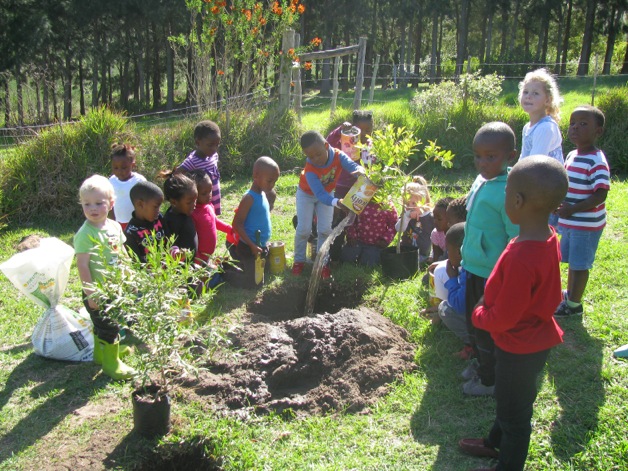
According to the Wessa Eco-Schools team, the Flower Valley centre is providing young children passing through the centre “a good and sound environmental ethic”.
The centre was praised for its well-stocked vegetable garden, medicinal plants section, water-wise garden and scented garden. “This must bring great joy to all at school and to your visitors.” The centre teaches youngsters how to plant their own gardens, compost, recycle, upcycle and about sustainable water use, among other themes.
Wessa coordinates the Eco-Schools programme in South Africa. More than 10,000 schools participate in the programme across the country.

Young Conservation Heroes Call for Protection of the Planet
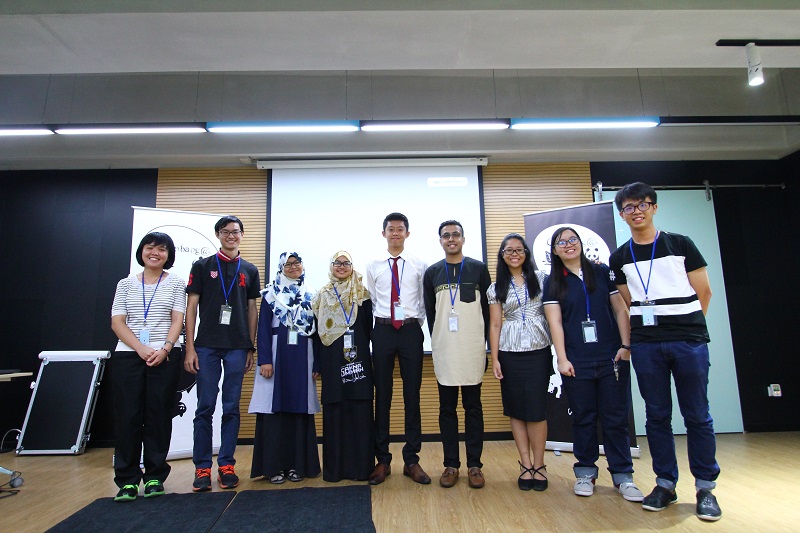
Two Eco-Schools students took part in Sembang@WWF, a bilingual story-telling platform that empowers youths and students to share their ideas on environmental sustainability activities with a larger audience.
They studied relevant current issues, and had to undergo numerous rehearsals and tests before sharing their presentations with the audience. The content of their presentations has been guided and verified by WWF-Malaysia in-house Experts.
WWF-Malaysia's Education for Sustainable Development (ESD) Programme hosted the second edition of Sembang@WWF 2016 in conjunction with the Earth Day on 23 April 2016.
© WWF-Malaysia / ESD
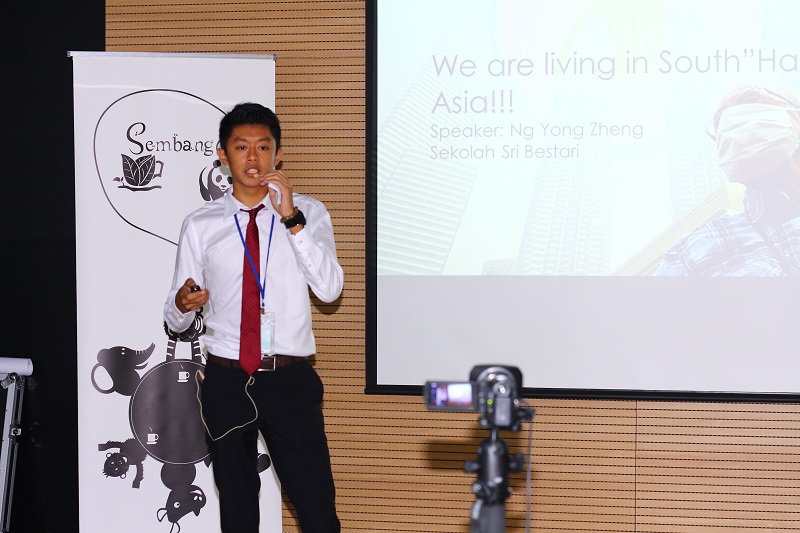
Ng Yong Zheng, who represented the Eco-Schools Progamme of WWF-Malaysia, emphasised the need to address climate change through his talk, 'We Are Living in South Haze Asia'. He shared his views on the impact of haze from the perspective of a 17-year old student.
"We cannot depend on environmental NGOs only to overcome polution. It is everyone’s responsibility if all of us want clean air to breathe.
We must ensure corporations, big or small, embassies and governmental agencies to work together with the people to ensure this problem can be solved"
© WWF-Malaysia / ESD
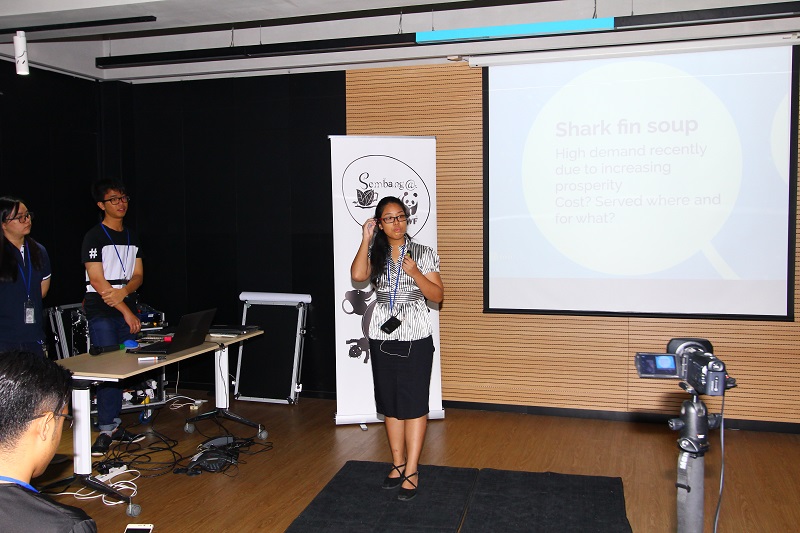
In showing their commitment to WWF-Malaysia’s 'My Fin My Life' campaign, Khou Jerome and Nurul Syazwani Mohammad Zikri, both representatives from Eco-Institutes Programme, and Jessadine Rose Baluyot, from the Eco-Schools Programme, took the challenge to call people to stop shark finning and shark fin soup consumption.
The whole article can be found at the following link: Young Conservation Heroes Call for Protection of the Planet through Sembang@WWF Storytelling Platform
© WWF-Malaysia / ESD
How our Kenyan member, KOEE, is working to reduce the heat in Africa
Practicing Education for Sustainable Development
through Eco-Schools
Joto Afrika, meaning 'Africa is feeling the heat' in Swahili, is a series of briefing and online resources reporting on climate change and climate adaptation in sub-Saharan Africa. It draws lessons, experiences and practical information from across several sub-Saharan African countries.
Joto Afrika was conceptualised, developed and produced by the Arid Lands Information Network (ALIN), Kenya, in partnership with IDS Knowledge Services and the AfricaAdapt Network.
An article about Eco-Schools Kenya appears on page 8, 'Practicing Education for Sustainable Development through Eco-Schools'.
It presents the programme and describes a particularly meaningful case story from St. Mary's Girls' Primary School in Machakos County, which managed to reduce the amount of firewood used per term after an environmental audit conducted by the students. More resource efficiency has led to an improvement of the school feeding programme, raising the number of girls enrolled from 50 to 200.
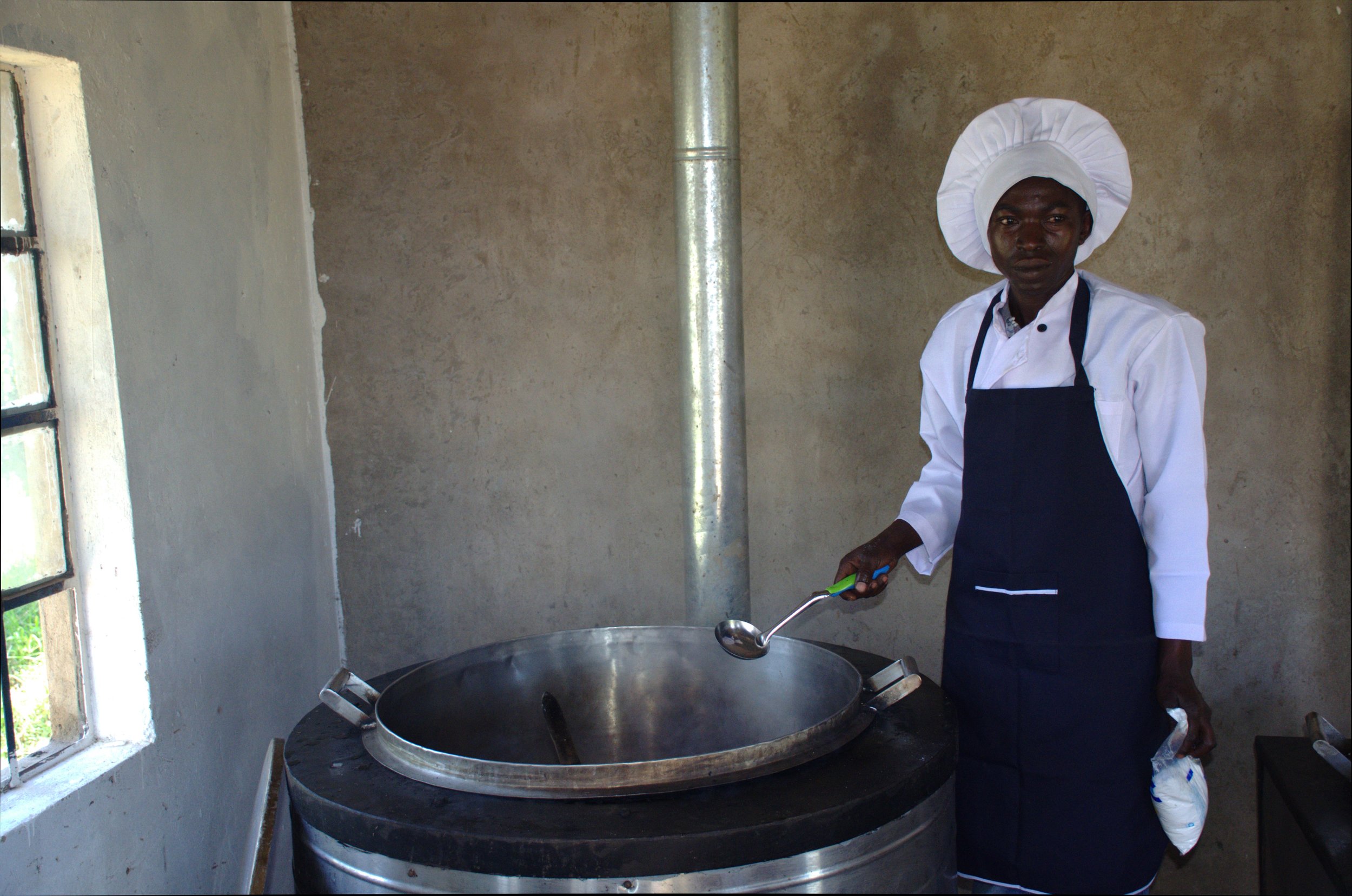
The chef at St. Mary's Girls Primary School in Machakos preparing a meal using an improved energy saving jiko. © David Wandabi
The full publication can be found at the following link: Issue 17 - Green Growth: An Overview of the Framework for Development