Eco-Schools Themes
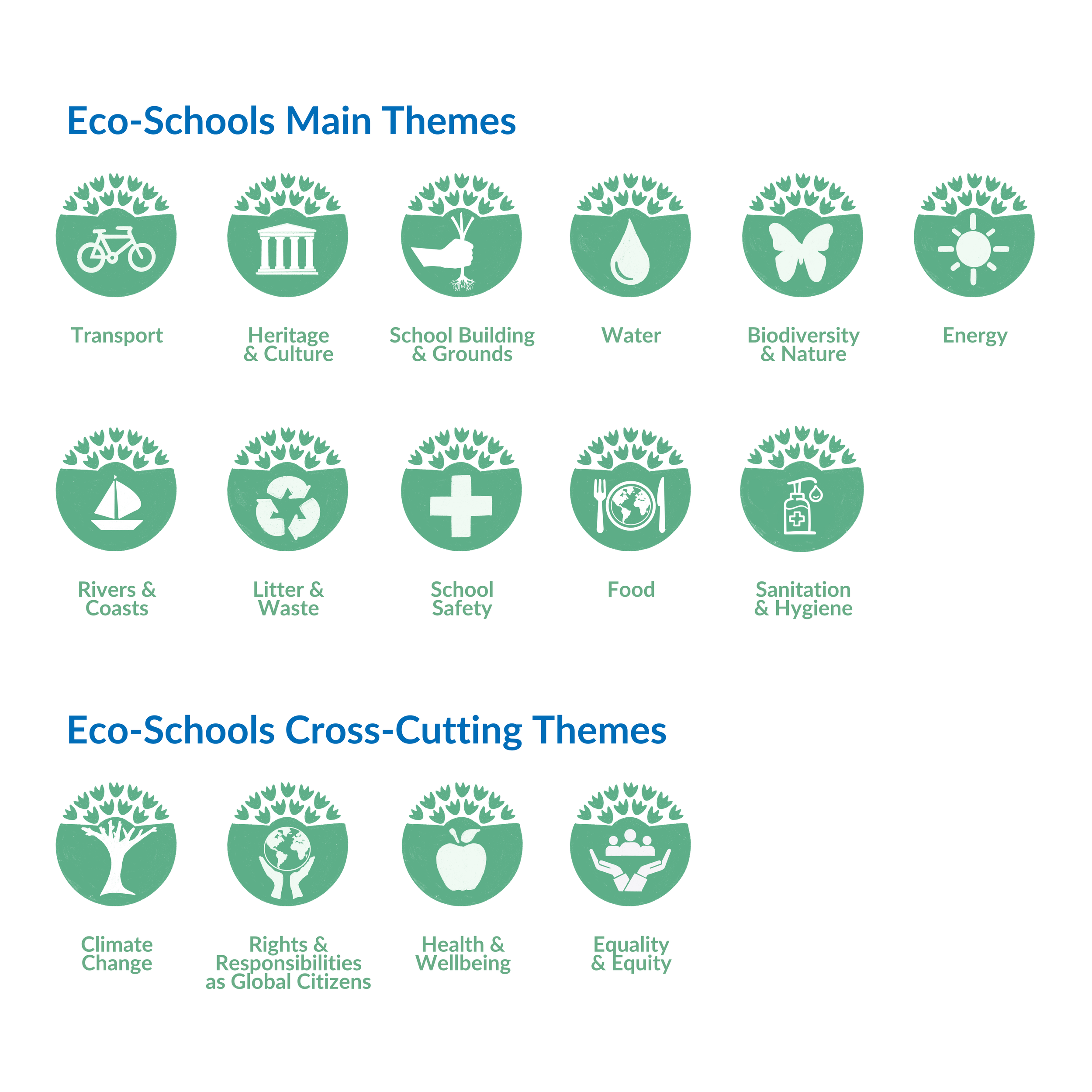
While the Seven Steps and the Seven-Steps Framework are the most important aspects of the Eco-Schools programme, the Themes provide a framework to understand sustainability holistically.
Divided into 15 concepts, the Eco-School themes are flexible and interconnected, reflecting the complexity of sustainability.
Most Eco-School projects will span several domains and themes.
Overall, there are four essential cross-cutting themes:
Climate Change
Rights & Responsibilities as Global Citizens
Health & Wellbeing
and Equality & Equity
Eco-Schools Main Themes
Transport
Transportation is a major contributor to CO2 emissions, driving climate change. Sustainable transport focuses on energy-efficient, affordable, and eco-friendly travel options like walking, cycling, public transport, and electric vehicles. Road safety is essential, ensuring students can use eco-friendly transportation safely. Parents also play a key role by supporting and modelling sustainable travel choices, including how they bring their children to school. Promoting low-carbon travel helps improve health, reduce pollution, and create more connected, enjoyable communities.

Heritage & Culture
All cultures represented are respected and valued. They aim to preserve traditions and natural heritage, allowing us to learn from the past and shape a sustainable future. Heritage connects us to our environments, understand our past and helps shape our identities. Tangible heritage encompasses landmarks and artifacts, while intangible heritage reflects customs and stories, linking us to both cultural and natural roots.
School Building & Grounds
Your school becomes a “living laboratory,” where you can experience sustainability firsthand through energy-saving systems, natural light, and eco-friendly materials. You also get a say in how your school building and outdoor spaces are used, making you an active part of the change.

Biodiversity & Nature
Biodiversity keeps earth’s ecosystems healthy and balanced. All living things depend on one another to form habitats, regulate climate, and support life. Today, many human activities are harming these systems, while Indigenous knowledge shows ways to live in balance with nature. Through this theme, Eco-Schools explore keystone species, native plants, and threats to biodiversity locally and globally, and take action to protect and restore ecosystems in their own schools and communities.
Energy
Energy consumption and carbon emissions are key factors driving climate change. We depend on energy for daily activities at school and home, with two primary sources: non-renewable and renewable energy. Non-renewable energy, like coal and oil, contributes to harmful carbon emissions, while renewable energy - such as solar, wind, and hydro - offers a cleaner alternative.
Rivers & Coasts
Oceans and rivers are vital ecosystems that support countless species and sustain life on Earth, yet they face growing threats from human activity. Overfishing, pollution, invasive species, and climate change disrupt biodiversity, harm habitats, and alter water conditions, including ocean acidification and flooding. By focusing on this theme, you will learn to understand these challenges and take action through environmentally friendly choices, collective efforts, and education.
Litter & Waste
Waste and Litter create significant environmental challenges, contributing to pollution and worsening climate change.
School Safety
The School Safety theme empowers learners to understand and address a wide range of risks, from everyday concerns to the challenges posed by climate change and natural hazards.
Food
Sustainable diets focus on healthy, affordable, and culturally appropriate foods produced with care for people and the planet.
Sanitation & Hygiene
Sanitation and Hygiene facilities and behaviours are fundamental pillars of a healthy learning environment.
Cross-Cutting Themes
Climate Change
Weather is what we experience day to day, while climate is the pattern of weather over a long time. Global warming is raising Earth’s average temperature, which is driving climate change. This can affect people’s lives, health, and the ways communities work. Mitigation means reducing greenhouse gas emissions to slow climate change. Adaptation means preparing for changes that are already happening, like heatwaves, heavy rain, or storms, by protecting nature, homes, and important infrastructure.
Rights & Responsibilities as Global Citizens
Global citizenship fosters a sense of responsibility for building a fair and sustainable world, encouraging students to engage in climate action locally and globally.
Health & Wellbeing
The Health and Wellbeing theme highlights the vital connection between human health and the natural world. Climate change and environmental degradation threaten physical health, causing issues like heat stress and respiratory problems, while also contributing to eco-anxiety and mental health challenges.
Equality & Equity
Equality offers everyone the same chances, while equity addresses the unique challenges faced by marginalised groups, such as those impacted by gender, disability or socio-economic disparities.